

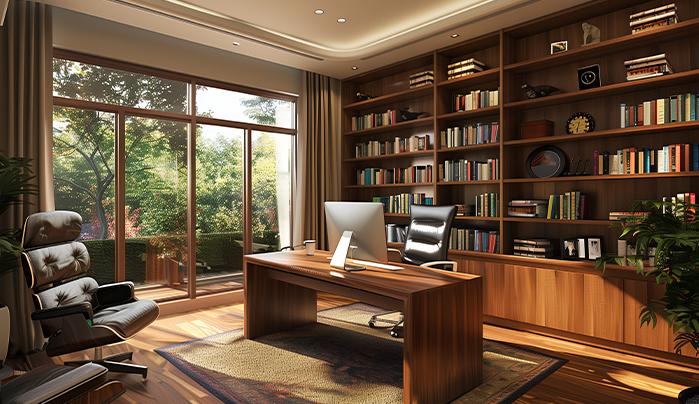
We’ve all been there—sitting at a cluttered kitchen table with a laptop balanced on a pile of mail, trying to focus while the TV hums in the background. It’s exhausting. If you’ve ever felt like your brain is as messy as your desk, you aren’t alone. Your environment directly impacts your cognitive load. When your physical space is chaotic, your mind struggles to find the “RAM” needed to process complex information.
Creating a minimalist study nook isn’t just about making your room look like a Pinterest board. It’s about building a high-performance zone where your brain knows it’s time to work. By stripping away the non-essential, you create a vacuum that your focus can finally fill. Here is how you can transform a small corner of your home into a powerhouse of productivity.
Finding the Right Location
The first rule of a study nook is “location, location, location.” You don’t need a massive spare bedroom; you just need a dedicated “zone.” This could be a corner of your bedroom, a repurposed closet (the “cloffice” trend), or even a quiet spot under the stairs.
The key is visual separation. If your desk faces your bed, your brain might start thinking about a nap mid-essay. If it faces the kitchen, you’ll find yourself wandering to the fridge every ten minutes. Try to face a window for natural light or a blank wall that you can keep clean and simple.
The Power of Natural Light and Air
Science tells us that students who study in natural light perform better and have less eye strain. When designing your nook, try to place your desk near a window. However, avoid having the window directly behind you, as this creates a glare on your screen.
If you are working late into the night, invest in a “warm” LED desk lamp. Avoid harsh fluorescent bulbs that feel like a hospital waiting room. You want a space that feels inviting, not clinical. Also, don’t underestimate a small desk plant. A succulent or a snake plant adds a touch of life and improves air quality without adding “visual noise.”
Choosing the “Right” Minimalist Furniture
In a minimalist nook, every piece of furniture must earn its keep. You only need three things: a sturdy surface, a comfortable chair, and proper lighting.
- The Desk: A floating desk is a great minimalist choice because it keeps the floor clear, making the room feel larger.
- The Chair: Don’t skimp here. You might love the look of a wooden vintage chair, but if your back hurts after twenty minutes, you won’t get any work done. Look for ergonomic support.
- Cable Management: Nothing kills a minimalist vibe faster than a “spaghetti mess” of chargers. Use cable clips or a simple box to hide your wires.
Managing the Academic Workload
Even the most beautiful study nook can’t do the work for you. Sometimes, despite having the perfect setup, the sheer volume of assignments becomes overwhelming. This is especially true for complex subjects like finance or social sciences. If you find yourself staring at a blank page for hours, it might be time to seek a bit of professional guidance.
For students struggling to balance home life and high-level academics, utilizing a professional assignment writing service Australia can be a total game-changer. It’s not just about getting the work done; it’s about learning how to structure your own future papers by seeing how the experts do it. Having that safety net allows you to enjoy your study nook without the crushing weight of burnout.
Color Psychology and Focus
Colors affect our mood more than we realize. For a minimalist nook, “less is more” applies to your palette too.
- Off-Whites and Beiges: These create a calm, airy feel.
- Soft Blues: Known to lower heart rates and improve focus.
- Muted Greens: Great for long-term tasks as they are easy on the eyes.
Avoid bright reds or neon oranges in your study nook. These colors are “high energy” and can lead to anxiety or irritability during a long study session.
The “One-In, One-Out” Tool Rule
A common mistake is cluttering the desk with “productivity tools” that you don’t actually use. Five different colored highlighters, three notebooks, and a tablet you don’t need are just distractions.
Keep only what you are using for the current task on your desk. If you are switching from math to history, clear the math books away first. This “physical reset” helps your brain transition between subjects.
Dealing with Complex Subjects
Certain subjects require more than just a clean desk—they require a specific mindset. For instance, if you are tackling economic theories or supply-and-demand curves, the mental fatigue can be real. If you hit a wall while studying market trends, seeking specialized Economics Assignment Help can help clarify those difficult concepts. This allows you to maintain the “minimalist” mindset by offloading the stress of misunderstood topics to someone who can explain them clearly.
Digital Minimalism
Your physical desk might be clean, but is your computer desktop a mess? Digital clutter is just as distracting as physical clutter.
- Close tabs you aren’t using.
- Use “Do Not Disturb” mode on your phone.
- Keep your file folders organized by semester and subject.
A clean screen is the digital equivalent of a clean desk. If your laptop is covered in icons and old downloads, spend ten minutes every Sunday night “sweeping” your digital workspace.
Sensory Control
Minimalism isn’t just about what you see; it’s about what you hear and feel. If you live in a noisy house, a pair of noise-canceling headphones is a vital part of your minimalist kit. Some people work best with “Lo-Fi” beats or white noise, while others need total silence. Find your “soundscape” and stick to it.
The Psychology of the “End of Day” Reset
One of the best habits you can develop is the “2-minute reset.” Before you leave your nook for the night, put your pen back in its holder, stack your books neatly, and wipe down the surface.
Walking into a clean, ready-to-go study nook the next morning provides a huge psychological boost. It removes the “friction” of starting your work. Instead of spending ten minutes cleaning up yesterday’s mess, you can dive straight into your goals.
Conclusion
Building the ultimate minimalist study nook isn’t about spending thousands of dollars at a furniture store. It’s about intentionality. It’s about choosing a quiet corner, prioritizing light, and being honest about when you need help. By creating a space that respects your mental energy, you aren’t just decorating a room—you are investing in your academic future.
Keep it simple, keep it clean, and don’t be afraid to reach out for support when the workload gets heavy.