

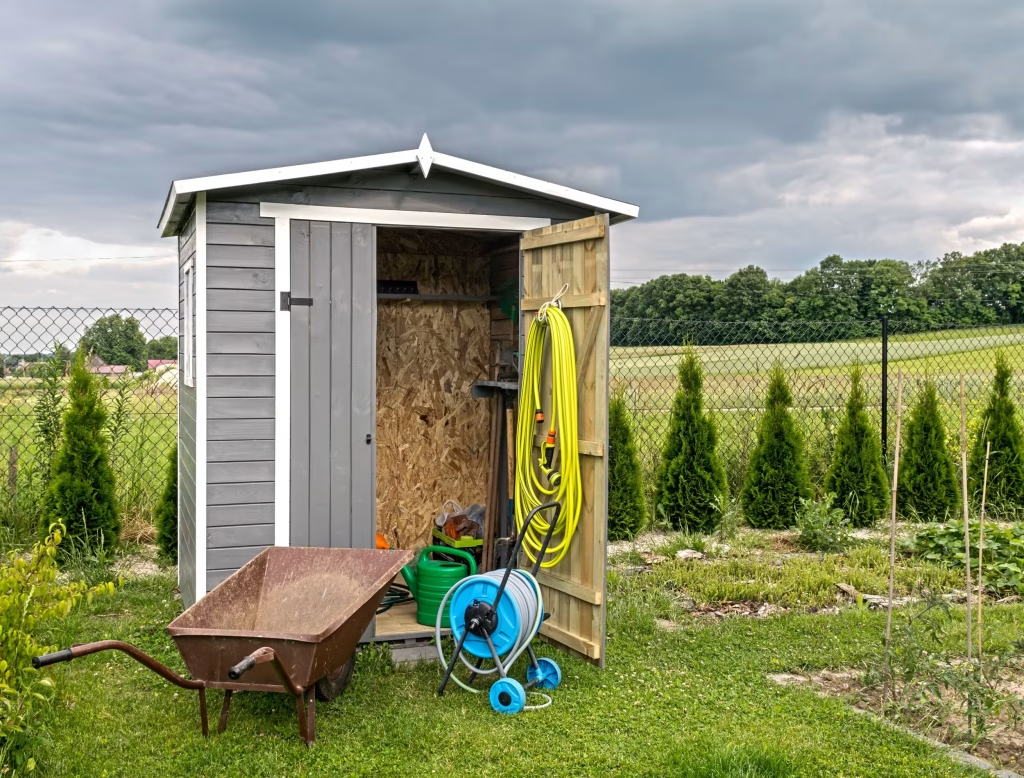
There is a particular type of shed that I think most of us have experienced at one point or another — one we either own, have owned, or spent a mortifying afternoon digging through at someone else’s house looking for a pair of secateurs. You know the one. The lawnmower is in, but only just. The tools are somewhere behind the lawnmower. The half-empty bags of compost are on top of the tools. The garden chairs are wedged in at an angle that somehow both blocks everything else and still results in them falling on you every time you open the door. The overall effect is of a car boot sale that has been sealed for several years and forgotten about.
This shed is not an inevitability. It is a choice — or rather, the result of not making choices about how the space should function. The alternative, a shed that is genuinely well-organised and properly equipped for the work you actually do in the garden, is achievable without a significant budget or a complete interior refit. It mostly requires applying some thought to what you need, where it should live, and how to get to it without disturbing everything else.
Start With a Clear-Out
No organisational system, however clever, works on top of accumulated clutter. Before you buy a single shelf or hook, empty the shed completely. This is the step most people skip, and it is also the most important one. Once everything is out, you will almost certainly find things that need to go: broken tools, empty containers, outdated chemicals that should be disposed of properly at a local recycling centre, items that somehow migrated into the shed from the house and have no business being there.
Take the opportunity to sweep out the interior thoroughly, check for any signs of damp or damage to walls and floor, and treat any bare timber with preservative before items go back in. You are, in a very real sense, resetting the shed to zero — and this is exactly the right condition from which to design a system that actually works.
Think in Zones
The most functional sheds are organised by zone rather than by organic accumulation. The principle is simple: group items by frequency of use and category, and assign each group a specific area that suits both the items and your workflow.
Frequently used tools — trowels, forks, secateurs, gloves, string — should be at the front and at a convenient height, immediately accessible without moving anything else. Heavy, awkward items like the lawnmower and wheelbarrow should be positioned for easy access and exit, with a clear path to the door. Seasonal items — the BBQ cover, the Christmas lights, the croquet set — can go at the back or high up, because they only need to come out occasionally and a little effort to retrieve them is acceptable.
Chemicals, fertilisers, and anything with specific storage requirements (dry conditions, away from frost, out of reach of children) should have a dedicated area — ideally a lockable cabinet if children or pets use the garden. Keeping these separate from tools and general equipment makes them easier to manage safely and prevents accidental contamination of other stored items.
Wall Space: Your Most Underused Asset
In most sheds, the floor is the primary storage surface and the walls are largely ignored. This is the reverse of what it should be. Floor storage is the least efficient form of organisation in a shed because it makes everything inaccessible: you cannot reach what is at the back without moving what is at the front. Wall storage puts items within reach, allows them to be seen at a glance, and frees the floor for the larger items that genuinely need to be there.
The most versatile wall storage system for a shed is a simple grid of horizontal rails or a slatwall panel, from which a variety of hooks, baskets, and tool holders can be hung and repositioned as requirements change. This is preferable to fixed shelving because it adapts as your tool collection evolves. Specific holders are available for almost every tool type: long-handled tool hooks that hold spades, forks, and rakes vertically; clips for handheld tools; baskets for packets and small items; trays for lubricants and sprays.
Pegboard — perforated hardboard fitted to the wall and populated with a system of pegs and hooks — has been a shed classic for generations and remains one of the most practical solutions because it is cheap, infinitely reconfigurable, and immediately shows you at a glance exactly what you have and where it is. The visual inventory it provides is not a trivial benefit: it is much harder to lose a trowel, and much easier to notice when it has gone missing, when tools are on a pegboard rather than in a drawer or pile.
Shelving: Getting the Specifics Right
For items that need a surface rather than a hook — compost bags, plant pots, spray bottles, seed trays, boxes of plant labels — shelving is the natural solution. In a wooden shed, shelving is easy to install: a few lengths of timber, some simple brackets, and you have as much shelf space as the walls can accommodate.
Shelf depth is worth thinking about carefully. Shallow shelves (200–250mm) are better than deep ones for most shed contents because everything is visible and reachable without having to move items at the front to get to items at the back. The tendency to make shelves as deep as possible in order to maximise storage is usually counterproductive — the back half of a deep shelf tends to become a black hole where items disappear and are never seen again.
Fixed shelving height should be planned around the largest items you need to store on each level. A shelf set too low to fit your tallest spray bottles will result in those bottles being stored on the floor instead, defeating the purpose. Before fixing anything, hold the brackets in position and check that the shelf height actually works for the items you plan to put there.
Workbench: The Upgrade That Changes Everything
If your shed is large enough to accommodate one — and this is a good argument for buying a larger shed than you think you need — a workbench transforms the space from a storage unit into a working environment. Even a modest fixed bench along one wall, made from a couple of lengths of thick scaffold board on simple metal brackets, gives you a surface for potting, seed sowing, tool maintenance, DIY tasks, and the dozens of other small garden-related jobs that currently happen on the kitchen floor or the edge of the raised bed.
Under-bench storage is an opportunity that is too often missed. Shelves below the workbench are ideal for heavy items — bags of compost, large pots, buckets — that would otherwise occupy floor space. A drawer unit beneath the bench keeps small items like seed packets, plant labels, twist ties, and the small tools that are perpetually mislaid in organised reach without cluttering the bench surface.
Lighting and Power
A shed without lighting is a daytime-only proposition, which means in winter — when many gardening jobs that would benefit from a workspace happen in the early morning or evening — it is simply unavailable. Adding a light fitting to a wooden shed dramatically extends its useful hours and makes it a genuinely year-round resource rather than a fair-weather one.
The most straightforward solution is to run a properly armoured electrical cable from the house to the shed, installed by a qualified electrician. This gives you a permanent and reliable supply for lighting, sockets, and any other electrical requirements. Solar-powered LED shed lights are a wire-free alternative that has improved considerably in recent years and can provide adequate illumination for most shed uses without any electrical installation at all.
Inspiration and Ideas
For anyone looking at the interior design end of shed organisation — or considering a more ambitious conversion into a garden room or studio space — Grand Designs covers garden buildings, interiors, and creative outbuilding ideas in accessible and inspiring detail, including examples of converted sheds and outbuildings that demonstrate what is achievable at various levels of ambition and budget.
If you are starting from scratch with a new shed, the specification of the building itself is the first decision. You can find the current range of wooden garden sheds on the Dobbies website — comparing construction details like cladding thickness and window options will help you choose a building that suits not just your storage needs but any wider ambitions you have for the space.
The Shed You Deserve
A properly organised, well-equipped wooden shed is one of those things that quietly improves the quality of everyday garden life in ways that are difficult to fully appreciate until you experience them. Finding what you need when you need it. Doing small maintenance tasks at a proper bench rather than on your knees. Having a space that is genuinely yours and that reflects something of how you actually work in the garden.
None of it is complicated. It just requires that you treat the shed as something worth organising rather than something to throw things into. Make that decision, and the rest follows naturally.