

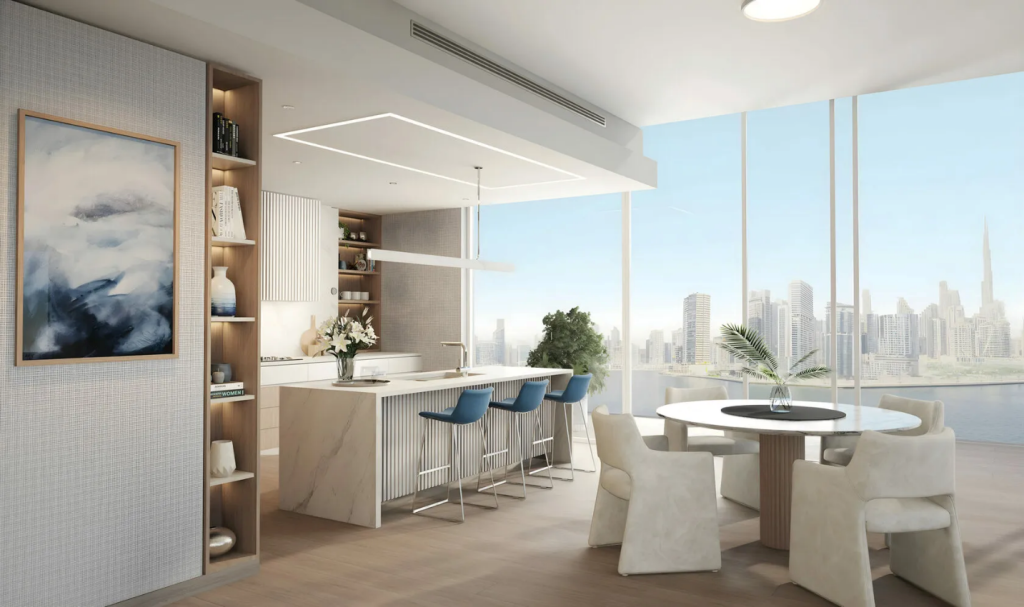
For decades, the traditional European real estate portfolio looked remarkably similar. A primary residence in a major city, perhaps a vacation home in the south of France or Spain, and a few rental apartments to generate passive income. But the global property map is being aggressively redrawn. Faced with shifting tax landscapes, stringent regulations, and stagnating yields at home, European buyers are looking further afield.
Their primary destination? Dubai.
The United Arab Emirates has transformed from a regional business hub into a premier global destination for luxury homeownership. While the glitz of the city has always attracted a certain demographic, the current wave of European buyers is distinctly analytical. They aren’t just buying vacation homes; they are strategically acquiring off-plan properties to capture capital appreciation and tax-free rental yields that significantly outpace traditional European markets.
Here is a closer look at the mechanics behind this shift and why the Dubai housing market has become a mandatory component of a well-diversified property portfolio.
The Mathematics of the Shift: Yields That Actually Perform
If you speak with any seasoned property investor in Amsterdam, Berlin, or London, the conversation inevitably turns to margins. In many major European cities, gross rental yields have compressed to a meager 3% to 4%. Once you factor in property taxes, maintenance, and income taxes on rental earnings, the net return is barely enough to outpace inflation.
Dubai offers a stark contrast. The city consistently delivers gross rental yields ranging from 6% to 9%, depending on the neighborhood and property type. But the real mathematical advantage lies in the tax structure. The UAE does not levy personal income tax on rental earnings, nor does it impose capital gains tax when the property is eventually sold.
According to data routinely published by the Dubai Land Department (DLD), transaction volumes continue to break historical records, driven largely by foreign capital. For a European investor, a luxury apartment in Dubai Marina or a townhouse in a master-planned community doesn’t just offer sunshine; it offers a financial efficiency that is virtually impossible to replicate back home.
The Off-Plan Advantage: Buying Tomorrow’s Homes Today
While the secondary (ready) market in Dubai is robust, the most sophisticated European buyers are focusing heavily on the off-plan sector. Buying off-plan means purchasing a property directly from a developer before or during its construction phase.
Why the preference for homes that don’t exist yet? It comes down to leverage and capital appreciation.
Developers in Dubai offer incredibly flexible payment plans, often allowing buyers to pay a fraction of the property’s value during construction and the remainder upon handover. This allows investors to secure an asset at today’s prices while only committing partial capital. As the development nears completion and the surrounding infrastructure matures, the property naturally appreciates in value.
However, navigating the off-plan market requires a highly critical eye. The skyline is crowded with cranes, and not every project is created equal. Knowing which developers have a flawless track record for quality and timely delivery is paramount. This is exactly where working with local experts becomes non-negotiable. Firms like AION Dubai, which act as a strategic bridge between European capital and the UAE market, provide the on-the-ground intelligence required to filter out the noise and identify projects that actually deliver on their promises.
The “Golden Visa” Catalyst
You can’t discuss the influx of European home buyers in Dubai without addressing the UAE’s Golden Visa program. It has fundamentally changed the nature of property investment in the region.
Historically, residency in the UAE was tied strictly to employment. If you lost your job, you lost your visa. The introduction of the Golden Visa—a long-term, renewable residency permit—decoupled residency from employment and tied it directly to investment.
Currently, purchasing a property (or a portfolio of properties) valued at AED 2 million (approximately €500,000) qualifies the buyer for a 10-year Golden Visa. This visa extends to the investor’s spouse and children. For European buyers, this isn’t just about getting a travel document; it’s about securing a “Plan B.” It offers the freedom to relocate, establish tax residency, or simply spend extended periods in a safe, world-class city without bureaucratic friction.
Beyond the Numbers: The Evolution of Dubai’s Living Spaces
The financial metrics make sense, but the actual homes being built in Dubai have evolved dramatically to meet European tastes. A decade ago, the market was dominated by flashy, oversized spaces. Today, developers are focusing on community, sustainability, and lifestyle integration.
We are seeing a massive surge in demand for community-centric living. European buyers, particularly families, are gravitating toward master-planned neighborhoods that offer sprawling parks, cycling tracks, international schools, and community retail centers right at their doorstep.
Furthermore, the rise of “branded residences” has caught the attention of high-net-worth individuals. These are luxury homes managed by premium hospitality brands (such as Dorchester Collection or Six Senses), offering residents hotel-grade amenities, from concierge services to in-house dining. It represents a level of effortless homeownership that appeals deeply to international buyers who may only spend a few months of the year in the UAE.
Mitigating Risk in a Fast-Paced Market
Despite the obvious benefits, buying property 5,000 kilometers away carries inherent risks. The speed at which the Dubai market moves can be overwhelming. Regulatory frameworks, escrow accounts, and developer contracts operate differently than they do in the European Union.
The most common mistake international buyers make is attempting to navigate this landscape alone or relying on enthusiastic but inexperienced brokers. Due diligence is the firewall that protects your capital.
Investors need to verify that a project is registered with the Real Estate Regulatory Agency (RERA) and that all payments are being deposited into an official, government-monitored escrow account. Securing premium projects requires a trusted advisory partner who understands the legal and cultural nuances of the UAE, while also speaking the financial language of a European investor.
Looking Ahead
The narrative surrounding Dubai real estate has matured. It is no longer viewed as a speculative frontier. It has solidified its position as a global safe haven for wealth and a primary destination for luxury living.
As European markets continue to grapple with economic headwinds and heavy taxation, the appeal of Dubai’s tax-efficient, high-yield environment will only intensify. For those willing to look beyond their local borders, the desert is offering some of the most compelling homeownership and investment opportunities on the planet. The key is to approach the market not just with capital, but with expert local guidance.
FAQ
Q1: What are the typical rental yields for homes in Dubai? Investors can generally expect gross rental yields between 6% and 9%, depending on the specific neighborhood and the type of property. These yields are often significantly higher than those found in major European cities and are entirely tax-free.
Q2: Is it safe for a foreign national to buy off-plan property in Dubai? Yes, it is highly regulated and safe, provided you follow the rules. The Dubai government uses an escrow account system. Buyer funds are held in these secure accounts and are only released to the developer as specific construction milestones are met and verified by the government.
Q3: Does buying an off-plan property qualify me for the UAE Golden Visa? Yes. Purchasing property (including off-plan properties) valued at AED 2 million or more qualifies you for a 10-year Golden Visa, subject to specific government regulations regarding payment thresholds.
Q4: Do I need to be a resident of the UAE to buy a home there? No. Foreign nationals can easily purchase freehold property in designated areas of Dubai without holding a residency visa.