

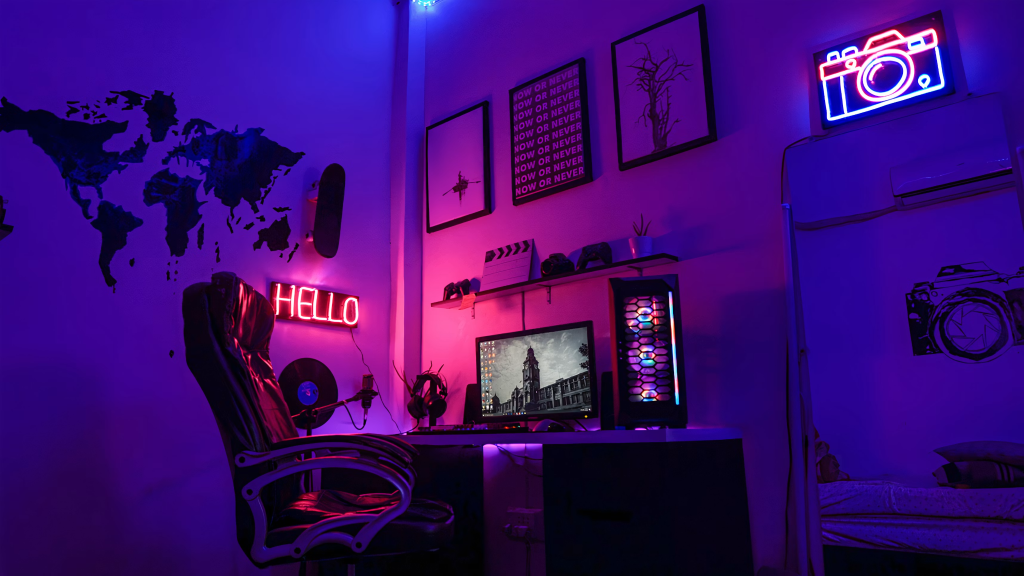
LED strips blink in sync with on-screen explosions, ultra-wide monitors curve around viewing angles, and racing pedals sit where coffee tables once rested. Domestic rooms that previously centered on television now resemble compact broadcasting studios. During the past decade, technological advances and shifting media habits combined to transform humble desks into immersive arenas as compelling as theme parks or cinemas. Analytics published by spinfin confirm the shift: playtime hours in personally customized stations climbed faster than attendance at traditional leisure venues, proving that households now host spectacle rather than merely consume it.
Tech Convergence Turned Bedrooms into Control Rooms
Smaller graphics processors, affordable ergonomic furniture, and broadband fiber arrived almost simultaneously. The trio allowed ambitious configurations without professional budgets. Hardware vendors followed demand, launching modular lighting kits and low-profile sound dampening panels sized for apartments. Streaming platforms added incentive by rewarding visually distinctive backdrops, encouraging hobbyists to upgrade webcams, install acoustic foam, and experiment with virtual-production software.
Catalysts Behind the Home-Arena Boom
- Component affordability: mid-tier GPUs deliver console-level frame rates at modest prices
- All-in-one monitors: integrated USB hubs simplify cable management for multi-device rigs
- Voice-activated assistants: hands-free scene changes shift ambience between work and play
- Compact VR sensors: reduced space requirements make room-scale movement viable in small flats
- Social integration: instant clip sharing turns local triumphs into global conversations
Aesthetic Personalization Enhances Everyday Motivation
Beyond performance, visual identity drives prolonged engagement. Color-coordinated peripherals match game art, inspiring daily sessions that rival gym attendance for routine adherence. Custom wall art maps from open-world titles, minimalist controller silhouettes signals belonging and sparks conversational icebreakers during virtual meetings.
Interior designers increasingly consult on builds, positioning ambient lights to avoid screen glare and selecting desks deep enough for triple-monitor panoramas. Such attention elevates gaming corners into multipurpose studios suitable for creative projects, remote work, and movie marathons.
Social Gatherings Evolve Around Digital Stages
Friends once convened for board games; now communal sessions involve co-op speed-runs projected onto living-room walls. Couch co-play benefits from wireless controllers that recharge on discreet stands between rounds. Food delivery partnerships integrate overlay notifications, turning halftime into synchronized snack calls. Events such as charity marathons or new-season launches prompt themed decor pixel balloons, collectible figurine centerpieces blending offline hospitality with online hype.
Audience participation extends to remote viewers through shared screen features. Relatives located in different time zones watch the same campaign unfold, commenting via low-latency voice channels that replicate living-room banter despite continental divides.
Features Defining Today’s Signature Setups
- Adjustable sit-stand platforms supporting long streaming blocks without fatigue
- Dual-zone climate gadgets maintaining PC cooling and occupant comfort simultaneously
- Cable-raceways with LED accents hiding wires while accentuating theme colors
- Modular mic arms for quick swaps between podcast and racing-wheel configurations
- Smart power hubs tracking energy consumption per component for eco-friendly tuning
A full paragraph separates the two lists, ensuring structural variety and smoother readability.
Health-First Design Gains Traction
Hours of continuous play raise ergonomic challenges. Awareness campaigns encourage monitor heights aligning with natural sight lines and chairs that promote lumbar support. Manufacturers respond with breathable mesh fabrics and adjustable armrests sized for joystick clearance. Blue-light-filter screens and ceiling diffusers mitigate eye strain, reinforcing longevity within the hobby.
Mental wellness also receives attention. Ambient-sound generators overlay forest or shoreline loops beneath game audio, fostering relaxation during menu navigation. Break-reminder software pauses action at customizable intervals, turning short stretches into habit-forming routines.
Economic Ripple Effects Reach Beyond Hardware
Peripheral sales represent only the visible tip of a broader market. Home-arena demand fuels industries ranging from customizable desk mats to themed wall mounts for controllers. Real-estate agencies list “stream-ready alcove” as a selling point in urban condos. Insurance firms offer rider policies covering high-value electronics within rental units. Even local carpenters advertise bespoke shelving for collector editions and headset stands.
Brand sponsorship opportunities expand proportionally. Beverage labels, chair makers, and broadband providers secure on-camera placement inside popular setups, leveraging organic exposure during streams that attract thousands. Such partnerships further subsidize hardware upgrades, accelerating the cycle of innovation and adoption.
Future Rooms Blur Reality Boundaries
Upcoming micro-LED panels promise wraparound surfaces, while haptic floor tiles simulate terrain underfoot. Mixed-reality glasses will overlay tactical HUDs onto actual walls, erasing the line between monitor and environment. Predictive lighting engines may soon adjust saturation based on heart-rate sensors, amplifying excitement peaks without manual input.
Architectural blueprints already factor dedicated gaming nooks beside kitchens or bedrooms, anticipating occupants who prioritize digital pursuits as core leisure. Builders include extra outlets, reinforced shelves for hefty rigs, and fiber conduits running straight to desk level.
Closing Snapshot
Home gaming setups evolved from improvised hobby corners into sophisticated entertainment spaces through convergence of affordable hardware, social connectivity, and design innovation. Personalized aesthetics, ergonomic priorities, and multifunction features turn these stations into daily destinations that rival external venues for engagement and comfort. With technology advancing and cultural acceptance cemented, the in-house arena stands poised to become a standard household feature making every press of the power button the opening act of a private show.