

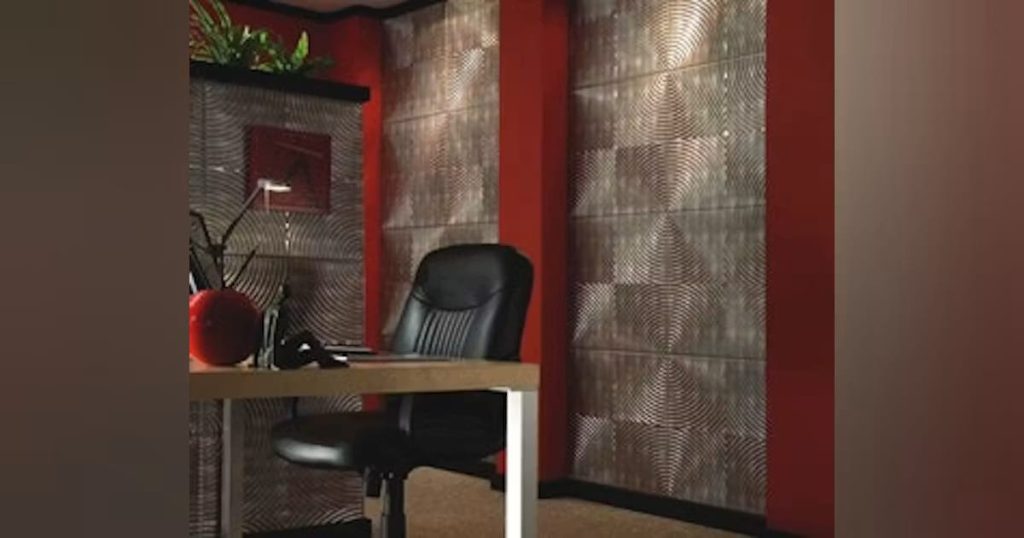
Healthcare facilities clean walls on a defined schedule using specified agents, and that regimen is set by infection-control policy rather than by the finish. A wall surface in a patient room or corridor will be wiped, sprayed, and scrubbed on a cycle that continues for the life of the installation. Selecting an MDC covering for these interiors means accounting for that cycle at the specification stage, before a pattern is chosen.
What Cleaning Protocols Involve
Healthcare cleaning is not occasional maintenance. Surfaces in clinical areas are disinfected between patients, after procedures, and on routine rounds. The agents used are chosen for efficacy against pathogens, and they are applied with contact time and mechanical action.
The agents in use vary by facility, and the contact time each requires is set by the disinfectant rather than by the crew. A surface specified without reference to that regimen will still be cleaned to it.
The wall surface absorbs three separate stresses in this process:
- Chemical contact from disinfectants and their contact time on the surface
- Mechanical action from wiping, brushing, or scrubbing
- Moisture exposure at seams and edges where liquid can collect
Each of these acts on a different part of the material. Chemical contact acts on the printed layer and the surface coating. Mechanical action acts on the surface and on the seams. Moisture acts at the perimeter and behind the material.
Scrub Rating and Surface Construction
The scrub rating measures how a wallcovering surface holds up under repeated cleaning with a brush or sponge. Commercial wallcoverings carry higher scrub ratings than residential papers, and the rating is a manufacturer-documented figure rather than an estimate.
Weight class correlates with construction. Type II wallcovering, at approximately 20 ounces per linear yard, is the class most commonly specified for commercial interiors, including healthcare corridors and patient areas. Type III, at approximately 33 ounces, is manufactured for high-impact environments such as hospital corridors and patient rooms where contact from carts and gurneys is part of daily operation.
Reading the scrub rating alongside the weight class gives a specifier the two figures that describe how a surface responds to a cleaning regimen. Neither figure alone answers the question, since weight describes construction and the scrub rating describes tested surface performance.
Seams, Moisture, and Permeability
Seams carry a disproportionate share of the risk in a cleaned environment. Liquid that reaches a seam edge can travel behind the material, and repeated cleaning at the same seam line concentrates mechanical stress in a narrow area.
Permeability rating, expressed in perms, describes how readily a wallcovering allows water vapor to pass through it. This figure is relevant where moisture is present behind or around the wall assembly, and it bears on mold and moisture risk. In humid climates and in below-grade applications, permeability becomes part of the specification conversation rather than a footnote.
Matching the Material to the Room
Cleaning intensity is not uniform across a healthcare facility. A patient room, a procedure area, an administrative corridor, and a waiting room are cleaned to different protocols. Specifying a single material across the entire building assumes a uniform demand that does not exist.
The practical approach is to identify which spaces are subject to which cleaning protocol, then confirm the scrub rating and durability class for each. A material specified for a patient room and one specified for a back-office corridor often receive different treatment.
Confirming the Data Before Specification
Manufacturer data sheets document the wallpaper’s scrub rating, weight, fire rating, and permeability figure. These are the numbers a plan reviewer, an infection-control lead, and a facility manager will each rely on for a different reason.
Verifying that data against the facility’s cleaning protocol, rather than against a general assumption about healthcare interiors, connects the specification to the building operations. Infection-control staff can supply the agents and frequencies in use, and facility managers can identify which areas fall under which protocol.
The cleaning schedule is a known quantity before installation begins, and the material can be selected against it.
Commercial Wall Decor is a trusted national supplier of MDC covering and other leading contract brands, carrying Type I, Type II, and Type III goods sourced from major manufacturers across the United States, Europe, and Japan. With a team trained to color-match designs and meet specifications, Commercial Wall Decor is a reliable resource for healthcare specifiers who need quality wallpaper with dependable delivery on a project schedule.