

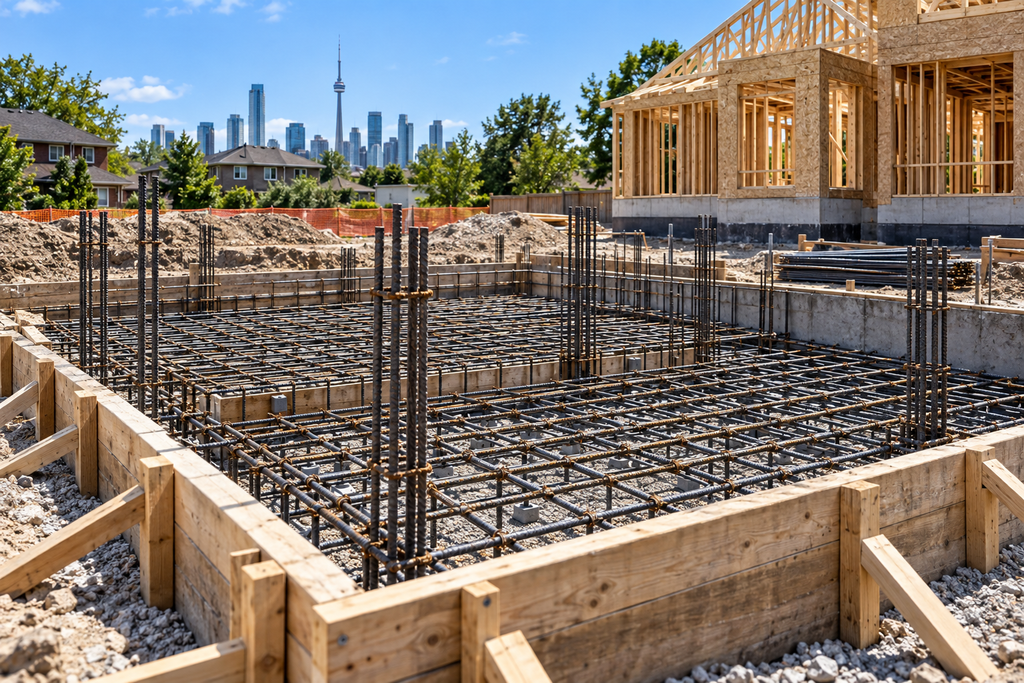
Rebar is one of those building materials that does its job largely out of sight. Once a foundation, footing, wall, or slab has been poured, the reinforcing steel inside the concrete disappears from view. That makes it easy to overlook during the early planning stages of a residential project.
For custom homes, additions, garages, major renovations, and other GTA building projects, reinforcement planning needs to happen well before the concrete trucks arrive. The required steel must be identified, fabricated where necessary, delivered, and installed according to the project specifications. Addressing these details early can help the concrete phase proceed according to plan.
Start With the Project’s Reinforcement Requirements
Concrete performs well under compression, but reinforcing steel is commonly incorporated where additional tensile strength and structural support are required. The reinforcement needed for a residential project depends on the design rather than a standard material list that applies to every foundation.
Foundation dimensions, structural loads, wall configurations, soil conditions, and other design considerations can affect the required reinforcing steel. The size, spacing, quantity, and placement of the bars should therefore come from the appropriate project drawings and specifications.
Homeowners managing a significant renovation or custom build should avoid estimating these requirements themselves. The project’s designer, engineer, or qualified contractor can clarify what is required and help translate the plans into an accurate material order.
This is especially important when sourcing rebar for concrete foundations. Ordering too early without confirmed specifications can result in incorrect materials, while leaving the order until the last minute can create scheduling problems.
Account for Fabrication Before Ordering
Rebar is not always delivered as straight lengths that are cut and adjusted entirely on the job site. Depending on the design, reinforcing steel may need to be cut or bent into particular shapes and dimensions before delivery.
That makes fabrication requirements an important part of residential rebar supply planning. A contractor reviewing an order should know not only how much material is needed, but also whether the drawings call for specific bar sizes, lengths, bends, or other fabricated pieces.
Clear information at this stage can also make installation more efficient. When reinforcement arrives prepared according to the project requirements, crews can organize and place the steel based on the construction drawings rather than dealing with avoidable material changes immediately before the pour.
For homeowners working with a general contractor, this part of the process may happen largely behind the scenes. Even so, it is useful to understand why reinforcement should be finalized alongside other structural details rather than treated as a basic commodity purchase.
Coordinate Availability and Delivery With Concrete Work
Material availability is another consideration, particularly when a project requires fabricated pieces or has a firm construction schedule. Contractors should confirm lead times rather than assuming every required bar size and configuration will be immediately available.
Delivery timing matters just as much. Rebar needs to arrive early enough for crews to place, tie, inspect, and make any necessary adjustments before concrete work begins. At the same time, delivering material far earlier than necessary can create storage and site-management issues, particularly on smaller residential lots in Toronto and surrounding municipalities.
The best timing depends on the project. A straightforward garage slab may involve different logistics than a custom home foundation with several wall sections, footings, and structural details.
Weather, excavation schedules, forming work, inspections, concrete bookings, and access for delivery vehicles can all affect the sequence. Reinforcement should therefore be considered part of the broader construction schedule rather than an isolated purchase.
Consider Local Supply and Site Logistics
Location can influence how easily GTA construction materials reach a residential site. Toronto projects may have restricted access, limited staging space, narrow residential streets, or other conditions that should be discussed before delivery.
Before sourcing material, contractors should be ready to provide accurate quantities and fabrication details while also confirming availability and expected delivery timing. These conversations are most useful before the concrete schedule becomes urgent.
For readers researching local reinforcing steel options, Ace Rebar provides information about its Toronto-area supply capabilities through its Rebar Supplier Toronto resource. The purpose of researching a supplier at this stage is to understand whether the required material, fabrication, and delivery arrangements can align with the project’s specifications and schedule.
Site access should also be considered. Knowing where the material can be unloaded, how it will be stored, and how installation crews will move it into position can prevent unnecessary handling once it arrives.
Treat Reinforcement as Part of the Concrete Plan
Successful concrete work depends on more than scheduling a pour. Formwork, reinforcement, inspections, site preparation, labour, and concrete delivery all need to come together in the correct sequence.
For homeowners, understanding this process can make conversations with builders and contractors more productive. It also provides context when construction appears to pause between excavation, forming, reinforcement installation, and the actual pour. Each stage prepares the structure for the next.
For builders and renovation contractors, early coordination reduces the chance that an overlooked material requirement will interfere with a tightly scheduled foundation or concrete project. Confirming specifications, fabrication needs, quantities, availability, and delivery arrangements before the pour date gives the project team time to address issues while options are still available.
Reinforcing steel may ultimately disappear inside the finished concrete, but the planning behind it should never be an afterthought. On residential projects across Toronto and the GTA, treating reinforcement as an integral part of the concrete schedule helps create a more organized path from structural drawings to the completed foundation.
