

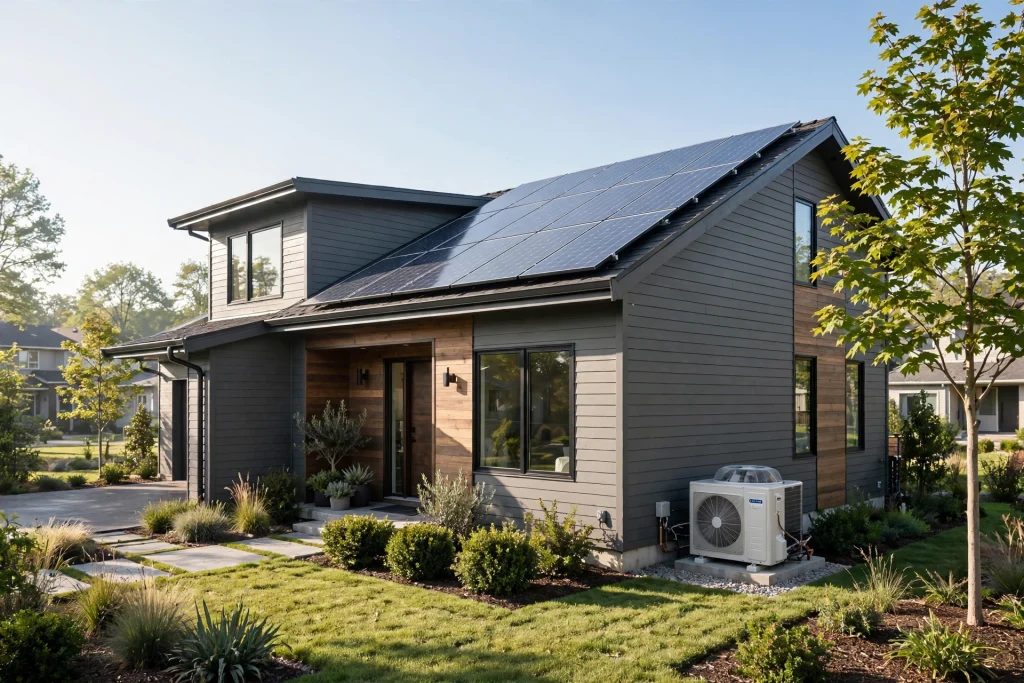
For decades, the formula for heating a home was simple: burn something. Gas, oil or wood went in, warmth came out. In 2026, that formula is being rewritten. Heat pumps — devices that move heat rather than make it — are now outselling traditional furnaces in many markets, and homeowners who once viewed them as a niche eco-gadget are treating them as the default upgrade. Here is why the shift is happening, what it costs, and whether it makes sense for your home.
How a heat pump actually works
A heat pump works like a refrigerator in reverse. Instead of burning fuel, it uses electricity to extract heat from the outdoor air (or the ground) and transfer it indoors. Because it moves heat rather than generating it, a modern unit can deliver three to four units of heat for every unit of electricity it consumes — an efficiency no boiler can match. In summer, the process reverses and the same unit cools your home, replacing a separate air conditioner.
The US Department of Energy’s Energy Saver guide to heat pump systems explains the main types — air-source, ground-source and ductless mini-splits — and where each performs best. The International Energy Agency, meanwhile, tracks the technology’s global rise in its analysis of heat pumps, describing them as a central tool for cutting emissions from buildings.
The real costs — and the real savings
Installed costs vary widely by home size and system type. A ductless mini-split serving a few rooms can start in the low thousands, while a whole-home ducted system or a ground-source installation can run well into five figures. What has changed the maths in 2026 is the combination of falling equipment prices, rising gas prices and generous incentives. Many regions now offer rebates, tax credits or low-interest loans that can cut the upfront cost by a third or more, and installers in competitive markets have sharpened their prices considerably.
Running costs depend on your electricity and gas prices, but households replacing oil or electric resistance heating typically see the largest savings — often 30 to 50 per cent on heating bills. Homes switching from cheap natural gas save less on bills but still gain summer cooling and a large cut in carbon emissions. If you are planning a wider renovation at the same time — perhaps reworking a kitchen layout like the projects in our guide to how exposed beams can transform your kitchen design — it is worth coordinating the work, since insulation and duct improvements are far cheaper when walls are already open.
But what about cold winters?
The most common objection — “heat pumps don’t work in the cold” — is increasingly out of date. Cold-climate models now operate efficiently at temperatures well below freezing, and the proof is in adoption patterns: some of the highest heat-pump penetration rates in the world are in Norway, Sweden and Finland. Modern variable-speed units, paired with decent insulation and a backup heat source for the very coldest nights in extreme climates, keep homes comfortable year-round.
Is it right for your home?
A heat pump makes the most sense if your existing system is nearing the end of its life, your home is reasonably insulated, and local incentives bring the payback period into single digits. It makes less sense if you installed a new high-efficiency boiler last year or plan to move within a couple of years. Either way, get at least three quotes, insist on a proper heat-load calculation rather than a rule-of-thumb sizing, and ask about noise levels and defrost cycles.
The direction of travel is clear. As grids get cleaner, every year a heat pump runs, it gets greener — something no gas boiler can claim. For a growing number of homeowners in 2026, the question is no longer whether to switch, but when.