

For people with type 2 diabetes, managing blood sugar has traditionally meant pricking a finger a few times a day and hoping the hours between tests behaved. Continuous glucose monitors (CGMs) replace that guesswork with a reading every few minutes — and the evidence for the benefit is now striking: studies show CGM users with type 2 diabetes spend around five more hours a day in their healthy blood-sugar range than people relying on finger-prick testing alone.
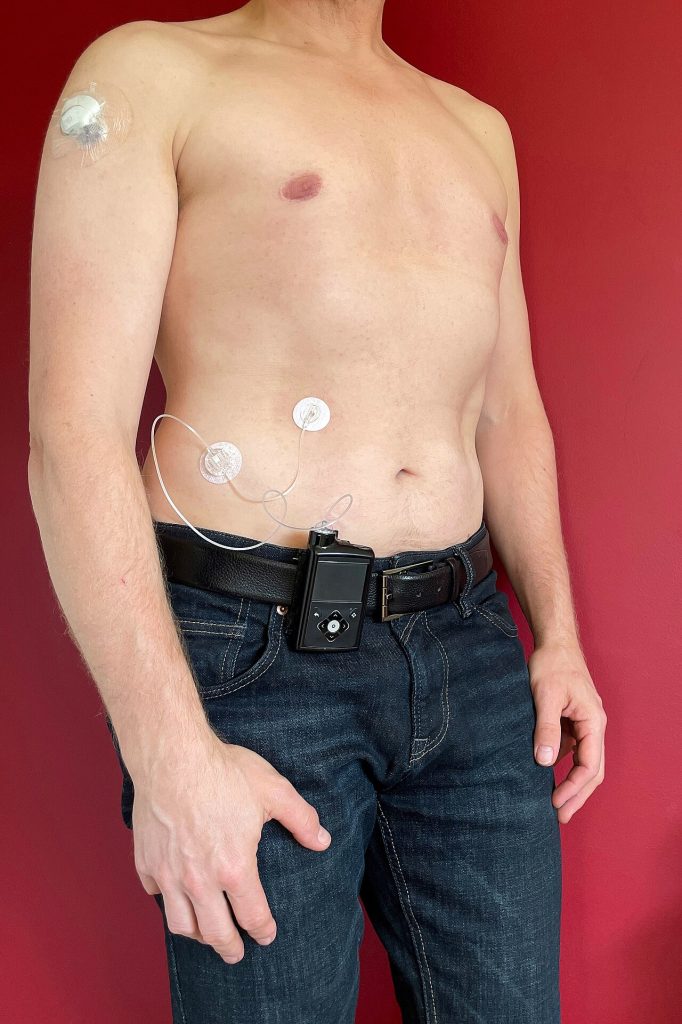
A CGM is a small sensor, usually worn on the upper arm, that measures glucose in the fluid beneath the skin and transmits it to a phone or reader. The headline metric is ‘time in range’ — the share of the day spent between roughly 70 and 180 mg/dL — and it captures what single blood tests cannot: the overnight lows, the post-lunch spikes, the slow afternoon climbs. Gaining five hours a day inside that range is not a rounding error. Sustained over years, time in range is associated with lower risk of the complications that make diabetes dangerous: eye damage, kidney disease, nerve pain and cardiovascular events. An overview of glucose monitoring technology is published by the National Institute of Diabetes and Digestive and Kidney Diseases.
Why Seeing the Curve Changes Behaviour
The most interesting finding in CGM research is not pharmacological but behavioural. People change what they do when they can see what food, sleep, stress and exercise actually do to their own glucose — not a population average, but their body, today. A breakfast that looked virtuous reveals itself as a spike; a ten-minute walk after dinner visibly flattens the curve. Clinicians describe patients making durable changes they had resisted for years under general advice, because the feedback is immediate, personal and undeniable. In that sense the sensor is as much a teaching device as a measuring one.
Medication decisions improve too. With a continuous record rather than a handful of snapshots, clinicians can time doses, spot dangerous overnight lows and judge whether a drug is working within days instead of waiting three months for an HbA1c result. For patients on insulin — historically the main CGM group — that visibility has long been standard; the new evidence extends the case to the far larger population managing type 2 diabetes with oral medication and lifestyle measures.
The Adoption Question: Cost and Coverage
If the benefit is so clear, why isn’t every person with type 2 diabetes wearing a sensor? Money, mostly. Sensors are consumables, replaced every ten to fourteen days, and insurance coverage has lagged the evidence, often restricting CGMs to intensive insulin users. That calculus is shifting as prices fall, as studies quantify avoided complications — which are vastly more expensive than sensors — and as manufacturers market directly to the type 2 majority. Our home and health coverage has watched the same pattern with other home-health technology: a hospital-grade tool becomes a consumer device, evidence accumulates in real-world use, and coverage follows the data with a delay measured in years.
There are honest caveats. A stream of numbers can feed anxiety in some patients; sensors can read imperfectly in the first hours of wear; and five extra hours in range, while valuable, does not repeal the fundamentals of diet, activity and medication adherence. Diabetes educators argue the technology works best when someone helps the patient interpret it at the start.
A New Default for a Common Disease
Type 2 diabetes affects hundreds of millions of people worldwide, most of them managing it at home, largely unseen by the health system between appointments. A technology that quietly adds five healthier hours to every day, and teaches its wearer how to add more, is close to the ideal of home medicine: continuous, personal and preventive. Guidance for people living with diabetes is maintained by the American Diabetes Association. The remaining question is no longer whether CGMs work for type 2 diabetes — the evidence increasingly says they do — but how quickly health systems will decide that everyone with the condition deserves to see their own curve.