

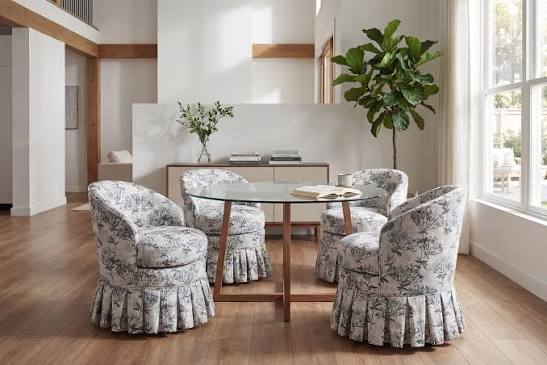
A dining chair really only has one crucial task – get used daily without a murmur. Not just once per annum at Christmas dinner time. Daily, for breakfast, studying, video conferencing on your laptop, and evening meals. That’s a hard job for a piece of furniture, and most people buy a dining chair based on how it looks in a showroom photo, not how it’ll feel after forty-five minutes of sitting. Comfort, fit, and every-day wear really tug in different ways – finding that perfect balance demands much more consideration than many shoppers actually give it.
Comfort Starts With Seat Depth, Not Padding
Here is the very first sentence that just about everyone gets wrong – more padding equals more comfort.It doesn’t. Seat depth matters more. A standard dining chair seat depth in Australia generally measures between 40 and 50 cm – and if it’s too shallow, your thighs will lack support halfway through a meal. If it’s too deep, shorter people won’t be able to reach the backrest and end up sitting on the edge – almost as though ready to sprint.
Padding only fixes surface-level discomfort. It can’t fix bad proportions. A thin foam seat on a well-shaped frame beats a thick cushion on a badly shaped one, every time.
Shape Changes With How You Actually Sit
Dining Chair Shapes and What They’re Good At
| Chair Shape | Best For | Watch Out For |
| Armless side chair | Small spaces, tight table spacing | Less back support for long sits |
| Armchair | Head of table, longer meals | Needs extra width, check armrest clears table |
| Low-back chair | Minimal look, open plan rooms | Less support for tall adults |
| High-back chair | Formal dining, longer sitting | Can look heavy in small rooms |
Most Australian dining rooms end up with a mix. Armless chairs down the sides, armchairs at each end. It’s not a style rule someone invented. It solves a real spacing problem, since the standard allowance is 55 to 60 cm per seat along a table’s length, and armrests eat into that fast.
Your dining chair should really reflect how your house actually uses the table itself. A family with young children will need chairs very easy to clean – and won’t tip over so easily. A couple working from the dining table every day really requires a chair offering good back support – more than just an attractive shape.
Everyday Use Is the Real Test
Showroom chairs get sat in for thirty seconds. Real chairs get sat in for years. That’s the test that actually matters, and it’s the one most buyers skip entirely.
Before you commit to any dining chair, run through this short checklist.
- Sit in it for at least five minutes, not five seconds
- Check if your feet rest flat on the floor, not dangling or cramped
- Test the chair with the table, not alone in the showroom
- Ask how the frame handles weight, wobble is a warning sign early on
- Check the warranty, a short warranty on frame joints is a quiet red flag
A well-made chair is built to handle that daily pressure, with joinery and frame weight that holds up to years of pulling the chair in and out, not just one dinner party.
One more thing worth knowing. Industry data on furniture durability shows that frame joinery, not fabric, is the most common failure point in dining chairs under regular household use. Fabric fades or stains and gets noticed. A loose joint fails quietly until the chair wobbles or cracks. If you’re choosing between two chairs at a similar price, check the joinery before you check the fabric swatch. That’s the part that decides whether the chair lasts five years or fifteen.