

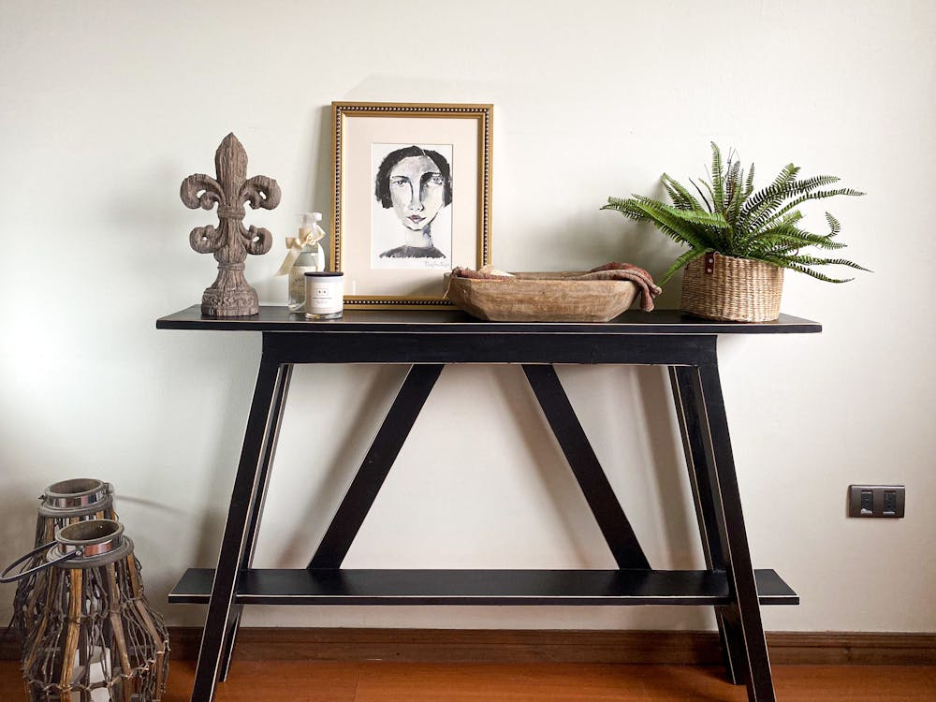
The entryway sets the mood long before anyone reaches the living room, and a console table often becomes the piece that gives that first corner a clear purpose. It doesn’t need a lot of space, works with almost any layout, and instantly adds structure to a home.
For many homes in the UAE, where hallways and entrances can be narrow, a console table offers both convenience and character without getting in the way.
What a Console Table Really Is
It’s simply a long, narrow table designed to sit flat against a wall. The point is not depth but convenience. You’re not meant to load it with bulky things. It’s there for keys, lamps, a few photos, or something decorative.
Some console tables have drawers, some don’t. Both work. Their slim profile makes them usable in spots where a regular table would be awkward.
Getting the Size Right
Most console tables share a similar height. They typically range between 28 and 36 inches. This range feels natural to stand beside, and it doesn’t block the eye. Lengths vary a lot more.
Short pieces suit tight entryways in apartments. Longer tables stretch nicely along wide walls or villa corridors. Depth stays modest. It is usually under 18 inches, and often around 10 or 12 inches. This allows people to walk past without shifting sideways.
The only real rule with spacing is simple: if you can move through the area without adjusting your step, the size is fine.
Different Styles You’ll See
There’s no single look that defines the console table. Some pieces are modern and clean, with straight edges and calm colors. These are easy to pair with almost any décor.
Wood versions lean warmer and bring a more lived-in vibe. Metal frames give a structured, sharper look. Rustic pieces with worn edges soften a hallway. Glass tops feel light, almost floating, which helps smaller UAE apartments feel less crowded.
Stone or marble throws in an elegant, weightier note. And then there are mixed pieces: wood with metal, stone with wood, and so on. Those are popular because they work with different interiors without clashing.
Where It Actually Works Best
The entryway is the obvious home, and for good reason. That’s where you need a surface the most. You can use it to set your keys on, drop the mail, or simply a spot to place a piece of décor. This placement will make the entrance feel intentional. Hanging a mirror above it instantly makes the space feel complete.
Living rooms use console tables behind sofas or along quiet walls. In dining rooms, they turn into serving counters during gatherings. Home offices treat them as storage for stationery, chargers, and books. Bedrooms use them as light dressing zones or somewhere to keep personal items without creating clutter.
Styling It Without Overthinking
A few pieces go a long way. A plant or a vase for height, a small decorative object, maybe a bowl or tray, so that daily items don’t scatter.
Leaving open surface space is important. The table looks better when it isn’t covered edge-to-edge. It’s not meant to act like storage furniture. It’s more like a finishing touch that helps the home feel pulled together.
Why It Makes a Difference
When a console table sits in the entry, the whole space feels more grounded. It organizes the arrival area, adds personality, and fills a corner that normally stays empty. Once it’s in place, it’s hard to imagine the entry without it.
The right size, a style that blends naturally with your home, and a simple arrangement on top, that’s all it takes to make the first step inside your home feel thoughtful rather than unfinished.
