

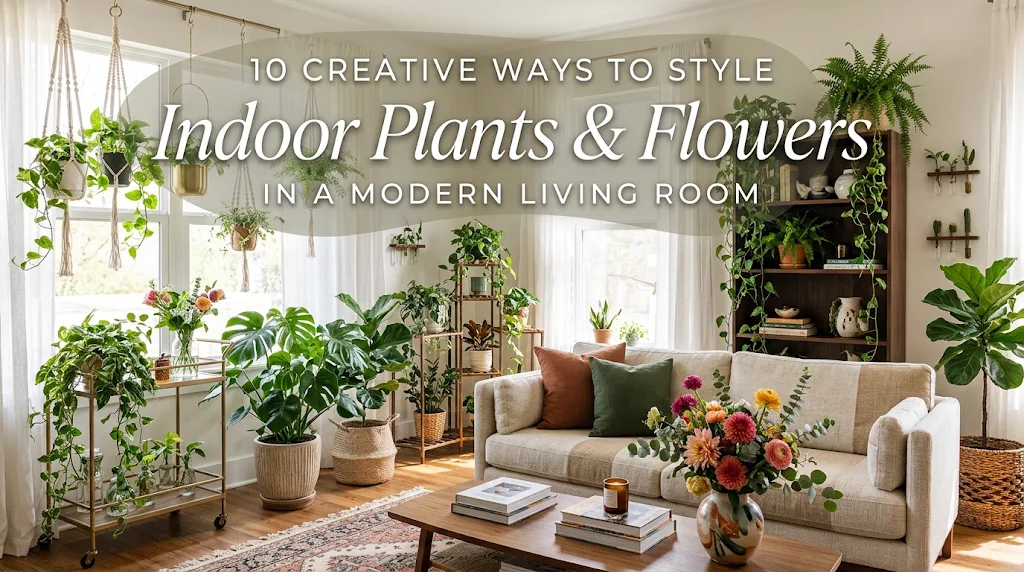
10 Creative Ways to Style Indoor Plants and Flowers in a Modern Living Room
A modern living room does not need expensive furniture or lots of decorations to feel beautiful. Sometimes, a few well-placed indoor plants and fresh flowers can make the biggest difference.
Plants add natural colour and texture, while fresh flowers bring seasonal colour and a softer feel to the room. The secret is knowing where to place them, which sizes to choose and how to combine different shapes without making the space look crowded.
Whether you have a large living room or a small flat, there are simple ways to create an attractive floral display.
Here are 10 practical ideas you can recreate at home, with suggestions for suitable plants, flowers, pots and arrangements.
1. Create a Statement Corner with One Large Indoor Plant
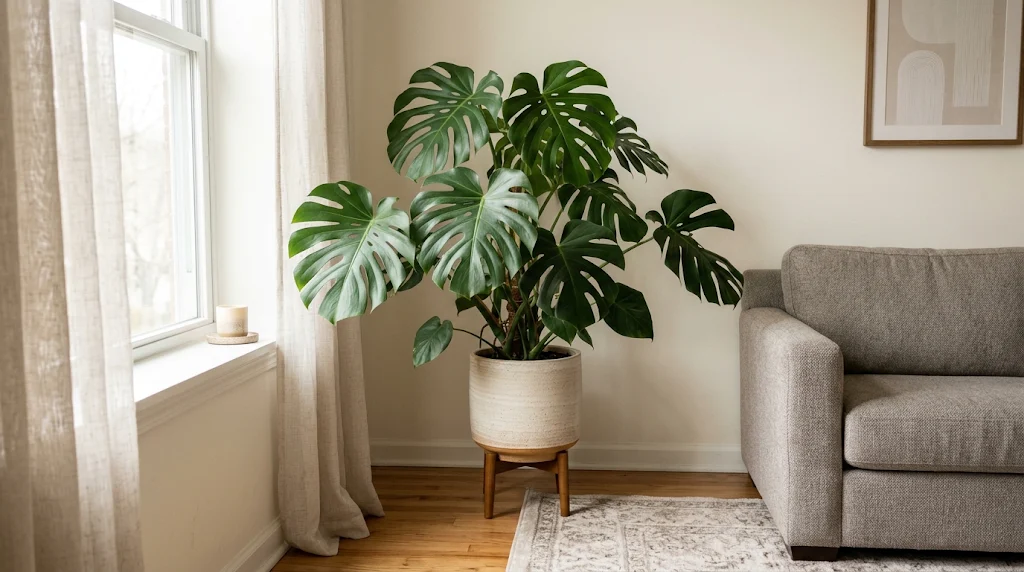
Best for: Empty corners, spaces beside sofas and large windows.
An empty living room corner can make the whole space feel unfinished. A tall indoor plant is one of the easiest ways to make that area look more complete.
Choose a plant with a strong shape and attractive leaves, such as a rubber plant, areca palm or monstera. Place it in a decorative planter that matches your furniture and room colours.
How to recreate this look:
- Find an empty corner with enough natural light.
- Choose a plant that suits the available light and space.
- Use a medium or large planter that complements your furniture.
- Place the plant slightly away from the wall so its leaves have room to spread.
- Keep the surrounding area simple.
For a balanced appearance, avoid placing several large plants together in a small corner. One healthy statement plant can be more effective than a crowded collection.
2. Arrange Three Plants at Different Heights
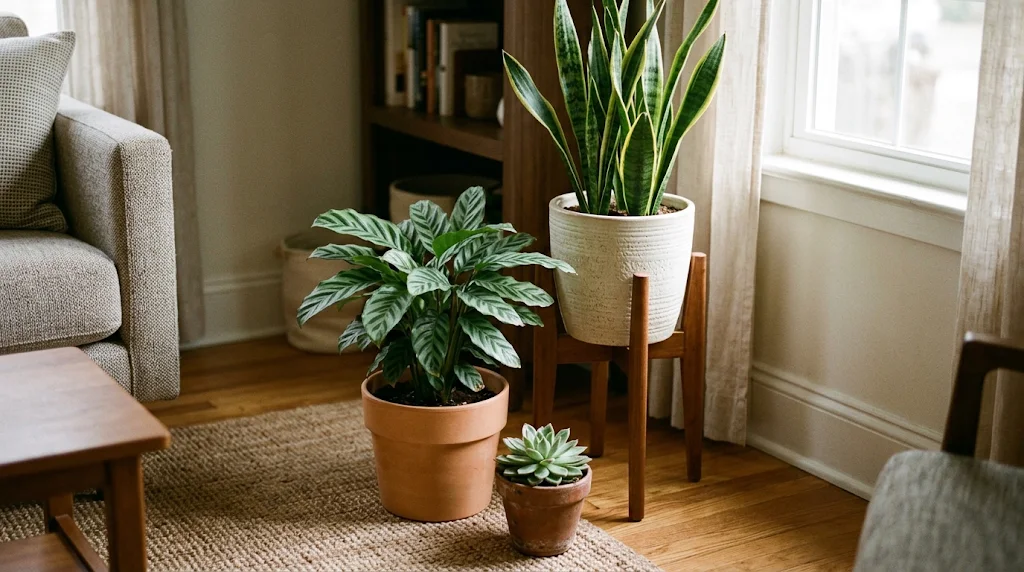
Best for: Empty spaces beside furniture, shelves and window areas.
A group of plants at different heights creates a more interesting display than several identical pots placed in a straight line.
The easiest way to achieve this is to combine one tall plant, one medium-sized plant and one smaller plant.
For example, place a medium-sized leafy plant on the floor, raise another plant on a wooden stand and position a small succulent on a nearby table.
How to recreate this look:
- Choose three plants with different leaf shapes.
- Select pots in similar colours or materials.
- Place the tallest plant at the back.
- Position the medium plant slightly forward.
- Add the smallest plant at the front.
Try terracotta, white ceramic or natural woven planters. Keeping the pot colours connected helps the arrangement look organised.
Remember that plants grouped together should have similar light and watering needs. Their appearance matters, but their growing conditions matter too.
3. Decorate Your Coffee Table with a Fresh Flower Vase
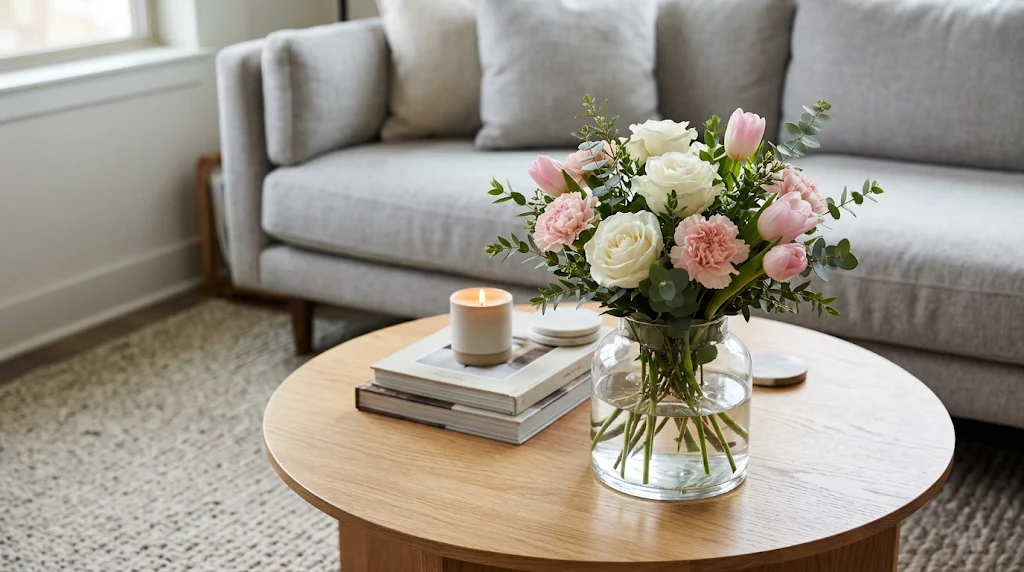
Best for: Coffee tables and central seating areas.
A fresh flower arrangement can become the main decorative feature of a coffee table. It adds colour without taking up too much space.
For a modern living room, choose flowers that work with your existing colour scheme. White roses, pink carnations, tulips and seasonal mixed flowers can create a simple and elegant display.
A clear glass vase is a good choice if you want the flowers and their natural stems to remain visible. A ceramic vase can create a more solid decorative feature.
How to recreate this look:
- Choose a vase that does not block people’s view across the table.
- Trim the flower stems to different lengths.
- Remove leaves that would sit below the waterline.
- Arrange the larger flowers first.
- Add smaller flowers and foliage to fill the gaps.
- Leave enough space around the vase for everyday items.
For a small coffee table, use a compact arrangement rather than a large bouquet.
Fresh flowers need clean water and regular care. Remove fading blooms and refresh the water according to the flowers’ needs.
4. Add Trailing Plants to Floating Shelves
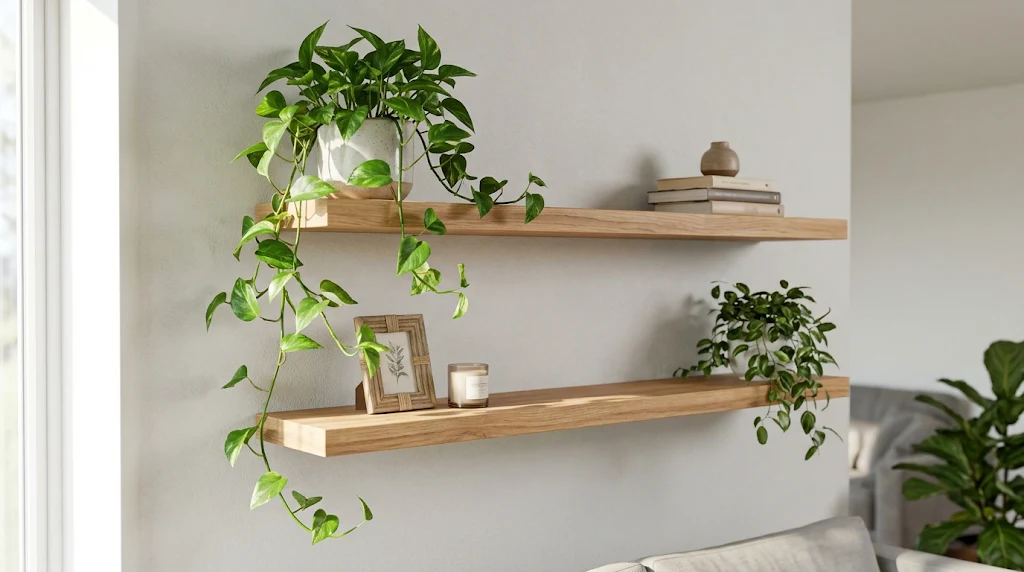
Best for: Small living rooms and unused wall space.
Floating shelves are useful for displaying small decorative items without using valuable floor space. Adding a trailing plant can make them look softer and more natural.
Plants such as pothos and heartleaf philodendron are popular choices because their stems can grow downwards over the edge of a shelf.
How to recreate this look:
- Choose a shelf that receives suitable natural light.
- Place a trailing plant towards one side.
- Add one or two smaller decorative objects.
- Allow the stems to hang naturally.
- Keep enough space between the plant and other objects.
Do not fill every shelf with plants. A small amount of empty space helps each item stand out.
Also, make sure the shelf can safely support the weight of the planter, particularly after watering.
5. Combine Flowers and Greenery in One Arrangement
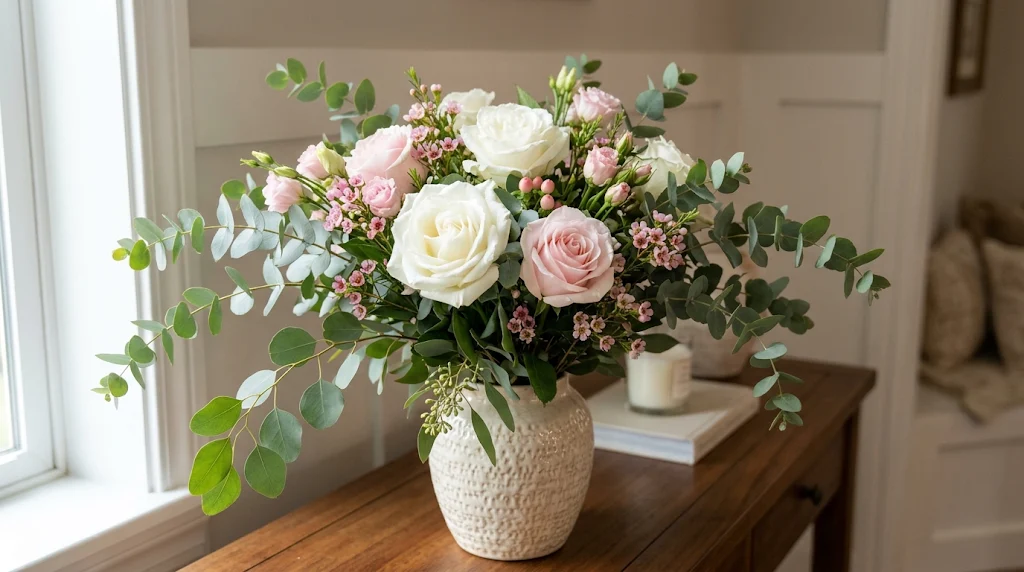
Best for: Side tables, console tables and decorative corners.
If you want something more colourful than a simple green plant display, combine fresh flowers with decorative foliage.
The combination of different leaf shapes and flower colours creates a natural-looking arrangement. Eucalyptus, for example, has a soft green appearance that works well with many flower colours.
Try combining white roses, pink flowers and eucalyptus for a gentle, balanced display. You can also use seasonal flowers to create different looks throughout the year.
How to recreate this look:
- Choose two or three complementary flower colours.
- Select greenery with a different leaf shape.
- Place the foliage around the outside of the arrangement.
- Add the larger flowers towards the centre.
- Use smaller flowers to fill any visible gaps.
- Place everything in a clean vase with fresh water.
Avoid mixing too many strong colours in one small arrangement. Two main flower colours with green foliage are often enough.
For additional foliage inspiration, explore fresh eucalyptus flowers and choose a style that suits your preferred arrangement.
6. Use a Large Floor Vase Beside Your Sofa
Best for: Empty spaces beside sofas and large furniture.
A floor vase can add height and character without requiring another piece of furniture.
Choose a tall vase with a simple shape and place it beside a sofa, armchair or console table. You can fill it with decorative branches, dried flowers or suitable long-stemmed foliage.
For a modern appearance, neutral colours such as white, beige, charcoal and soft brown work particularly well.
How to recreate this look:
- Choose a vase that is tall enough to stand out beside the furniture.
- Select branches or decorative stems that fit its opening.
- Arrange the tallest stems towards the back.
- Spread the remaining stems naturally.
- Leave enough space around the vase.
Make sure the vase has a stable base and does not obstruct walking areas.
This idea works especially well in rooms where a large decorative object would look better than several small ornaments.
7. Bring Nature to Your Windowsill
Best for: Bright windows and small living rooms.
A windowsill is a useful place to display smaller plants and seasonal flowers. It can become a simple decorative feature without taking up space elsewhere.
You can combine compact succulents, small foliage plants or flowering plants in pots of different sizes.
For a more organised appearance, use pots with similar finishes. White ceramic pots, for example, can look particularly attractive against a bright window.
How to recreate this look:
- Check how much direct sunlight reaches the windowsill.
- Choose plants that suit those conditions.
- Place taller pots towards the ends.
- Position smaller pots between them.
- Keep the arrangement low enough to allow natural light into the room.
Be careful with strong direct sunlight through glass, as it can damage some houseplants. Also, avoid placing delicate plants directly above hot radiators.
The best arrangement is one that looks attractive while allowing every plant to grow properly.
8. Create a Minimalist Display with One Beautiful Flower Arrangement
Best for: Modern, minimalist and neutral living rooms.
If you prefer a clean and simple interior, you do not need lots of plants and decorations.
One carefully chosen flower arrangement can create a beautiful focal point.
Choose flowers in one colour family, such as white and cream, soft pink or pale yellow. Place them in a simple vase on a console table or sideboard.
The key is to give the arrangement enough space so it does not compete with other decorations.
How to recreate this look:
- Choose a vase with a simple design.
- Select flowers in two closely related shades.
- Arrange them at slightly different heights.
- Remove unnecessary leaves and damaged petals.
- Keep the surrounding surface mostly clear.
This style is particularly effective in rooms with neutral walls, simple furniture and natural materials.
It also makes it easier to change your display when new seasonal flowers become available.
[IMAGE 8: Minimalist white and cream flower arrangement on a modern sideboard]
9. Mix Indoor Plants with Decorative Baskets
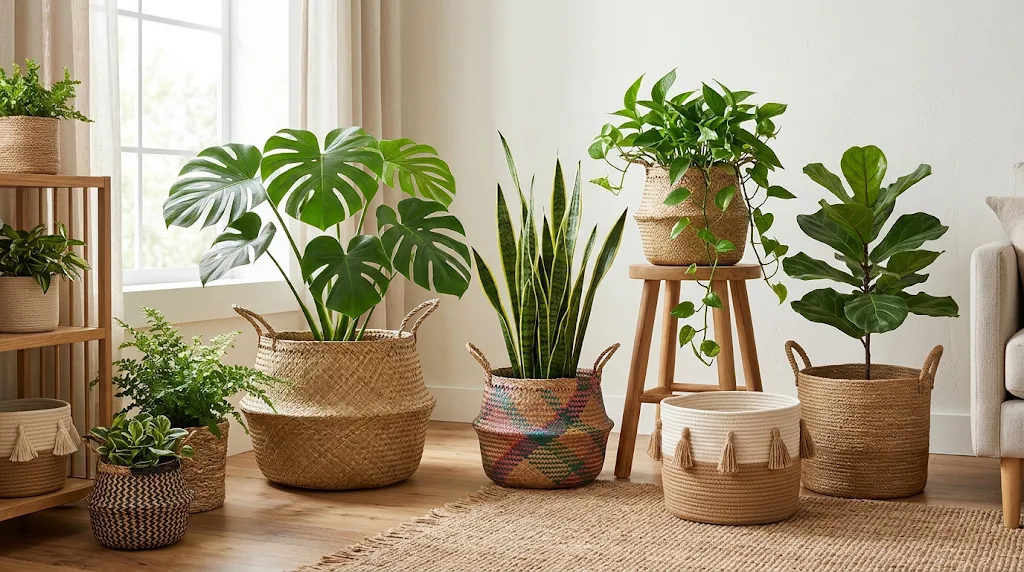
Best for: Relaxed, natural and contemporary interiors.
Decorative baskets can make ordinary plant pots look more attractive. They introduce natural textures that work well with wooden furniture, soft rugs and neutral colours.
Choose a basket that is slightly larger than the plant’s existing pot. Place the original pot inside it rather than planting directly into a basket that is not designed to hold soil and water.
How to recreate this look:
- Choose a plant with attractive foliage.
- Find a woven basket that fits its existing pot.
- Check that the basket remains dry and protected from water.
- Place the plant beside a sofa or in an unused corner.
- Add one smaller plant nearby if there is enough room.
Natural woven baskets, seagrass finishes and light wooden plant stands can all work well.
Remember to remove the plant from its decorative cover when watering if necessary. Never allow excess water to collect inside the basket, as this can damage the roots and the basket itself.
10. Change Your Flower Display with the Seasons
Best for: Anyone who enjoys refreshing their living room throughout the year.
Seasonal flowers are a simple way to give your living room a different appearance without changing your furniture or overall decoration.
Instead of keeping the same flower colours throughout the year, choose blooms that reflect the season.
For example:
- Spring: Tulips, daffodils and hyacinths bring fresh seasonal colour.
- Summer: Sunflowers, colourful roses and daisies create a brighter display.
- Autumn: Warm orange, yellow and deep red tones create a cosy atmosphere.
- Winter: White flowers, seasonal foliage and simple greenery offer a softer look.
How to recreate this look:
- Choose a seasonal colour palette.
- Select flowers that are suitable for indoor arrangements.
- Use a vase that complements the flower colours.
- Remove damaged leaves and petals.
- Change the arrangement when the flowers begin to fade.
You do not need to replace every decoration each season. Changing the flowers and a few small accessories can be enough to refresh the entire room.
How to Choose the Right Plants and Flowers for Your Living Room
The best arrangement is not always the one with the most expensive flowers or the largest plants. It is the one that suits your room, available light and daily routine.
Consider these points before choosing your display:
| Your living room | What to choose |
| Small living room | Compact plants and small vases |
| Large living room | One statement plant and layered displays |
| Minimalist interior | Simple pots and one-colour flower arrangements |
| Natural interior | Green foliage and woven baskets |
| Bright windows | Plants suited to the available sunlight |
| Low-light areas | Suitable shade-tolerant plants, with some daylight |
One important point: no living plant can thrive in complete darkness. Always check the light requirements before choosing a location. The Royal Horticultural Society also recommends considering light, temperature, water and humidity when positioning houseplants.
You can read its houseplant growing advice before choosing plants for different parts of your home.
How to Keep Indoor Plants and Fresh Flowers Looking Beautiful
A beautiful display needs a little regular attention. Here are some simple habits that help.
For indoor plants:
- Check the soil before watering.
- Follow the watering requirements of each plant.
- Remove damaged or yellow leaves.
- Give plants suitable natural light.
- Clean dusty leaves when needed.
- Check for pests regularly.
For fresh flowers:
- Use a clean vase.
- Add fresh water and suitable flower food where provided.
- Remove leaves below the waterline.
- Trim stems when necessary.
- Keep flowers away from direct heat and strong sunlight.
- Remove fading blooms promptly.
If you have cats or dogs, check the safety of every plant and flower before bringing it home. Some popular flowers and houseplants can be harmful to pets. Lilies from the Lilium and Hemerocallis groups are particularly dangerous to cats, so avoid bringing them into a home with cats.
Frequently Asked Questions
1. How do I decorate my living room with indoor plants?
Start with one larger plant in an empty corner. Add smaller plants to shelves, side tables or windowsills. Use different heights and similar pot colours to create a balanced appearance. Avoid overcrowding the room.
2. Which indoor plants look best in a modern living room?
Monstera, rubber plants, areca palms, pothos and snake plants are popular choices. Select a plant according to the available light, room temperature and space rather than choosing it only for appearance.
3. Where should I place flowers in my living room?
Coffee tables, sideboards, console tables and windowside tables are suitable locations. Choose a vase that fits the surface and does not block movement or people’s view.
4. How many plants should I have in my living room?
There is no fixed number. A small living room may look attractive with two or three well-placed plants, while a larger room can accommodate more. Focus on balance, suitable light and enough space for each plant.
5. How can I make a small living room look greener without taking up floor space?
Use floating shelves, windowsills, hanging planters and compact tabletop plants. Trailing plants are especially useful because they add greenery without requiring additional floor space.
6. Can I mix fresh flowers and indoor plants in the same room?
Yes. In fact, combining the two creates a more varied display. Use indoor plants for lasting greenery and fresh flowers for seasonal colour. Keep cut flowers in their own water-filled vases rather than placing their stems in plant pots.
7. What colours of flowers look best in a modern living room?
White, cream, blush pink and soft green work well with neutral interiors. If your room has darker furniture or colourful accessories, you can choose brighter flowers to create contrast.
8. How can I decorate my living room with flowers on a budget?
Start with one small flower arrangement in a vase you already own. Use seasonal flowers, reuse suitable decorative containers and add foliage to make a smaller arrangement look fuller. You do not need to decorate every surface.
Final Thoughts
Styling your living room with indoor plants and fresh flowers is about finding the right balance between natural beauty and everyday practicality.
A statement plant can transform an empty corner, a small vase can brighten a coffee table, and trailing greenery can make a plain shelf feel more inviting.
Start with one area of your room rather than trying to change everything at once. Choose plants that suit your available light, select flowers that complement your interior and leave enough space for each arrangement to stand out.
With a few thoughtful choices, you can create a living room that feels more welcoming, colourful and connected to nature.
