

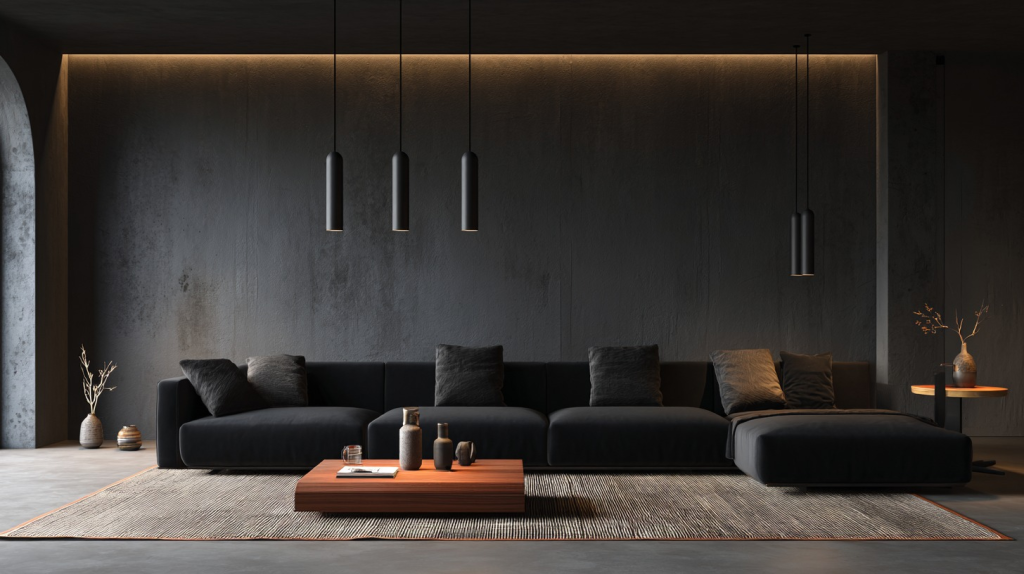
Dark modern minimalism sits at an interesting intersection. It’s clean but not stark. Restrained, but never cold. The spaces feel deliberate, even confident, without ever raising their voice. There’s no reliance on bright color or decorative noise here. Just proportion, shadow, and the quiet sense that every choice was made on purpose.
This style quietly challenges the idea that minimalism has to feel light or airy. Darker tones, charcoal, deep brown, matte black, muted navy, bring weight and presence when they’re handled correctly. Paired with modern forms and uncluttered layouts, those colors create rooms that feel settled. Calm. Finished.
And when it fails, it fails loudly. Usually because everything goes dark at once with no contrast, no texture, and no pause.
The Concept of Dark Modern Minimalism
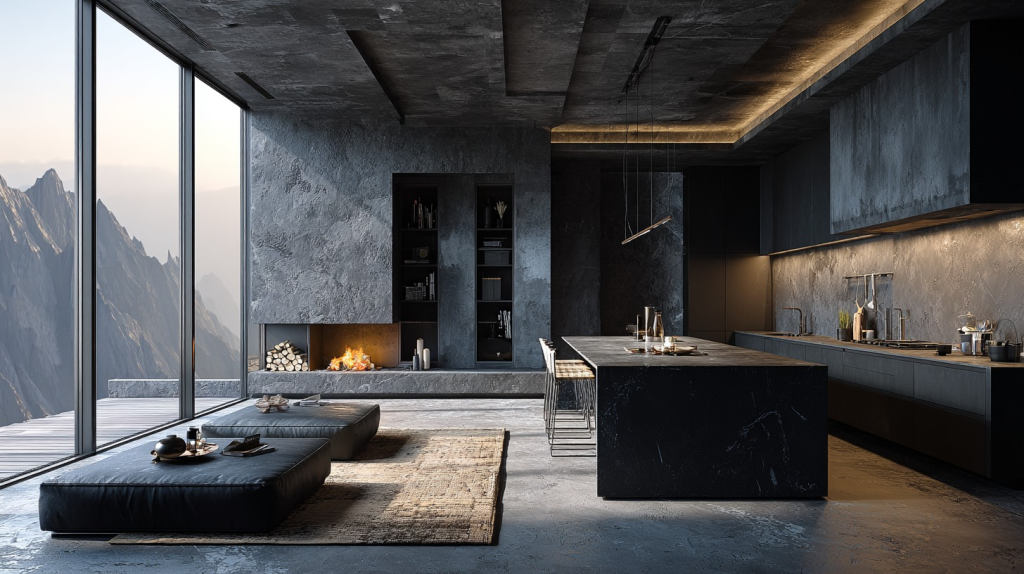
Minimalism, at its core, is about subtraction. Less furniture. Fewer distractions. Only what earns its place. Dark modern minimalism follows the same rules, but trades bright whites for deeper, more grounded tones. Nothing is ornamental. Everything carries intent.
Furniture stays low and composed. Profiles are clean. Surfaces are smooth. Shapes are simple enough that they don’t compete with one another. Dark backdrops help with this. They let materials and lighting do the talking instead of decor.
Dark modern interior design also changes how a room behaves. Darker environments pull focus inward. They create intimacy almost automatically. Texture becomes more noticeable. Light feels more intentional. The room slows you down, whether you planned for it or not.
Where people get tripped up is assuming darkness alone creates mood. It doesn’t. Poorly chosen dark rooms feel flat, heavy, or unfinished. The difference is restraint and contrast.
Choosing the Right Color Palette
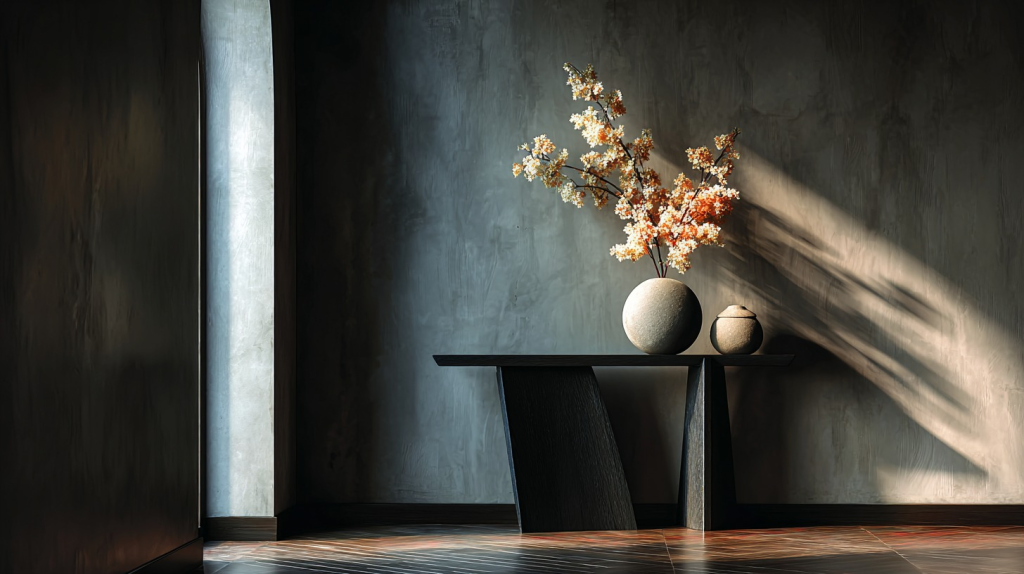
Color does most of the heavy lifting here. Walls often live in the darker end of the neutral spectrum, charcoal gray, espresso, soft black. These shades anchor the room and immediately establish structure.
But darkness isn’t the goal. Balance is. Without it, the room collapses inward. That’s where warmer materials come in. Natural wood. Leather. Stone with variation and movement. These elements keep the palette from feeling severe or one-note.
One common mistake is going too dark, too fast. Dark walls, dark floors, dark furniture, all at once. It looks dramatic in photos and exhausting in real life. In my experience, one primary dark surface paired with warmer or lighter supporting elements works far better.
If you’re unsure whether a color belongs, ask one question: does it add contrast or depth? If it doesn’t, it probably isn’t pulling its weight.
Furniture That Reflects Simplicity
Furniture in dark modern minimalist spaces should feel grounded, not decorative. Clean lines matter more than detail. Solid forms matter more than novelty. Upholstery tends toward materials that age gracefully, wool, linen, dark leather. Matte finishes almost always outperform glossy ones here.
One thing I’ve found over time is that darker rooms are less forgiving of cheap furniture. Poor proportions show faster. Thin materials feel thinner. Good lighting can’t save bad scale.
Spacing does as much work as the furniture itself. Every piece needs room to exist. Negative space isn’t an absence, it’s part of the composition. Even darker rooms feel open when nothing is crowding for attention.
If a piece doesn’t add function, material contrast, or visual weight, it probably doesn’t stay.
The Importance of Lighting
Lighting is where dark modern minimalism either succeeds quietly or fails completely. Dark surfaces absorb light, so a single overhead fixture rarely works. Layering isn’t optional here.
Ambient lighting sets the baseline. Task lighting handles function. Accent lighting adds depth and direction. Warm temperatures are almost always the right choice. They soften hard edges and prevent dark finishes from feeling harsh.
A common mistake is under-lighting dark rooms to preserve mood. The result is often dull, not atmospheric. The goal isn’t darkness. It’s control.
Floor lamps, wall sconces, recessed lighting, these elements stay understated and architectural. When lighting is done right, you don’t notice the fixtures first. You notice how comfortable the room feels at night.
Texture Over Decoration
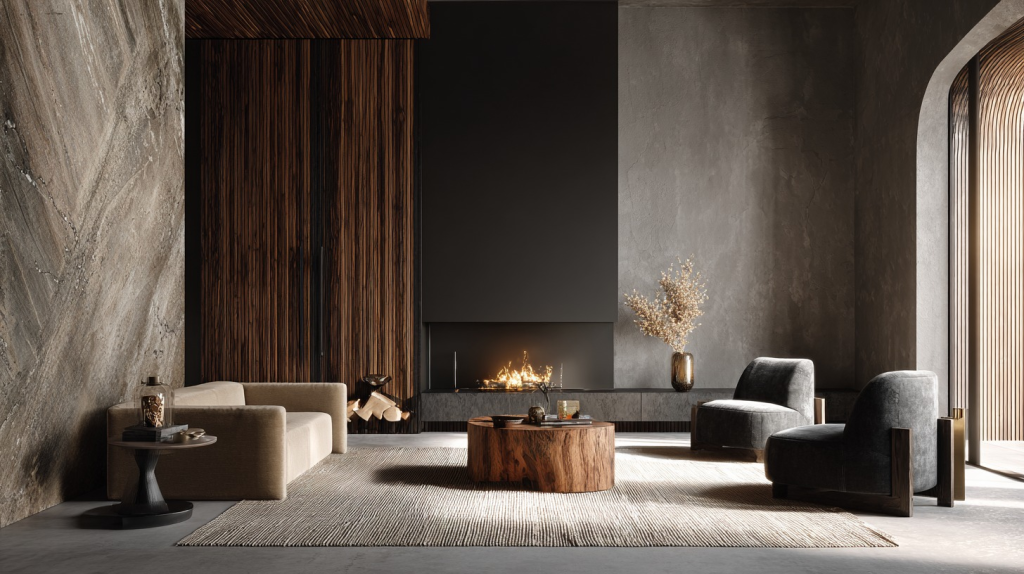
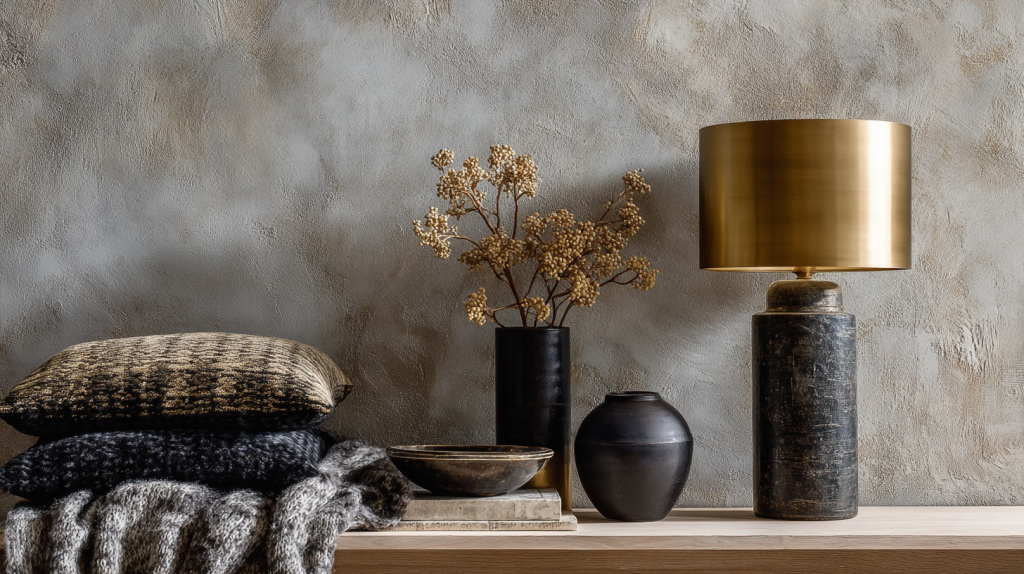
Decoration steps back in this style. Texture steps forward. Matte finishes, brushed metals, raw wood, stone with visible grain. These details create depth without clutter.
Against darker backgrounds, texture becomes more legible. Fabric weave stands out. Wood grain reads more clearly. Metal feels warmer and less industrial. This is why dark modern minimalist rooms often feel richer with fewer objects.
Accessories should be intentional. One sculptural object or a single piece of art often carries more presence than a shelf full of decor. When everything is quiet, the right object speaks louder.
How This Style Translates Room by Room
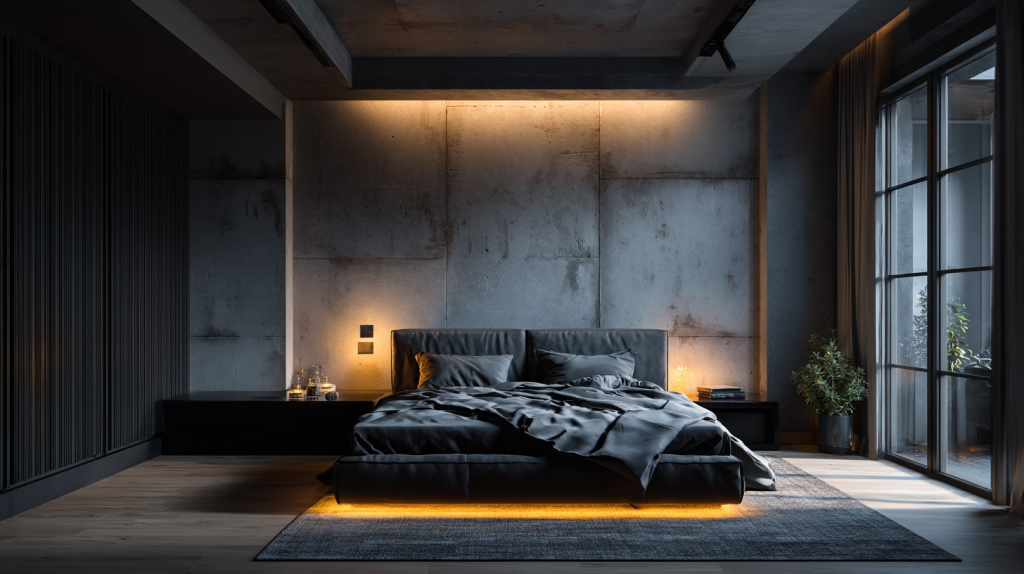
Dark modern minimalism behaves differently depending on the space.
Living rooms benefit from layered texture. Without it, they can feel flat. Softer materials, rugs, upholstery, and wood surfaces help balance darker walls.
Bedrooms are surprisingly well suited to darker tones. Dark walls tend to recede at night, making the room feel calmer and more contained. Lighting and bedding do most of the emotional work here.
Home offices often feel more focused with darker perimeters and lighter work surfaces. Contrast helps define purpose and reduces visual distraction during the day.
In smaller spaces, restraint matters even more. One dark focal surface paired with lighter surroundings usually feels better than committing everything to shadow.
Creating a Calm and Elegant Space
Dark modern minimalism appeals to people who value quiet confidence. It isn’t about trends or quick impact. It’s about living with fewer things and liking them more.
When dark tones, modern forms, texture, and lighting are handled with care, the result feels settled. Nothing feels temporary. Nothing feels rushed. The space knows exactly what it is, and it doesn’t feel the need to explain itself.
That’s the real elegance here. Not drama. Not excess. Just rooms that feel complete, and stay that way.