

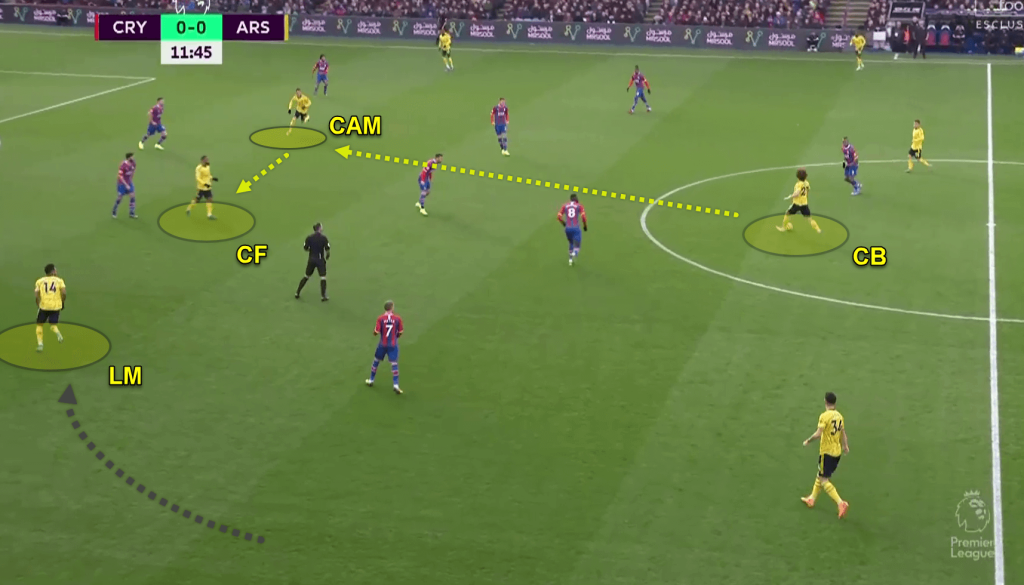
Multi-layered attacking is about how Premier League teams stack passing, movement and zone occupation in waves rather than relying on single, direct actions, creating repeated chances within the same phase. Analysing which clubs do this best reveals why some sides sustain pressure and chance quality over 90 minutes while others generate only isolated bursts.
What “multi-layered attacking” really means in modern Premier League play
In current Premier League usage, multi-layered attacking refers to sequences that combine structured build‑up, intermediate connections and final-third combinations within the same move, often using third‑man runs, rotations and switches. Rather than asking a single vertical ball to solve everything, the best teams chain progressive passes, carries and positional interchanges to move opponents step by step out of shape before exploiting the final gap.
Data-led reports show that vertical progression—measured through progressive pass distance and carries—is central to this concept. Teams with higher aggregate progressive distances, like Liverpool and Arsenal in 2024/25, do not simply “go long”; they frequently move the ball through multiple zones, linking defenders, midfielders and forwards in staggered layers that carry the ball upfield while preserving structural balance behind the attack.
Why multi-layered attacking has become so valuable in the league
The rise of compact low blocks and organised mid‑blocks has made simple direct play easier to defend, pushing coaches toward more sophisticated attacking structures. When three or four players occupy different heights and lanes within the same side of the pitch—full‑back, midfielder, winger, and a forward dropping or running beyond—it becomes far harder for defenders to track runs and close passing lines simultaneously.
League‑wide analyses of tactical evolution between 2023/24 and 2024/25 highlight that teams improving their progressive carries and passes often also improve their xGD and points, with Fulham and Bournemouth cited for quietly upgrading their positional play even without headline signings. The underlying cause–effect is clear: better multi-layered structures create more stable access to dangerous zones, which in turn supports more consistent results over a season.
Which Premier League teams best embody multi-layered attacking?
Data on vertical progression for 2024/25 places Liverpool at the top of progressive pass distance with 93,682 metres, reflecting Arne Slot’s emphasis on purposeful, staged forward play. Liverpool’s counters are backed by structured patterns: midfielders drifting into half‑spaces, full‑backs adjusting height, and wide forwards timing runs off third‑man combinations rather than sprinting in straight lines.
Arsenal provide another model, balancing positional play with sharp vertical bursts. Analyses of their dominance against Newcastle highlight reduced distances between players, inverted wingers and frequent third‑man runs that create multiple angles on the same side, allowing the ball to bounce from defender to midfielder to winger to underlapping runner in rapid succession. Manchester City, though criticised for a drop from 91 to 71 points across two seasons, still maintain an intricate attacking structure; their issues are framed as reduced efficiency in the final third rather than loss of layered patterns.
Mechanism: how layers are stacked inside one attack
Multi-layered attacking typically unfolds in three linked stages. First, the build‑up line forms a platform through centre‑backs and the pivot, often using small overloads and goalkeeper involvement to draw the press. Second, progression into midfield and the half‑spaces occurs via progressive passes or carries, with one player dropping short while another moves beyond, creating third‑man dynamics that open interior lanes.
Third, final‑third occupation is staggered: a wide player stretches the line, a half‑space attacker positions between lines, a striker pins centre‑backs, and an advanced midfielder or underlapping full‑back attacks the box late. Because each “layer” can be used as either a wall pass, a decoy or a finishing option, the defending side must cover more possibilities at once, raising the chance that one link in the chain breaks them open.
Comparing multi-layered sides with more linear attacking teams
Comparative data on progressive passes, carries and xG underscores the difference between layered and linear teams. Clubs such as Manchester City, Liverpool and Arsenal sit high for progressive actions while also maintaining significant possession, indicating that they both control territory and move it forward purposefully; others, like some lower‑table sides, rely more on isolated direct balls or individual dribbles to create threat.
Dribble‑based tables show a further contrast. Manchester City rank among the most frequent dribbling teams, using carries to break lines as part of designed patterns, whereas Crystal Palace, described as “semi‑reluctant” dribblers, sit near the bottom, relying more on quick breaks and fewer on-ball actions to create chances. The net effect is that layered sides can generate repeated pressure and multiple shots from the same phase, while linear sides depend more on single moments or set‑pieces.
| Attacking profile | Example teams | Key traits and data cues |
| Multi-layered, high progression | Liverpool, Arsenal, Man City. | High progressive pass/carry volumes; structured third‑man patterns. |
| Transition‑focused layering | Bournemouth, Nottingham Forest. | Fast breaks with multiple runners in lanes; less possession. |
| Linear / direct attacking | More direct mid‑table sides. | Longer balls, fewer combined layers, heavier set‑piece reliance. |
This comparison shows that “multi-layered” is not synonymous with slow; Bournemouth and Forest apply layered ideas in transition, while City and Arsenal do so through controlled possession.
Where multi-layered structures strengthen attacks – and where they break down
Multi-layered attacking is strongest when spacing and timing are carefully calibrated. Arsenal’s use of inverted wingers to reduce horizontal gaps, for example, allows shorter, faster combinations and more frequent third‑man runs, which in turn lead to better shot locations and more varied chance sources across matches.
These structures can falter when fatigue, injuries or predictability creep in. Manchester City’s decline in points and attacking sharpness has been linked partly to Kevin De Bruyne’s hamstring issues, removing a key architect of vertical progression and layered final‑third passing. Tactical analyses suggest that even when City’s general structure remains intact, a drop in incisive movement and final‑ball quality leads to fewer goals per expected goal, illustrating that multi-layered frameworks still rely on elite execution.
Using an educational perspective to read multi-layered attacks during matches
Adopting an educational perspective means watching games with an eye for layers rather than just the final pass or shot. When Liverpool build from the back under Slot, viewers can track how Mac Allister’s movements into the channel between full‑back and winger trigger different passing lanes, and how subsequent progressive carries link those lanes into a chain that ends with Salah or Diaz receiving in advanced zones.
Similarly, in an Arsenal match, noticing when Saka or Martinelli invert into central positions while a full‑back or midfielder overlaps outside reveals how distances between players shrink, making third‑man combinations more likely. Understanding these recurring patterns helps explain why some teams appear to “camp” in the final third, recycling attacks again and again, while others struggle to sustain pressure after a first blocked cross or cleared through ball.
Positioning multi-layered insights when considering UFABET
When someone has learned to recognise layered attacking patterns—seeing, for instance, how Liverpool’s vertical progression or Arsenal’s third‑man runs tend to generate sustained waves of pressure—the next question is how to handle that information if they also engage with football markets. If that person accesses odds through a สล็อต ufa168 เว็บตรง online betting site, the key analytical issue becomes whether they can translate their tactical observations into disciplined, scenario‑based decisions instead of impulse staking. For example, multi-layered teams might justify interest in shot or corner markets when facing deep blocks, but only if prices and game context support that view; without integrating injury data, schedule load and opponent structure, betting purely on “they create layers” risks overstating what the patterns alone can deliver.
Keeping multi-layered attack study distinct from casino online habits
There is also a broader cognitive tension when detailed tactical study overlaps with high‑variance gambling environments. When a viewer spends time understanding progressive metrics, dribble tables and multi-phase build‑ups but does so while logged into a wider casino online context, the quick-feedback nature of those games can nudge decision‑making away from slow, structure-based reasoning. Over time, bankroll outcomes may reflect random swings from those high‑variance activities more than the quality of insights on Liverpool’s progression or Arsenal’s layered combinations, making it difficult to see whether tactical understanding improves discipline. Keeping separate budgets and mental “compartments” for learning the game and for entertainment-driven wagering helps ensure that multi-layered attacking knowledge remains a tool for deeper appreciation rather than fuel for impulsive risk.
Summary
Multi-layered attacking in the Premier League is best seen in how teams like Liverpool, Arsenal and Manchester City stack build‑up, progression and final‑third occupation into coherent waves, backed by high progressive pass and carry volumes and carefully managed spacing. Recognising these layers—who forms the platform, who connects the middle and who arrives to finish—offers a more precise lens on why certain clubs sustain pressure, adapt to low blocks and maintain attacking identities over time, while others remain dependent on individual moments or set‑pieces for their threat.

