

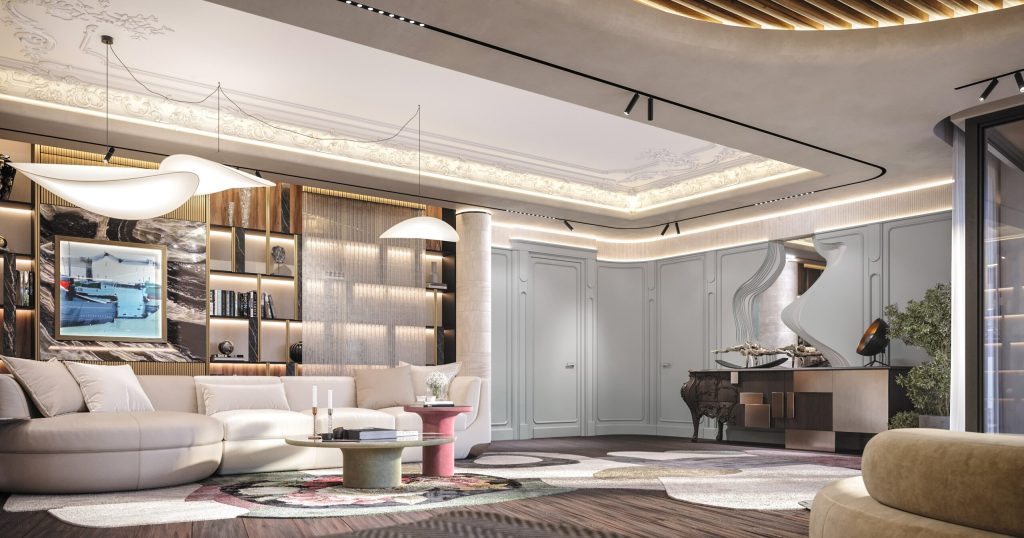
Bad lighting ruins good rooms. It’s that blunt. You can have the right furniture, the right palette, the right finishes — and one harsh overhead globe destroys it. Lighting in Australia has shifted dramatically in the last decade. LED technology dropped in cost by over 85% between 2012 and 2023 according to the International Energy Agency, making high-quality, tunable lighting accessible at every budget level. Australian homeowners are spending more on lighting design than ever before — the local architectural lighting market hit AUD 1.4 billion in 2023. The rooms that look extraordinary in every photo you’ve ever saved have one thing in common: the lighting was planned.
Why Does Lighting Change How a Room Feels So Dramatically?
Light is biological before it’s aesthetic. Bright, cool-toned light (5000K and above) activates alertness. It’s why fluorescent offices feel clinical and tiring. Warm light (2700K to 3000K) signals rest. It’s why candlelit restaurants feel relaxing even when they’re noisy. Your brain responds to color temperature before your conscious mind even registers the room’s design.
A 2020 study from the Lighting Research Center at Rensselaer Polytechnic Institute found that people in warm, layered light environments reported a 34% higher sense of relaxation than those in evenly lit rooms of the same temperature and size. The room didn’t change. The light did.
What Is Layered Lighting and Why Does Every Designer Talk About It?
Layered lighting means using three types of light simultaneously — ambient, task, and accent. Ambient is the base fill. Task is directed light for specific activities — reading, cooking, working. Accent is decorative and directional — highlighting architecture, art, or texture. When these three work together, a room has depth. When only ambient lighting is used, the room looks flat and functional at best.
A common mistake in Australian homes is relying entirely on one central downlight circuit. Everything at the same brightness, same direction, same temperature. No shadow. No contrast. The room looks like a supermarket. Adding a floor lamp, a pendant at a different height, and under-cabinet lighting changes the same room completely. Cost is low. Impact is high.
How Do You Choose the Right Color Temperature for Each Room?
Kitchens and bathrooms: 3000K to 4000K. Neutral white gives accurate color rendering for food prep and grooming. Living rooms and bedrooms: 2700K to 3000K. Warm white creates comfort and signals wind-down time. Home offices: 4000K for sustained focus without the harshness of 5000K+ daylight-range globes.
The mistake people make is buying all the same globes for every room. Hardware stores push warm white as the default and cool daylight for utility spaces. Neither rule is absolute. A bedroom reading lamp at 3000K with high CRI (color rendering index of 90+) reads colors accurately and stays relaxing. CRI matters more than most people know — anything below 80 makes skin tones look grey and fabric colors look muddy.
What Makes a Lighting Fixture Worth the Price Premium?
Three things: heat management, optical quality, and build. Cheap LED fixtures run hot, which degrades the phosphor coating and shifts the color temperature over time. A globe that starts at 2700K warm white turns cooler and harsher within 18 months if the heat sink is inadequate. Premium fixtures from brands like Flos, Louis Poulsen, and Vibia manage heat properly and hold their color spec for 30,000 to 50,000 hours.
Optical quality determines how the light distributes. Cheap reflectors create hot spots and glare. High-quality optics diffuse light evenly with no harsh edges. For a pendant above a dining table or a bedside wall sconce, glare is the enemy of atmosphere. Pay for the optic. It’s the part doing the actual work.
How Is Smart Lighting Changing Interior Design Decisions in Australia?
Faster than most people expected. IBISWorld data from 2024 shows the Australian smart home market growing at 11.3% annually, with lighting as the second most adopted category after security. Tunable LED systems that shift from 6500K to 2700K across the day — mimicking natural light cycles — are now standard in high-end residential builds and are filtering into mid-market renovations.
The practical upside is significant. One fixture can serve as a task light at noon and a relaxing ambient glow at 9pm. Scenes can be saved and recalled. That flexibility reduces the need for multiple fixture types and simplifies design decisions. Space Furniture’s contemporary lighting range bridges that gap between design-forward aesthetics and smart functionality — pieces that look intentional and perform technically.