

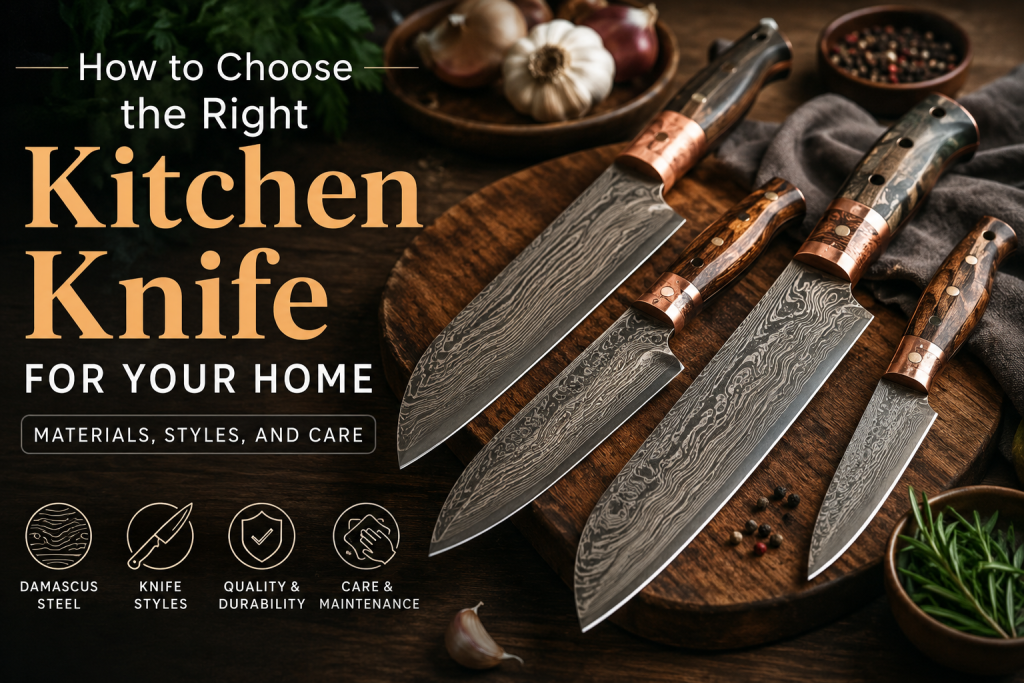
A good kitchen knife is one of the most important tools in any home cook’s collection. Whether you’re chopping vegetables for a weeknight dinner or breaking down a chicken for Sunday roast, the knife in your hand shapes the entire cooking experience. Choosing the right one depends on blade material, knife style, handle comfort, and long-term maintenance not just price or brand.
Home cooks today have more choices than ever, from stainless steel to layered Damascus blades known for their striking patterns. Handmade Damascus-style knives, in particular, offer a rare blend of practical function and craftsmanship.
Why the Right Kitchen Knife Matters in a Home Kitchen
The knife you reach for every day affects the speed, safety, and enjoyment of cooking more than almost any other tool. Picking the right one starts with understanding how a knife supports control, matches your cooking style, and holds up over time.
Better Control During Food Preparation
A well-made knife feels balanced in the hand. Blade weight, handle shape, and grip design work together to give you precise control. When a knife feels comfortable, your cuts are cleaner, faster, and safer.
Matching the Knife to Your Cooking Habits
Cooks who prepare quick everyday meals need something versatile. If you cook a lot of vegetables, a santoku or nakiri may serve you better. Home cooks who regularly prepare meat or poultry benefit from stiffer blades with strong tips, while occasional specialty tasks call for dedicated blades.
Quality Knives Can Become Long-Term Kitchen Tools
Well-built knives with quality steel, proper heat treatment, and consistent maintenance can last decades. Store them properly, avoid the dishwasher, and hone the edge regularly to keep them performing at their best. A good knife is an investment that pays back every time you cook.
Common Kitchen Knife Styles Every Home Cook Should Know
Not every knife is built for every job. A small set of well-chosen styles will cover almost anything a home cook prepares. Here are the most useful shapes to understand before you buy.
Chef’s Knife
The workhorse of any kitchen. With blade lengths typically between 6 and 10 inches, it handles chopping, slicing, and mincing across nearly every ingredient.
Santoku Knife
A Japanese-style knife with a shorter, flatter blade. Its lightweight design suits vegetable prep, thin slicing, and quick chopping especially in smaller kitchens.
Paring Knife
Small and precise. Ideal for peeling apples, deveining shrimp, or trimming small fruits and vegetables where a large blade would be awkward.
Utility Knife
Sitting between a chef’s knife and a paring knife in size, this all-rounder handles medium tasks like slicing sandwiches, small cuts of meat, or larger fruits.
Kitchen Cleaver
Built for heavy work splitting squash, cutting through poultry bones, or portioning large cuts of meat. The wide blade also doubles as a scoop for moving ingredients to the pan.
Understanding Damascus Steel Kitchen Knives
Damascus knives have earned a strong following among home cooks and collectors alike. Before choosing one, it helps to know what makes the steel special and how different Damascus styles vary in look and construction.
What Is Damascus Steel?
Damascus steel is created by forge-welding multiple layers of steel together, then folding and shaping them into a blade. The result is a distinctive wavy or watery pattern along the blade’s surface — no two blades ever look exactly the same.
Why Damascus Knives Are Popular
Home cooks and collectors love Damascus for several reasons: the unique visual patterns, the craftsmanship involved, strong edge retention when made with quality core steel, and the collectible character that comes from each blade being one of a kind.
Copper Damascus vs. Traditional Damascus
Traditional Damascus uses layered carbon and stainless steels, giving a silvery contrast pattern. Copper Damascus incorporates copper-toned layers, producing a warmer, more distinctive appearance. The construction principles are similar, but the visual character is noticeably different — copper adds an amber shimmer that stands out on the blade and often draws attention as a decorative piece as well as a working tool.
If you’re drawn to that warm, distinctive look, you can explore handmade copper Damascus knives from JW SteelCrafts, where each piece is forged individually and no two patterns are exactly alike.
What to Look for When Buying a Kitchen Knife
A good buying decision comes down to a handful of details most shoppers overlook. Focus on these factors and you’ll avoid the common regret of paying for a knife that looks great but underperforms in real use.
Blade Material and Construction
Look at the steel type (VG-10, AUS-10, high-carbon, or stainless), Rockwell hardness (usually HRC 58–62 for kitchen knives), edge retention, and corrosion resistance. Harder steels hold an edge longer but can be more brittle if misused.
Blade Shape and Length
Choose a blade that fits both your typical cutting tasks and your cutting board. A 10-inch chef’s knife feels powerful but can be unwieldy on a small board. A 6-inch knife may feel limiting when tackling large produce.
Handle Material and Grip
Handle materials range from stabilized wood and resin to Micarta, bone, and horn. The best handle for you is the one that feels secure and comfortable during long cooking sessions. Good handles stay grippy even when wet.
Full-Tang vs. Partial-Tang Construction
Full-tang means the blade steel extends the full length of the handle, offering better balance and durability. Partial-tang knives are lighter but generally less robust for heavy tasks.
Handmade vs. Mass-Produced Knives
Mass-produced knives offer consistency and lower prices. Handmade knives cost more but bring individual character , unique blade patterns, hand-shaped handles, and the touch of a skilled craftsman. For cooks who value both function and artistry, handmade is often worth the investment.
Choosing a Knife Based on Your Kitchen Needs
The best knife for you depends on what you actually cook, not on what looks impressive in a catalog. Think about your weekly meals first, then match a blade style to those tasks.
Best Knife Characteristics for Everyday Home Cooking
Look for versatility, comfortable weight, and easy maintenance. A single well-chosen knife often handles 80% of daily tasks.
Knives for Vegetable Preparation
Santoku, nakiri, and chef’s knives all excel here. Nakiri knives, with their straight edge, offer the cleanest push-cuts through firm vegetables.
Knives for Meat and Poultry Preparation
Boning knives handle raw meat around bones. Utility knives cover medium cuts, while cleavers manage larger jobs including poultry portioning.
Knives for Outdoor or Specialty Use
Some handmade knives are designed for outdoor cooking, camping, or hunting. If your interests extend beyond the kitchen, consider a dedicated blade ,using a fine kitchen knife outdoors can dull or damage the edge quickly.
How to Care for a Damascus Kitchen Knife
Damascus blades need a little more attention than standard stainless knives, but the routine is simple. A few small steps protect both the edge and the layered pattern.
Clean the Blade After Use
Wash by hand with mild soap and warm water. Never put a Damascus knife in the dishwasher , heat, detergent, and moisture will damage both the edge and the pattern.
Store the Knife Properly
Options include knife blocks, magnetic wall strips, in-drawer trays with blade slots, blade guards, or leather knife rolls. Anything is better than tossing it loose in a drawer with other utensils.
Maintain the Cutting Edge
Hone your knife regularly with a ceramic or steel rod to keep the edge straight. Sharpen properly every few months using whetstones or a professional service. Always cut on wooden or plastic boards , never glass, stone, or ceramic surfaces.
Protect the Damascus Pattern and Finish
Dry the blade completely after washing. Damascus knives for everyday use A light coat of food-safe mineral oil or camellia oil helps prevent rust and preserves the pattern’s contrast. Avoid harsh chemicals or abrasive scrubbers that can dull the surface finish.
Common Mistakes Home Cooks Make When Choosing Knives
Even experienced cooks fall into the same traps when shopping for a new knife. Knowing these pitfalls in advance can save you money and frustration.
Buying Based Only on Appearance
A beautiful knife that doesn’t fit your hand or cutting style will end up unused. Prioritize feel and function alongside looks.
Choosing the Wrong Blade Size
Oversized knives dominate small kitchens; undersized knives make big jobs frustrating. Match the blade to your typical prep.
Ignoring Handle Comfort
The handle is where your knife meets your hand. If it feels awkward in the store, it will feel worse after 20 minutes of chopping.
Using One Knife for Every Task
Even the best chef’s knife struggles with detailed peeling or breaking down bone-in cuts. A small collection covers more tasks safely and efficiently.
Neglecting Proper Storage and Maintenance
Loose drawer storage chips edges. Skipping honing dulls blades quickly. Simple habits protect your investment for years.
How to Build a Practical Home Kitchen Knife Collection
You don’t need a full block of knives to cook well. Most home kitchens are covered by three or four thoughtfully chosen blades, added over time as your cooking habits grow.
Start With a Versatile Chef’s Knife
Pick one that feels balanced in your hand this will do most of your daily work.
Add a Paring Knife for Detail Work
Peeling, trimming, and small-fruit tasks are difficult with a large blade.
Add a Utility or Santoku Knife
This middle-sized knife fills the gap between jobs too small for a chef’s knife and too big for a paring knife.
Consider a Specialty Knife When Your Cooking Requires It
Bread knives, boning knives, or cleavers are worth adding once your cooking regularly calls for them not before.
Handmade Damascus Knives as Functional Kitchen and Gift Pieces
Handmade Damascus knives sit at an interesting crossroads: fully capable kitchen tools that also feel like works of art. Their distinctive patterns and hand-finished handles make them popular gifts for cooks and collectors. Copper Damascus designs, with their warmer tones and standout patterns, appeal especially to people who want something that looks as unique as it performs , combining beauty with genuine everyday utility.
Final Thoughts on Choosing the Right Kitchen Knife
The right kitchen knife comes down to blade material, style, handle comfort, construction, and care. Don’t let looks alone drive your decision , choose based on the cooking you actually do. With proper care, a quality knife can serve you for decades.
Frequently Asked Questions
Quick answers to the questions home cooks most often ask when choosing and caring for kitchen knives.
What is the best all-purpose knife for a home kitchen?
A chef’s knife between 7 and 8 inches is the most versatile option for most home cooks. It handles chopping, slicing, and mincing across a wide range of ingredients.
Are Damascus knives good for everyday kitchen use?
Yes. Well-made Damascus knives combine a strong core steel with beautiful layered outer layers. With basic care, they perform excellently for daily cooking tasks.
What is the difference between Damascus and copper Damascus knives?
Traditional Damascus uses layered steels that create silvery, watery patterns. Copper Damascus adds copper layers for a warmer, amber-toned appearance. Both offer strong performance, but copper Damascus has a more distinctive look.
How should a Damascus knife be stored?
Use a knife block, magnetic strip, blade guard, or knife roll. Avoid loose drawer storage that can chip the edge or scratch the pattern.
How do you maintain a Damascus knife?
Hand wash after use, dry immediately, hone regularly, sharpen when needed, and apply food-safe oil occasionally to protect the finish.
Is a handmade knife worth buying for a home kitchen?
For cooks who value craftsmanship, character, and long-term durability, yes. Handmade knives cost more but often outperform mass-produced options in feel and longevity.
Meta Description
Learn how to choose the right kitchen knife for your home by exploring knife styles, Damascus steel, blade materials, handle designs, quality, care, and maintenance tips.