

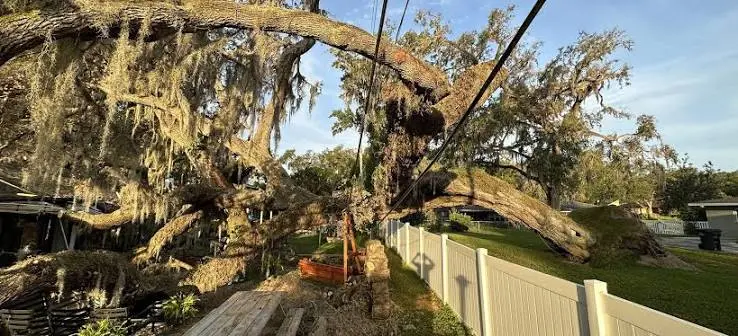
A single afternoon storm in Polk County can undo months of yard work and put a home’s roof or siding at risk. Wind gusts during Florida’s rainy season often expose weaknesses in trees that have gone unnoticed for years. Scheduling tree trimming in Lakeland, FL, before those storms arrive gives a property owner a real chance to prevent the damage that overgrown branches can cause.
Beyond boosting curb appeal, a healthy tree provides valuable shade that can lower summer cooling costs. But without regular upkeep, that same asset can turn into a liability once wind speeds rise. Knowing how trimming actually protects a property helps homeowners plan their landscaping calendar properly.
Why Lakeland’s Storm Season Puts Extra Pressure on Trees
Central Florida experiences a long stretch of thunderstorm activity each year, and without regular trimming, Lakeland’s mix of oaks, pines and other mature species can hold onto more weight than their root systems are designed to handle. Some of the risks that homeowners may face during storms are as follows:
●Dead branches break off with little warning.
●Thick, untrimmed canopies trap wind instead of letting it pass through.
●Branches stretching toward the roofline become a direct threat.
●Structural weaknesses often go unnoticed until wind exposes them.
A tree that appears healthy from the ground can still carry internal stress points that only get identified when conditions turn severe.
How Professional Trimming Strengthens a Tree for Storm Season
Arborists don’t trim trees only for appearance. Their work is aimed at improving how a tree handles wind, and that comes down to structure. Thinning out a dense canopy lets air move through the branches rather than pushing against them like a solid barrier, which takes real pressure off the trunk and root base.
Cutting branches and limbs that cross or rub against each other also matters more than most homeowners realize. Those contact points weaken over time and tend to be the first parts of a tree that give way in a storm. Clean and well-placed pruning cuts as per ANSI A300 standards heal faster too, lowering the odds of rot setting into the wood later on. A tree with fewer weak points simply performs better when wind speeds rise, and this may be important for surviving a storm.
For a homeowner, this translates directly to lower risk of roof repair bills and a safer home during a storm.
Warning Signs Homeowners Shouldn’t Ignore Between Trimmings
Storm damage rarely comes as a complete surprise. Most trees show some kind of warning sign before a branch falls or a trunk splits, though those signs are easy to miss. Below are a few warning signals to notice:
●Cracks or splits along the trunk.
●Branches sagging noticeably after heavy rain.
●Fungus growing near the base of the tree.
●A lean that seems new or more pronounced than before.
●Bark that looks loose or is peeling away.
Any one of these should prompt a call to an ISA certified arborist rather than a decision to wait and see how things go. Catching a problem early always costs less than dealing with the damage after a storm has already hit.
When to Schedule Trimming in Lakeland
Late winter through early spring tends to be the best window for major pruning work in Lakeland, since trees face less stress and hurricane season hasn’t started yet. Scheduling the work ahead of hurricane season allows a tree ample time to recover and strengthen its structure before the winds pick up.
Waiting until a storm is already in the forecast does not leave enough time for the job to be done properly, as arborists often have a backlog of emergency calls, and rushing the job can create new weak points or stress the tree further.
Conclusion
Investing in tree trimming services in Lakeland, FL, gives a property’s trees the structure they need to hold up when the weather turns harsh. It is not just routine yard maintenance. For most homeowners, it is one of the most essential practical steps toward protecting a home before storm season arrives.