

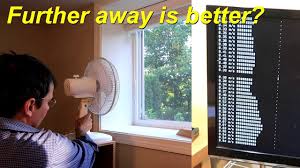
Summer heat can get pretty intense sometimes. Maybe your bedroom is stuffy. Or your home office has started to overheat. Perhaps the living room just never cools down at all. Fans are a great way to fight back but you need to put them in the right spot to get maximum benefit.
Fans in the wrong location simply circulate warm air. Fans in the correct location draw in cooler air, expel warmer air and produce an effective cross breeze. Here’s a look at where to place every fan in your home for optimal cooling.
Understanding Air Flow
Before we jump into placement there’s one concept you should understand. Hot air rises, and cold air sinks to the bottom. Fans don’t actually cool air, they simply move it. Moving air causes heat to be drawn away from your body allowing you to feel cooler.
Think of how a wind chill works. That’s pretty much what we’re going for with strategic fan placement. Even on a 75 degree day with wind, you’ll feel better than a 70 degree day with no breeze. Grasp this concept, and you’re halfway there.
The Window Fan Method
Windows can be your best ally when cooling with fans. The goal with window fans is simple: draw cooler air in on one side of your home and exhaust hot air out the other side.
To accomplish this:
- Set one fan in a window facing inward on the shady side of your house (North or East windows in the morning).
- Set a second fan on the opposite side of your home, facing outward.
- You’ve now created an airflow that circulates through your home.
The inward facing fan will suck cooler outdoor air in from outside. The outward facing fan then acts as an exhaust, removing warm air that has accumulated indoors. When used together they create natural ventilation.
This method works best in the morning or evening when outdoor temperatures are cooler. If it’s hotter outside than in, keep your windows closed and utilize an indoor air circulation strategy instead.
Cooling Your Bedroom
Few things are worse than lying in bed tossing and turning because it’s too hot. The placement of your bedroom fan matters a lot.
Place your fan near the foot of your bed, blowing upward at a slight angle. You’ll get a constant flow of air that moves across your body without blowing air directly in your face. If you have two fans you can place one by the window to draw in outside air and one by the bed to blow directly on you.
Another helpful trick is placing a bowl of ice in front of your fan. As air blows across the ice, it will absorb some of that cold and bring it right to you. It sounds weird, but it works. Plus, it’s cheap.
Keep your fan on the lowest setting that still provides relief. High speeds are noisy and will dry out your throat much faster. Opt for medium or low settings whenever possible when cooling your bedroom.
Living Rooms and Common Areas
Hallways and living rooms are often larger areas that are difficult to cool with a single fan. Instead of focusing all of your efforts in one area, focus on circulating air throughout the entire room.
Place a box fan or tower fan near a doorway or window to pull in fresh air from outside. If you have a ceiling fan be sure it’s spinning counterclockwise to push air downward. Many ceiling fans have a switch on the motor housing to change the rotation direction.
For larger open areas, stand two fans up in opposite corners of the room and angle both inward towards the center. Not only will you feel cooler, but air will continuously be circulated throughout the room.
Cooling Your Home Office
If you’re like me you’ve probably been working from home more this year. It can be hard to focus when your office overheats. It’s especially bad if you’re in a room that receives afternoon sunlight. The key is to avoid pointing the fan directly at you.
Having direct airflow blown at you all day can dry out your eyes and make it difficult to concentrate. Place your fan slightly off to one side, blowing toward your chest or shoulder. A small desk fan is ideal for this.
If possible, crack open a window and set your fan facing inward. Not only will you get fresh air from outdoors, but the fan will help circulate it throughout your workspace.
This is also a good technique if you have equipment like computers that produce heat. Make sure your fan is also helping to move that warm air away from your desk.
Cooling Multilevel Homes
Heat rises people, it’s just a fact. If you have a two-story house you might have noticed your feel hotter. It’s not your imagination; upstairs rooms can feel up to 10 degrees warmer than down stairs.
You can combat this by placing a fan at the bottom of your staircase blowing up. This helps force lower, cooler air up to your second story.
You should also open a window upstairs to allow hot air to escape. The combination of forcing cooler air up and allowing hot air out will make a huge difference.
Common Fan Placement Mistakes
Believe it or not there are some really easy ways you can mess up your fan’s effectiveness. Avoid these simple mistakes:
- Pointing your fan at a wall instead of an open area or directly at you.
- Leaving fans in rooms no one is using. Fans don’t actually cool rooms, they cool people.
- Blocking airflow with furniture that’s too close to the fan.
- Allowing dust and dirt to build up on your fan blades. This seriously reduces airflow.
- Keeping windows closed when it’s actually cooler outside than inside.
Speaking of dirty fan blades. Dirt and dust accumulation can really slow down your fan over time. Taking a few minutes every couple of weeks to wipe them down will keep your fan working at top performance.
UK Air Cooler Case Study: Saving Money Cooling Off in London Flat
Background
I live in a single bedroom flat in London as a young professional. Throughout summer my electricity bills would start to skyrocket from running my portable air conditioner unit. It was doing a good job cooling the room down, but I wanted a cheaper way to stay cool during summer without having my electricity bills climb so much.
My Portable AC would run anywhere from 6–8 hours per day during hot spells when it was particularly warm out.
I started researching alternative methods to stay cool as energy prices in the UK began to rise.
Situation
My apartment:
- Was not giant so I didn’t have a ton of space
- Was rental so I couldn’t just go install AC permanently into the walls
- Did not have terribly hot summers (usually around 20–28°C)
- Does get a bit humid at times but not “hot + humid” like other climates
- I needed a cheap way to cool down without spending too much on electricity.
Solution
I ended up purchasing a mid-tier air cooler (~150W) and changed my personal habits slightly when it came to cooling down.
I ended up running it during the day for about 6–8 hours per day with my windows cracked open a bit to allow for airflow, and used blackout curtains at night to keep extra heat from coming in. I would sometimes supplement with just a fan when it got too hot.
Results:
Before (Portable AC)
- 1.2–1.5kWh power consumption per hour
- 8 hours of daily usage
- £60–£90/month
After (Air Cooler)
- 0.15–0.2kWh power consumption per hour
- 8 hours of daily usage
- £8–£12/month
- Saved up to £50–£70/month less by making the switch
Impact on Comfort
- Air cooler wasn’t as strong as straight AC cooling
- Still made a big difference when used with proper ventilation
- Worked best during the morning and evening hours when temperatures were cooler.
Takeaways
- Air coolers can be a great substitute for AC if you live in a UK climate.
- They are most effective in places with ventilation. Don’t expect an air cooler to do miracles in a room with closed windows and doors.
- Electricity usage is a lot lower than AC. You can expect to use 80–90% less electricity when using an air cooler compared to AC units.
- Air coolers are great for those who rent or don’t have access to window units/Air Conditioning installed.
TLDR; If you live somewhere in the UK that doesn’t get severely hot for long periods of time (think Manchester or Birmingham) an air cooler is a great way to stay cool as long as you’re not expecting Walmart level cooling.
Link: https://www.nobroker.in/ac-services/ac-vs-cooler-power-consumption-acgd
FAQs
Do air coolers consume a lot of electricity?
Air coolers are extremely efficient when it comes to energy usage. The majority of air coolers use between 100 watts to 300 watts of electricity. To put that into perspective, that’s anywhere from a few pounds per month. (Especially when you compare that to the ENERGY USAGE of air conditioners)
How much does an air cooler cost to run in the UK?
Assuming average electricity prices in the UK, a medium air cooler (using about 150-200W of power) run for 6-8 hours a day would cost you £5-£15 per month. That’s right – less than £15 a month to enjoy cool air from your very own air cooler!
Are air coolers cheaper than air conditioners?
Air coolers use up to 90% LESS energy than air conditioners. They’re simply not meant to cool your rooms as effectively as AC units. However if you’re looking for a cooler to get you through the day, they can offer a fraction of the running costs.
Do air coolers work in the UK?
Air coolers work best when the weather is dry or moderately humid. In most parts of the UK, spring and summer tend to be perfect for air coolers. However, they will probably struggle on those days where the humidity is really high.
Can an air cooler cool down a room?
Air coolers are best for personal cooling or cooling down a small bedroom. Larger air coolers can conveniently cool down living rooms, hallways, or open areas. It all depends on the volume of cool air that the cooler is capable of outputting.
Do air coolers need ventilation?
Yes. Since air coolers work by pushing ambient airflow (from an open window/door) through waterEvaporative cooler to cool the air, it is important to leave a window or door open while you use the cooler. Not only will this prevent your room from becoming too humid but it’ll cool more efficiently.
Is it cheaper to leave an air cooler on all day?
While leaving an air cooler on all day will cost you extra money, you’ll still spend significantly less than leaving your AC on all day. To save more money, you can run your air cooler on a timer and ensure you always have a window/door open.
Are air coolers better for the environment?
Air coolers use less energy and don’t rely on harmful refrigerants like AC units. By simply switching to an air cooler, you’re reducing your carbon footprint and saving money!
Final Words
Fan placement isn’t difficult, but it does make a huge difference. Understanding how airflow works, using windows to your advantage and placing your fans based on the shape and design of each room can keep you comfy all day without blasting the AC. Try these tips out tonight and feel the difference proper placement can make.