Buying a former rental home: what changed for buyers in 2026

A run of rule changes has given landlords in England plenty to think about this year, and some are reviewing whether to keep every property in their portfolio. For buyers, that means former rentals are a real part of the market. They are worth approaching a little differently from an owner-occupied home. Check whether a tenant comes with it The Renters' Rights Act 2025 reshaped how possession works. A buyer taking on a property with a tenant in place may inherit that tenancy rather than receiving vacant possession on completion, and the grounds for possession set out in the Act each carry their own conditions and notice periods. The practical step is simple enough. Establish in writing, well before exchange, whether the property is being sold with vacant possession or with a tenancy running, and take legal advice on what that means. Nothing about the price makes up for an assumption that turns out to be wrong. Learn to tell wear from damage Grounds 12, 13 and 15 of the possession rules deal with breaches of tenancy and deterioration of the property or the landlord's furniture. Property lawyer David Smith has pointed out that courts draw a firm line between the two, and it is a useful line for buyers as well. Scuffed paint, worn carpet and marked furniture are normal in a let property and cost little to put right. Larger holes cut through walls to run cables, damaged doors, punched plasterboard and neglected common areas are a different matter. Viewings go better when you look past surface tidiness and check the things that cost money: roof, damp, heating, electrics, windows. Ask for the compliance paperwork From 15 December 2026, landlords must register each let property on a government service and upload safety records, including a gas safety record, an Electrical Installation Condition Report or Electrical Installation Certificate, and the current Energy Performance Certificate. A compliant landlord will therefore have all of this to hand, which makes it a fair thing for a buyer to request. The EPC deserves particular attention. A poor rating signals both higher running costs and possible work ahead, and the certificate will tell you what the assessor recommended. Read the local market, not the headline Prices in Eastern England and the South East have softened over the past year, and mortgage approvals sit at their lowest since early 2024. That gives buyers more room to negotiate on a property that needs work, though sellers have been slow to reduce and sales are taking longer to agree. Where a home has been let for several years, get a quote for anything the survey flags before settling on a figure, rather than agreeing a price and trying to renegotiate later. Buyers weighing up a former rental often find it helps to speak to an agent who handles both sales and lettings, since the questions worth asking about tenancies and safety records are not the ones that come up on a standard sale. If you are buying as an investment rather than a home, the same checks apply with one addition: ask what rent is currently being charged, when it was last reviewed, and whether any increase is under challenge. That, along with buying advice from someone who knows the local market, will tell you far more about the real return than an advertised yield.
How Bangkok’s International School Landscape Is Reshaping Childhood Education

How Bangkok’s International School Landscape Is Reshaping Childhood Education

Bangkok has emerged as one of Southeast Asia's most dynamic cities for internationally minded families. With a growing expatriate community and an increasing number of Thai families seeking globally competitive education, the demand for quality international schooling has never been stronger. Understanding what sets these institutions apart — and how to evaluate them — is essential for any family navigating this complex landscape. The Rise of International Schools in Bangkok Over the past two decades, Bangkok has seen a significant expansion in the number of accredited international institutions. Today, families relocating to the city or seeking an alternative to the national curriculum have access to a wide range of programs spanning British, American, IB (International Baccalaureate), and Singapore-based frameworks. The demand is driven by several converging factors: Thailand's growing middle class, a surge in multinational company relocations to Bangkok, and a broader global recognition that multilingual, internationally accredited education provides measurable long-term advantages. International schools in bangkok have responded by investing in multilingual faculty, globally benchmarked curricula, and state-of-the-art facilities that rival institutions in London, Singapore, and Sydney. Over 170 international schools are currently operating in greater Bangkok The majority offer curricula aligned with British, American, or IB frameworks Student populations commonly include children from 40–60+ nationalities Many schools offer bilingual Thai-English instruction from early childhood What Families Should Evaluate Before Enrolling Choosing between institutions goes far beyond comparing tuition fees. Education specialists consistently advise families to assess schools across several dimensions before making a final decision. Curriculum alignment: A child who has been educated in the UK system may struggle if placed abruptly into an American or Singapore-based curriculum. Families relocating from specific countries should prioritize curriculum continuity where possible. Accreditation and recognition: Not all international schools hold equivalent accreditation. Bodies such as CIS (Council of International Schools), WASC, and the IBO provide external benchmarking that signals academic credibility and university pathway readiness. Faculty qualifications: Schools with internationally certified teachers — particularly those holding credentials from the UK, Australia, or North America — tend to deliver more consistent academic outcomes. Staff turnover rate is also a meaningful proxy for institutional stability. Pastoral support systems: For families new to Bangkok or for students transitioning from a different national system, the presence of counselors, student wellbeing programs, and transition support can significantly affect a child's adjustment and long-term performance. Early Childhood and International Kindergarten Bangkok One of the most consequential decisions families make is where to begin a child's formal education. Early years programs — typically covering ages 2 to 6 — set the foundation for language acquisition, social development, and academic habits that persist throughout a student's schooling career. Bangkok's international early years sector has matured considerably. Institutions offering international kindergarten bangkok programs now routinely incorporate inquiry-based learning, bilingual instruction, and developmentally appropriate frameworks such as the Early Years Foundation Stage (EYFS) or the PYP (Primary Years Programme). Families considering early enrollment should look for: Low student-to-teacher ratios (ideally 1:8 or better at nursery level) Structured play-based learning environments Parent communication systems that enable regular progress updates A clear pathway from kindergarten into the school's primary program Multilingual exposure, particularly English and a second language Campus Location and the Urban Schooling Experience Bangkok's geography plays a meaningful role in school selection. Traffic congestion in the city is significant, and families often find that proximity to home or office — or access to reliable school transport — becomes a deciding factor as much as academic program quality. Several schools have established multiple campuses across Bangkok to serve different residential corridors. This model allows schools to maintain curriculum consistency while reducing commute burden for families. When evaluating an international school of bangkok, families should factor in both the specific campus location and whether that campus offers the full range of year groups their child will need through secondary school. The Role of Singapore-Influenced Curricula Among the various international frameworks available in Bangkok, Singapore-based curricula have attracted notable attention from both local and expatriate families. Singapore's education system has consistently ranked among the world's highest performers in mathematics, science, and literacy assessments such as PISA. Institutions applying Singapore methodology in Bangkok tend to emphasize structured learning progressions, conceptual depth over surface-level coverage, and rigorous assessment benchmarked against Singapore's national standards. SISB School is one example of an institution bringing this framework to Bangkok, offering families a curriculum pathway that aligns with internationally recognized Singaporean academic standards. Navigating Fees, Scholarships, and Value Assessment…
What Digital Marketing Will Look Like Once the Novelty Wears Off

What Digital Marketing Will Look Like Once the Novelty Wears Off

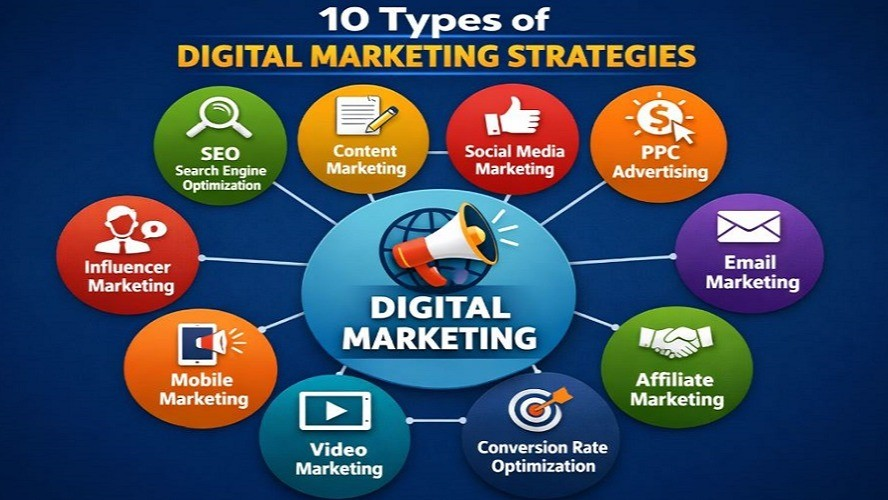
Every industry goes through a phase where the tools change faster than the habits around them. Digital marketing has been living in that phase for a few years now, but the next 12 to 24 months look different from the churn that came before. Search engines are answering questions directly instead of just linking to pages, ad platforms are quietly phasing out third-party tracking, and buyers increasingly research a company before ever landing on its homepage. Businesses that treat this as another minor update risk falling behind the ones that treat it as a structural shift. Search Is Being Rebuilt Around Answers, Not Just Rankings For most of the last two decades, ranking on page one was the finish line. That is no longer sufficient. AI-generated summaries at the top of search results now answer a large share of queries before a user clicks anything, which means visibility depends less on keyword density and more on whether a brand's information is structured clearly enough for an algorithm to lift and cite it. Analysts tracking search behavior expect this trend to accelerate through 2026 and 2027, particularly in markets like Thailand where mobile search dominates and users expect instant, conversational answers. Companies that keep publishing generic, thinly-written pages will simply become invisible to both traditional rankings and AI summaries alike. The ones that survive will be those with well-organized, genuinely useful content backed by a technically sound website. The Website Itself Is Becoming the Competitive Advantage Again There was a period where a website was treated as a formality — something to have, not something to invest in. That is reversing. As paid acquisition costs climb and organic discovery becomes more selective, the site a business sends traffic to matters more than ever, because a slow or unstable one loses visitors before they ever see an offer. Server response time, uptime, and security are now treated as ranking and conversion factors, not background infrastructure. This is why more Thai SMEs and regional brands are re-evaluating where their sites are hosted, moving away from shared, budget servers toward managed environments built specifically for platforms like WordPress. Reliable hosting wordpress setups reduce the load-time and downtime issues that quietly erode both search rankings and customer trust, and that shift toward infrastructure-first thinking is likely to keep gaining momentum as competition for attention tightens. Content Strategy Is Shifting From Volume to Verifiable Expertise Publishing frequency used to be the metric that mattered. Increasingly, depth, accuracy, and demonstrated expertise are what separate content that earns trust from content that gets scrolled past. Search engines have gotten better at identifying which articles are written by people who actually understand a subject versus content produced purely to fill a calendar. Looking ahead, brands that want to be cited, shared, and trusted will need editorial processes that prioritize research and clarity over sheer output. This is part of why demand for structured, strategy-led รับทำ content marketing services has grown steadily among Thai businesses trying to build long-term authority rather than chase short-term traffic spikes. Agencies such as Relevant Audience, a Bangkok-based digital marketing agency, have pointed to this same pattern — that a smaller volume of well-researched, properly distributed content tends to outperform a larger volume of generic posts over a 12-month horizon. Online Retail Will Demand Faster, Smarter Storefronts E-commerce is entering a phase where convenience alone no longer wins the sale. Shoppers compare prices, read reviews, and check delivery timelines across multiple tabs before committing, and a storefront that loads slowly or checks out clumsily loses that comparison instantly. The businesses preparing well for this shift are rebuilding their platforms with mobile-first design, integrated payment options, and clean product data rather than treating the storefront as an afterthought bolted onto a marketing campaign. A well-built เว็บขายของออนไลน์ is increasingly viewed as core sales infrastructure, not a side project, and that reframing is expected to widen the gap between brands that grow online and those that stagnate. Over the next few years, expect more integration between storefronts, chat-based customer service, and personalized product recommendations powered by first-party data collected directly on-site. Conclusion None of these shifts happen overnight, but the direction is consistent: search rewards clarity and expertise, infrastructure choices affect both speed and trust, and storefronts need to perform like sales tools rather than digital brochures. Businesses that start adjusting now — auditing their hosting, tightening their content strategy, and modernizing their online stores — will be in a far stronger position when these trends fully mature. Those still operating on assumptions from five years ago may find the gap harder to close later than it would be to address today. For businesses in Thailand looking to get ahead of this shift, a good next step is a conversation with a team that already works across these areas. Learn more at https://www.relevantaudience.com/. Contact Us Contact US Address: 2556, Building 66 Tower, Room.1802, Floor 18, Sukhumvit Rd, Bangna-Nuea, Bangna, Bangkok, 10260 Phone: 020385055 Email: [email protected] Website: https://www.relevantaudience.com/

How Specialist Recruitment and EOR Services Are Redefining Workforce Strategy in Thailand

How Specialist Recruitment and EOR Services Are Redefining Workforce Strategy in Thailand

Thailand's labor market has undergone significant transformation over the past decade. Rising foreign direct investment, the expansion of regional headquarters, and post-pandemic workforce restructuring have all forced companies to rethink how they attract, hire, and retain talent. Against this backdrop, specialist HR firms and employer-of-record solutions have moved from niche service categories to essential business infrastructure for companies operating across Southeast Asia. The Growing Demand for Head Hunter Recruitment Thailand Services Finding senior-level or highly specialized talent in Thailand is rarely straightforward. Standard job boards and internal HR teams often lack the networks and market intelligence required to identify candidates who are both technically qualified and culturally aligned with an organization's goals. This gap has driven consistent demand for executive search and head hunter recruitment thailand services, which operate through curated talent pools, direct outreach, and deep industry relationships rather than reactive advertising. Industries such as manufacturing, logistics, financial services, and technology have particularly relied on headhunting firms to fill mid-to-senior roles where the candidate market is thin and competitor poaching is common. The cost of a mis-hire at these levels — factoring in lost productivity, onboarding expenditure, and the repeat search — often far exceeds the fee charged by a specialist recruiter, making the investment case straightforward for most organizations. Why Multinational Corporations Turn to International Employer of Record Solutions For companies entering Thailand without an established legal entity, or those managing distributed teams across multiple countries, the compliance burden can be prohibitive. Labor law, social security contributions, personal income tax withholding, and statutory benefits each carry their own registration and reporting obligations. Errors are costly — both financially and reputationally. The international employer of record model addresses this challenge directly. Under this arrangement, a local EOR entity becomes the legal employer of the worker on the client company's behalf, handling all statutory obligations while the client retains operational control of day-to-day tasks and deliverables. This structure allows businesses to deploy talent in Thailand within days rather than months, without incorporating a subsidiary or navigating unfamiliar regulatory environments independently. Faster market entry with no entity setup required Fully compliant payroll and benefits administration Reduced legal exposure for the client organization Flexibility to scale headcount up or down without structural commitments Evaluating EOR Service Providers: What Separates Strong Partners from Weak Ones Not all eor service providers offer the same level of depth or reliability. When assessing potential partners, companies should look beyond pricing to evaluate the provider's existing legal infrastructure in Thailand, their track record handling multi-country payroll, and the responsiveness of their compliance team when regulations change — as they do with regularity in Southeast Asian markets. Key evaluation criteria include: Local legal entity: The EOR must have its own registered entity in Thailand, not rely on a sub-contractor arrangement that introduces additional risk. Compliance expertise: Look for providers with demonstrated knowledge of Thailand's Revenue Code, Social Security Act, and Workmen's Compensation Act. Technology platform: Payroll visibility, digital contracts, and employee self-service portals reduce administrative friction for both employers and workers. Onboarding speed: A competent EOR can onboard a new employee in Thailand within five to ten business days under most circumstances. Transparent pricing: All-inclusive fee structures are preferable to base-plus-variable models that obscure true cost. ADI Sourceing's Position in Thailand's HR Services Market ADI Sourceing is a Bangkok-based HR solutions firm that has built its service portfolio around the specific needs of employers operating in Thailand and the broader ASEAN region. The firm operates across executive search, contract staffing, and employer-of-record engagements, offering clients a consolidated point of contact for workforce challenges that span multiple service categories. What distinguishes ADI Sourceing within this space is its combination of local market depth and cross-border capability — a pairing that suits both domestic companies with regional hiring mandates and foreign firms establishing their first Thai operations. By managing both the recruitment function and the ongoing employment compliance obligations, the firm reduces the number of third-party relationships a client must maintain while entering or expanding in the market. Workforce Flexibility as a Competitive Advantage Organizations that build workforce flexibility into their operating model are better positioned to respond to market shifts, project-based demand spikes, and geographic expansion opportunities. The combination of specialist headhunting and EOR infrastructure enables exactly this kind of agility — companies can identify and onboard talent precisely when needed, without assuming the structural overhead of a full local HR function from day one. For multinational corporations evaluating Southeast Asia entry or expansion, Thailand represents both significant opportunity and regulatory complexity. Partnering with established local specialists in recruitment and employment compliance is increasingly recognized not as an outsourcing decision but as a risk management strategy. Conclusion Thailand's role as a regional business hub continues to attract investment from companies across manufacturing, technology, finance, and professional services. As workforce expectations evolve and compliance requirements tighten, the firms best equipped to operate here will be those that leverage specialist partners rather than attempting to manage every HR function in-house. Whether the need is an executive search, a compliant employment structure for a newly arrived foreign worker, or a scalable contract staffing arrangement, the case for working with an experienced local partner has never been stronger. To learn more about recruitment and employer-of-record services in Thailand, visit https://www.adiresourcing.com/ Contact US Address: 120 Kasemkij Building, Room No. 907, 9th Floor, Silom Road, Suriyawongse, Bangrak, Bangkok 10500…