

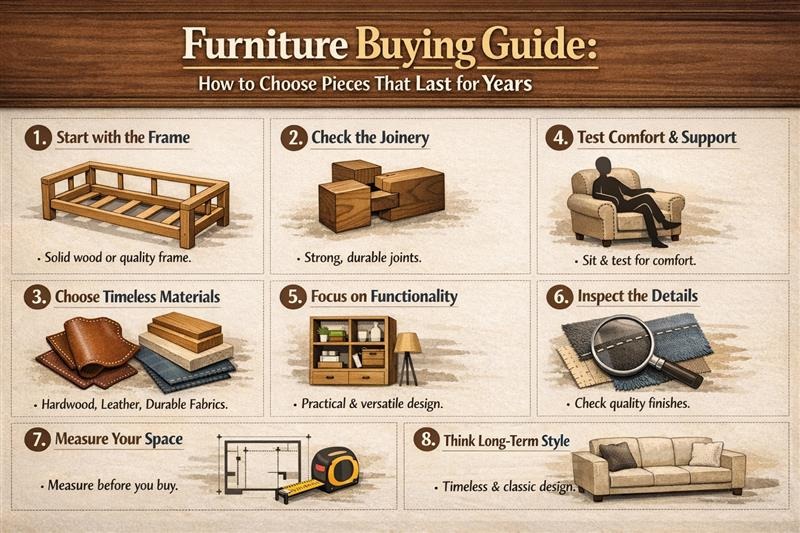
Furniture buying looks easy until it is not. We all have that one chair that started wobbling in six months or that sofa that looked amazing on day one and started sinking right where everyone sits. And then comes the line we all say at home, “We should have thought more before buying this.”
This guide is for that exact moment. Not fancy rules, not showroom talk. Just real things we actually notice after living with furniture every single day. Because buying furniture is not about how it looks on delivery day. It is about how it behaves on a random Tuesday two years later.
Understanding What Makes Furniture Long-Lasting
The biggest confusion while buying furniture is between something that looks good right now and something that stays useful for years.
Durable vs trend based furniture
Trend based furniture usually catches your eye instantly. Odd shapes, unusual colours, something that feels new. Durable furniture feels calmer. It does not scream for attention. It quietly does its job every day. Think of that solid dining table at your parents’ house that still feels fine after years of use.
Construction and materials matter more than looks
Long-lasting furniture depends on how it is built, not just what it looks like. Strong frames, good joints, and reliable materials make a difference. You might not see these things immediately, but you will feel them over time, especially in pieces like a mandir design where durability and craftsmanship are key
Everyday use changes everything
Furniture is not used gently in Indian homes. Kids climb, elders lean, guests sit anywhere. A piece that survives daily use is a good piece.
Buying with long term thinking
Ask one simple question before buying. Will this still work for us after five years. If the answer feels unsure, maybe rethink.
Many people realise this while browsing collections at Wooden Street, where you can actually compare pieces meant for daily use versus occasional use.
Choosing High-Quality Materials and Finishes
Materials decide how furniture behaves in real life.
Solid wood, metal, and good upholstery
Solid wood furniture feels steady because it is. It handles weight well and ages slowly. Metal frames work well for chairs and tables when done properly. Upholstery should feel thick and tight, not loose or overly soft.
Finishes are not just about shine
A good finish protects furniture. It helps against stains, scratches, and moisture. Bad finishes start peeling or fading quickly.
Materials that handle daily wear
Look for materials that do not panic with spills or dust. Life happens. Tea spills, food falls, kids draw. Furniture should handle these things calmly.
Avoiding shortcuts
Thin veneers and weak boards look fine at first but give up early. Touch the surface. Feel the weight. Light furniture is not always bad, but overly light furniture often tells a story.
Evaluating Construction and Build Quality
This part needs a little patience, but it saves a lot of regret later.
Joinery and frame construction
Strong joints keep furniture together. Whether it is a chair or a table, joints should feel firm. No shaking, no creaking.
Why sturdy frames matter
Seating takes the most stress. Frames need to support weight comfortably. Tables should not bend or move when you lean on them.
Signs of good build quality
Open drawers fully. Sit on sofas properly. Push the table slightly. Good furniture stays calm. Bad furniture reacts immediately.
Always test before buying
Sit the way you actually sit at home. Not straight, not careful. Normal sitting. If it feels awkward in the showroom, it will feel worse at home.
Selecting Timeless Designs Over Short-Lived Trends
Design is important, but it should not get tired quickly.
Why classic styles last longer
Simple designs age well. They do not depend on trends. They fit easily when you change curtains, wall colours, or lighting.
Clean lines and simple shapes
Furniture with simple shapes blends easily with different interiors. It does not feel out of place when styles change.
Versatility matters
A good piece should work in more than one setup. That makes shifting homes or rearranging rooms easier.
Long term visual comfort
Ask yourself if you will like this design even after seeing it every day for years. If the answer is yes, that is a good sign.
This is why many people prefer browsing balanced collections at Wooden Street, where you find designs that feel familiar yet current.
Balancing Comfort, Function, and Durability
Furniture should support how you live.
Comfort affects usage
Uncomfortable furniture slowly gets ignored. That chair becomes a place for clothes, not people.
Matching furniture to daily activities
A dining chair should support long meals. A sofa should handle long conversations and lazy afternoons. A bed should feel supportive every single night.
Ergonomics in everyday seating
Good back support, proper seat height, and armrests make a difference. You feel it in your body over time.

Practical features help
Washable covers, firm cushions, and sturdy legs make furniture easier to live with. These small things matter more than we realise.
Maintaining Furniture to Extend Its Lifespan
Buying good furniture is only half the story. Care matters too.
Simple care routines
Dust regularly. Clean spills quickly. Rotate cushions occasionally. These small habits help furniture last longer.
Cleaning and placement tips
Keep furniture away from direct sunlight and moisture when possible. Use mats and coasters. These things protect finishes quietly.
Maintenance prevents early damage
Loose screws, worn glides, or small scratches on a book shelf should be fixed early. Ignoring small issues can make them much bigger later.
Care as part of buying decision
Before buying, ask how much care a piece needs. Choose something that fits your routine, not something that adds stress.
Many families understand this better after talking to teams at Wooden Street, where usage and care are discussed openly, not just looks.
Conclusion
Furniture that lasts for years does not come from rushing decisions. It comes from thinking about daily life, real usage, and long term comfort. Strong materials, good construction, simple designs, and proper care together make furniture reliable.
The goal is not to fill the house quickly. The goal is to fill it wisely. Furniture should support life, not demand attention. When chosen carefully, good furniture quietly becomes part of everyday moments, from morning tea to late night conversations, and stays there without trouble for years.
