

For many households, the morning tea ritual feels like one of the simplest and healthiest habits of the day. A new brewing study covering 28 tea brands, however, suggests that what the tea is packaged in may matter almost as much as the tea itself. Researchers found that plastic tea bags released between 555 and 2,498 microplastic particles per cup, while loose leaf tea released only 0.3 to 2.4 particles per cup. The gap is large enough to make many home tea drinkers pause and look more closely at what is sitting in their kitchen cupboard.
What the study actually measured
The researchers brewed teas under realistic home conditions and counted the tiny plastic particles released into the water. Tea bags made with plastic materials, including nylon and polypropylene-style blends and plastic-sealed paper bags, shed far more particles during steeping. Loose leaf tea, which is brewed without a bag or with a reusable metal infuser, had almost no plastic to shed in the first place. The full study is published in a peer-reviewed journal and is available through Nature, where the methods and brand-by-brand results can be read in detail.
Microplastics are fragments smaller than five millimetres, and the particles counted in this research were far smaller than that. Scientists are still working to understand exactly how ingested microplastics affect human health over a lifetime, so the study does not claim that a single cup of tea causes harm. What it does show clearly is exposure: bag material is a major source of particles in an everyday drink, and that exposure is easy to reduce at home.
Why this matters for your kitchen
Tea is not an occasional treat in most homes. It is brewed daily, often several times a day, by every member of the family. Small exposures repeated over years are exactly the kind researchers want households to be aware of. The good news is that the kitchen is also where the fix is easiest. Unlike air pollution or municipal water, the tea you brew is entirely under your control, from the brand you buy to the way you steep it.
If you are already improving other high-moisture, high-use corners of the home, this fits the same mindset. Our guide to choosing the right ceiling tiles for kitchens and bathrooms makes a similar point: everyday materials chosen carefully can quietly improve daily life for years.
Simple swaps that cut exposure
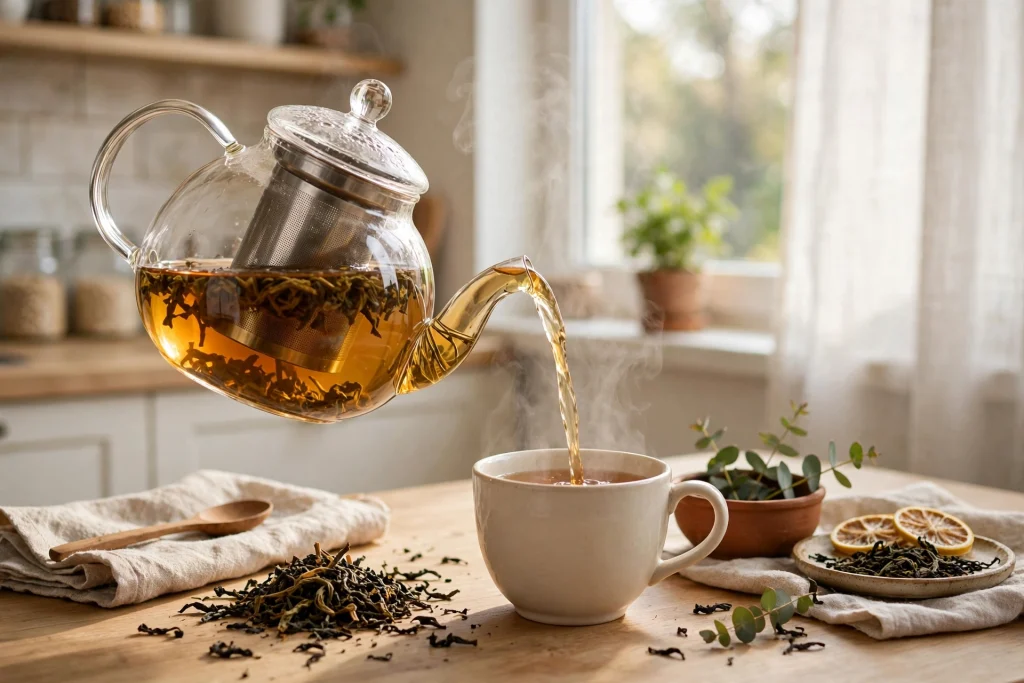
The most effective change is switching to loose leaf tea with a stainless steel infuser or a traditional teapot with a built-in strainer. Loose leaf tea is widely available, often tastes fresher because the leaves can expand fully, and produces almost no plastic waste. A good infuser costs very little and lasts for years.
If you prefer the convenience of bags, read the packaging carefully. Choose brands that state their bags are plastic-free and made from paper, cotton or plant-based fibres, and be cautious with silky pyramid bags, which are frequently made from nylon or other plastics despite their premium feel. Shorter steeping in water that is hot but not violently boiling may also reduce shedding, although material choice remains the biggest factor.
Building a healthier tea routine at home
Start with an audit of your tea drawer. Check which products list plastic in their bag material and replace them first, since heavy-use items matter most. Store loose leaf tea in an airtight tin away from light and strong smells, rinse infusers promptly so flavours stay clean, and compost used leaves where possible. Households working toward lower-waste living will find this pairs naturally with the ideas in our coverage of heat pumps and home energy upgrades: small, durable choices that keep paying off.
None of this requires giving up the comfort of a proper cup of tea. It simply means choosing leaves and materials with the same care you use for the water, the mug and the moment itself. On the evidence of this 28-brand study, loose leaf is the clear winner for anyone who wants great flavour with the fewest unwanted extras in the cup.