

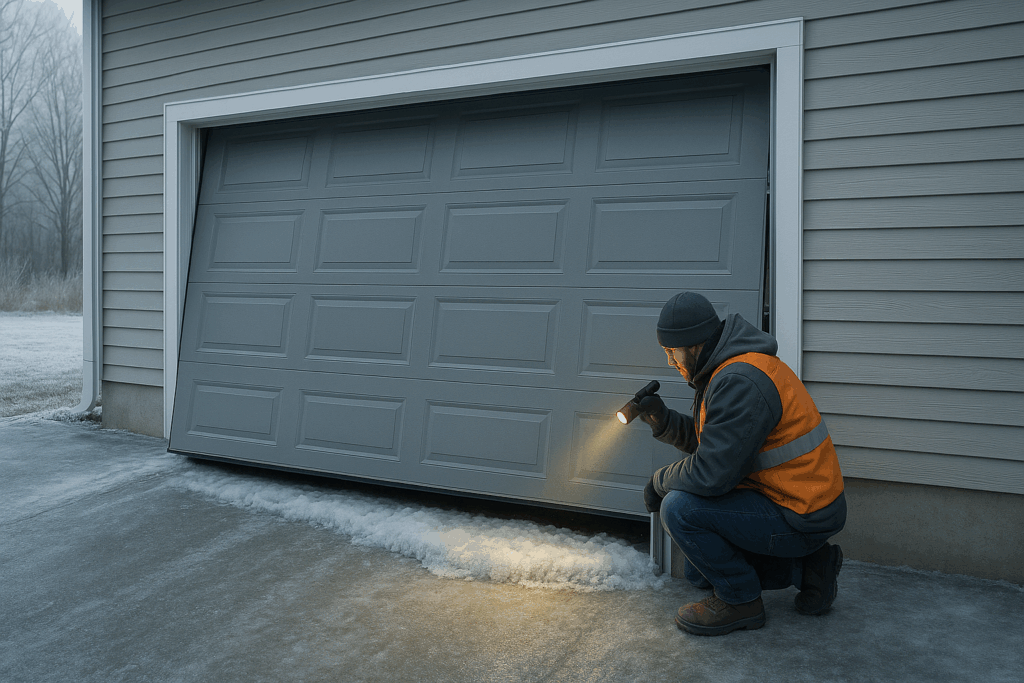
As winter storms approach and temperatures drop below freezing, home winterization becomes a top priority for homeowners. While insulating water pipes and clearing roof gutters are standard seasonal tasks, taking steps to prevent garage door freezing problems is essential to maintain daily home accessibility and security. When freezing rain, melted snow, and sub-zero temperatures combine, the bottom rubber seal of your garage door can fuse solid to the concrete threshold.
Attempting to open a frozen overhead door using an automatic opener can cause severe mechanical damage. The intense resistance can tear the bottom rubber astragal, strip motor gears, snap lifting cables, or break high-tension torsion springs. Implementing proactive preventative measures before severe winter weather strikes protects your garage system and avoids costly emergency repairs during freezing conditions.
Key Takeaway: A garage door freezes shut when trapped water at the concrete threshold turns to ice. Clearing snow around the bottom seal, applying silicone protectants, and maintaining proper floor drainage prevent ice bonding and protect your opener motor.
Why Garage Doors Freeze to the Driveway Concrete
Understanding the underlying causes of threshold ice bonding helps you apply effective preventative measures throughout the winter season.
- Melting Snow Runoff: Snow tracking into the garage from vehicle tires melts in warm indoor air, flows toward the doorway, and refreezes at the cold threshold.
- Poruous Concrete Absorbency: Driveway concrete absorbs moisture; when temperatures drop overnight, trapped water expands and freezes directly into the rubber bottom seal.
- Deteriorated Rubber Seals: Worn or cracked bottom astragals collect water within surface grooves, creating a strong mechanical bond when ice forms.
- Inadequate Floor Pitch: Poor garage floor drainage allows standing water to accumulate directly along the door threshold instead of draining outward.
Proven Strategies to Prevent Garage Door Freezing Issues
Applying a combination of preventative techniques guarantees smooth overhead door operation even during severe sub-zero cold snaps.
Strategy 1: Clear Snow, Slush, and Debris Daily
Daily maintenance around the doorway threshold prevents ice accumulation before it creates a structural bond.
- Shovel the Threshold Area: Clear a two-to-three-foot perimeter outside the garage door immediately after every snowfall to prevent melted slush from creeping under the seal.
- Sweep Out Interior Puddles: Use a push broom or squeegee to push standing water from melted vehicle snow out of the garage before temperatures plunge overnight.
- Remove Built-Up Ice: Use a non-metallic scraper to clear ice patches around the door perimeter without damaging the bottom rubber astragal.
Strategy 2: Apply Silicone Protectants to the Bottom Rubber Seal
Treating the bottom rubber seal creates a hydrophobic barrier that repels water and prevents ice adhesion.
- Use Synthetic Silicone Spray: Apply a generous coating of 100% silicone spray or rubber protectant along the entire bottom astragal rubber seal.
- Reapply Bi-Weekly: Reapply silicone spray every two weeks during active freezing weather to maintain a hydrophobic coating.
- Avoid Petroleum Jelly and Grease: Never apply thick petroleum grease or motor oil to rubber seals, as petroleum products degrade synthetic rubber and attract dirt.
Strategy 3: Create a Non-Stick Threshold Barrier
For extreme winter weather events, applying temporary non-stick agents directly onto the concrete slab provides an extra layer of protection.
- Sprinkle Table Salt or De-Icer: Lightly scatter rock salt or calcium chloride de-icer along the concrete threshold where the rubber seal meets the floor.
- Apply Cooking Spray in Emergencies: In a pinch, spraying vegetable cooking spray along the bottom rubber edge prevents ice from sticking to the driveway concrete.
- Install a Rubber Threshold Ramp: Mounting an elevated rubber threshold seal slightly behind the door line diverts indoor water away from the exterior freeze line.
Safe Step-by-Step Method for Thawing a Frozen Garage Door
If your garage door is already frozen shut, follow these safe, incremental steps to free the door without causing expensive mechanical damage.
Step 1: Disengage the Automatic Door Opener
Never press the automatic opener wall button or remote control if you suspect the door is frozen to the floor.
- Pull the Emergency Release: Disengage the automatic opener by pulling the red emergency release cord down and toward the door.
- Prevent Motor Damage: Disengaging the opener prevents internal drive gears from stripping or motor windings from burning out while trying to lift heavy ice.
Step 2: Apply Targeted Heat to the Bottom Seal
Use safe heat sources to melt ice along the threshold seal without scorching rubber materials.
- Use a Hair Dryer or Heat Gun: Pass a hair dryer or low-temperature heat gun back and forth along the bottom rubber seal, holding it six inches away.
- Pour Warm (Not Boiling) Water: Pour warm water along the exterior seal threshold to melt ice quickly.
- Avoid Boiling Water: Never pour boiling water over frozen concrete or cold rubber; extreme thermal shock can crack concrete slabs or tear frozen rubber seals.
Step 3: Gently Chip Away Ice and Lift Manually
Once the ice loosens, clear residual buildup and lift the door manually to verify complete freedom of movement.
- Use a Plastic Putty Knife: Slide a rigid plastic putty knife gently between the rubber seal and concrete floor to break remaining ice bonds.
- Manually Raise the Door: Lift the door manually using the bottom handle. If you encounter resistance, stop and apply additional heat.
- Wipe the Threshold Dry: Immediately dry the concrete floor and rubber astragal with an old towel to prevent the door from refreezing instantly.
Winter Threshold Protection Overview
| Preventative Action | Primary Target | Recommended Materials | Protection Level |
| Silicone Seal Coating | Bottom rubber astragal | 100% Silicone spray lubricant | High long-term protection |
| Threshold De-Icing | Driveway concrete slab | Calcium chloride pellets | High fast-acting protection |
| Daily Floor Squeegee | Interior garage slab | Heavy-duty rubber squeegee | Essential preventative care |
| Elevated Threshold Seal | Doorway concrete seam | Vinyl threshold ramp kit | Permanent drainage solution |
| Heat Gun Thawing | Frozen ice bond | Low-temp heat gun / hair dryer | Safe emergency recovery |
Know When to Seek Professional Support
While clearing threshold ice and applying silicone spray are safe DIY maintenance tasks, severe winter damage requires expert service. If attempting to open a frozen door resulted in bent track channels, derailed rollers, snapped torsion springs, or loose lifting cables, contact a licensed garage door repair technician right away. Professional specialists have the tools and training necessary to realign heavy overhead systems safely.
Protect Your Garage Door System This Winter
Taking simple steps to prevent garage door freezing issues preserves your equipment, ensures continuous home access, and saves you from costly repair bills. By sweeping away snow melt, applying silicone protectant to bottom seals, scattering threshold de-icers, and using safe thawing methods, you keep your garage door functioning smoothly throughout the coldest months of winter.