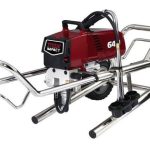

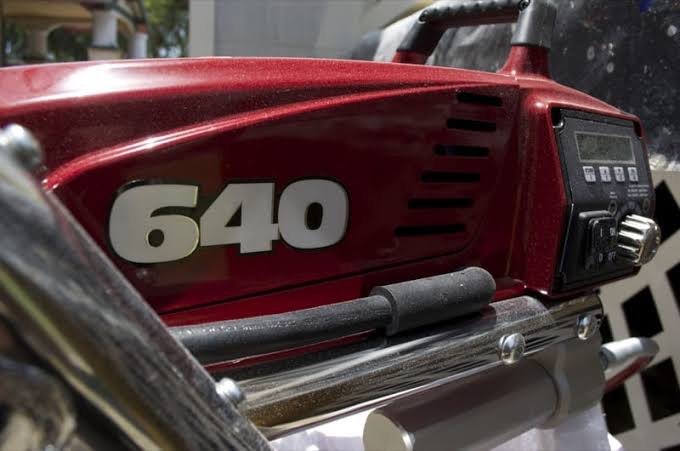
Every contractor shopping for a mid-tier airless sprayer eventually asks the same question. Do you spend more on a name brand machine, or save money on something that looks similar on paper? The Titan Impact 640 sits right in the middle of that decision for a lot of professional painters, and it is worth actually breaking down what you get for the price instead of just comparing spec sheets side by side.
Where the Impact 640 Fits
The 640 sits above the Impact 540 and below the heavier duty 740 and 840 in Titan’s lineup, giving it more flow and pressure capacity than the smaller machine while staying lighter and less expensive than the true industrial models. That makes it a common choice for painting contractors running steady commercial and larger residential work who need more than an entry level machine but do not need the extra cost or weight of a full industrial pump.
The machine shares a lot of its design language and serviceable parts architecture with the rest of the Impact series, which matters more than it might seem. A contractor running a 540, a 640, and an 840 across different crews benefits from shared consumables like filters and fittings across the fleet, which simplifies your parts inventory instead of stocking three completely different sets of wear items. Screws, ground lugs, motor covers, and several other small hardware components are genuinely interchangeable across multiple Impact models, which is a real convenience most buyers do not think to ask about until they own two or three machines.
Comparing It to Cheaper Alternatives
Budget sprayers from other brands often undercut the 640 on sticker price, sometimes by a significant margin. What that comparison usually leaves out is total cost over the life of the machine. Titan’s Impact series uses a fully serviceable fluid section rather than a disposable pump cartridge, meaning a worn piston or packing set is a parts repair rather than a full pump replacement. Cheaper machines built around sealed or non-serviceable pump units often force a full replacement once the pump wears out, which erases the up-front savings the first time it happens.
Parts availability is the other piece that rarely gets mentioned in a side-by-side spec comparison. A machine is only as good as your ability to keep it running, and a sprayer from a smaller or newer brand can leave you waiting weeks for a part that would ship the same day for an established platform like the Impact series. When you are billing a client for a completed job, that difference is not academic. It is the gap between finishing on schedule and explaining a delay.
What You Actually Get for the Higher Price
Beyond the fluid section, the 640’s motor and drive assembly are built for sustained daily use rather than occasional weekend projects. That shows up in practice as fewer stalls under thicker material, less heat buildup during long spray sessions, and a machine that tends to hold its working pressure more consistently as it ages compared to a lighter duty competitor pushed past its comfortable operating range.
The control panel and pressure regulation on the 640 also tend to be more precise than what you find on budget machines, which translates directly into a more consistent finish and less time spent adjusting settings mid-job. For a contractor billing by the job rather than the hour, that consistency has a real dollar value even though it never shows up on a spec sheet comparison. Rework from an inconsistent spray pattern costs far more in lost time and materials than the price difference between a mid-tier machine and a budget one.
A Practical Way to Compare Machines Side by Side
Rather than lining up spec sheets, it helps to think through a typical week. How many gallons do you spray, how thick is the material on average, and how many hours does the machine actually run under load rather than sitting idle between coats. Once you have those numbers, you can estimate a rough cost per gallon for each machine you are considering, factoring in purchase price amortized over a realistic lifespan plus expected annual maintenance. That calculation almost always favors the better built machine once your volume passes a certain threshold, even though the sticker price comparison alone would suggest otherwise.
It also helps to actually call a parts supplier and ask how quickly a common wear item ships for the machine you are considering. A fast, confident answer on stock and shipping speed tells you a lot about how well supported that platform actually is in practice, not just in marketing copy.
A Word on Warranty and Support
Warranty coverage is another factor that tends to get overlooked in a pure price comparison. Titan’s dealer network and documented service history give a 640 owner a clear path when something goes wrong under warranty, with defined coverage terms and an established process for claims. Smaller or newer brands sometimes offer warranty terms that look generous on paper but are harder to actually use in practice, whether because of slow response times, limited service locations, or ambiguous language about what is and is not covered.
That is worth factoring into the investment decision alongside the hardware itself, since a warranty you can actually use adds real value that a spec sheet comparison will never capture.
When a Cheaper Machine Actually Makes Sense
None of this means the 640 is the right buy for everyone. If you are spraying occasionally, working mostly with thin materials, or running a business where the sprayer sits idle more often than it runs, the total cost math shifts. A lighter, less expensive machine that gets replaced every few years can genuinely work out cheaper for low volume use, since you are not paying a premium for durability you never call on.
The honest way to decide is to look at your actual gallons sprayed per week and the coatings you run most often. If you are regularly pushing thicker materials or spraying daily, the Impact 640’s build quality and parts ecosystem tend to pay for themselves. If your usage is lighter, that premium is harder to justify.
What Contractors Say After a Few Seasons
Ask around at a paint supply counter or a contractor trade group and the same pattern shows up repeatedly. Owners of the Impact 640 who bought it for steady commercial work tend to report that the machine earned its keep, while owners who bought it for occasional light use sometimes wonder whether a smaller machine would have served them just as well for less money. That split lines up almost exactly with the usage based reasoning laid out above, which is a good sign that the framework holds up against real world experience rather than just theoretical math.
Keeping the Machine Running Long Term
Whichever way you land on the buying decision, the machines that last longest are the ones that get consistent maintenance rather than the ones that simply cost more up front. Flushing thoroughly after every job, replacing filters before they clog completely, and watching for early signs of packing wear will extend a 640’s service life well beyond what the sticker price alone would suggest, and it keeps your total cost of ownership close to what you budgeted for rather than climbing every time something unexpected fails.
About the Author
Nnanna Otuonye is the founder and CEO of AllTitanParts.com, an authorized OEM parts dealer for Titan, SprayTech, Wagner, and Speeflo sprayer equipment, based at 5250 Gulfton St, Suite 1H, Houston, Texas. With more than 20 years in the spray equipment industry, he has helped thousands of contractors source the right parts, troubleshoot equipment problems, and keep their airless sprayers running through genuine OEM components and same-day shipping.