

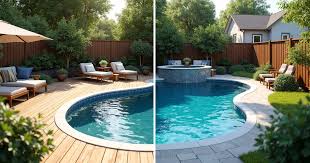
A swimming pool is one of the largest and most permanent investments a homeowner can make. Unlike a coat of paint or a new kitchen appliance, a pool cannot be easily changed once it is built. The shape is set in gunite. The depth is fixed in concrete. The placement of features — the waterfall, the spa, the Baja shelf, the entry steps — is determined before a single shovel hits the ground. And yet, for most of the history of residential pool construction, homeowners were expected to approve these permanent decisions based on nothing more than a two-dimensional paper plan and a contractor’s verbal description.
That era is over. Modern 3D swimming pool design technology has fundamentally changed the homeowner’s experience of planning a custom pool — and the pools being built because of it are better, more personal, and more precisely what their owners envisioned than anything produced under the old process. This guide explains what 3D pool design is, how it works, and why it represents such a meaningful advancement for anyone planning a new pool in Las Vegas.
What Is 3D Pool Design?
3D pool design uses specialized software to create a photorealistic, three-dimensional rendering of a proposed pool as it will appear in a specific homeowner’s actual backyard. Unlike generic pool catalogs that show beautiful pools in generic settings, a true 3D pool design is built from the homeowner’s specific yard dimensions, slope, existing structures, landscaping, and architectural style.
The process typically works as follows: a pool designer visits the property, takes measurements and photographs, and inputs this data into the design software. The existing house, yard boundaries, trees, patio areas, and other permanent features are modeled into the digital environment. Then the proposed pool — in the exact shape, depth, and configuration being considered — is placed into that digital yard. Features like waterfalls, spas, water features, lighting, and coping materials are added. The result is an image that shows, with a high degree of accuracy, exactly what the finished pool will look like in the homeowner’s actual backyard.
Advanced 3D swimming pool design platforms go even further. Homeowners can take a virtual walkthrough of the proposed design, viewing the pool from the perspective of someone standing on the patio, sitting on the Baja shelf, or looking out from the master bedroom window. Some systems offer real-time editing, allowing the designer to change the shape, add or remove features, or swap finish materials while the homeowner watches the changes update on screen.
The Problem 3D Design Solves: The Gap Between Imagination and Reality
Anyone who has been through the process of building something — a room addition, a landscape project, a custom piece of furniture — understands the phenomenon of the imagination gap. The homeowner imagines one thing based on verbal descriptions and 2D plans. The contractor builds exactly what was specified. And the finished result, while technically correct, does not look the way the homeowner imagined.
In swimming pool design, the imagination gap has been responsible for an enormous amount of costly post-construction regret. Common examples include:
● A pool that was described as ‘freeform’ but looks rigid and geometric in the actual yard space
● A waterfall that was expected to be dramatic and substantial but looks small in proportion to the pool size
● A spa that was envisioned as private and tucked-in but feels exposed and visually isolated from the main pool
● A pool that looks perfectly proportioned on paper but overwhelms the backyard in real life, leaving no comfortable yard space
● Finish materials — plaster color, tile choices, coping stone — that look completely different in a small sample than in the full context of a 15,000-gallon pool under Las Vegas sunlight
3D swimming pool design eliminates virtually all of these surprises. When the homeowner can see a photorealistic rendering of the finished pool in their specific yard — with their actual house in the background, their existing tree in the correct position, and their patio furniture to scale — the imagination gap closes. What they approve is what they get.
How 3D Design Changes the Decision-Making Process
Visualising Scale and Proportion
One of the most valuable functions of 3D swimming pool design is communicating scale. On a paper plan, a pool shape is represented as a top-down outline — essentially the pool’s footprint. This representation gives almost no intuitive sense of how the pool will feel in the space, how large it will appear, or how it will relate to the house and the yard boundaries.
In a 3D rendering, all of these spatial relationships become immediately legible. A homeowner can instantly see whether the proposed pool leaves comfortable lawn space for children to play, whether the Baja shelf feels proportionate to the overall pool, and whether the raised spa relates correctly to the main pool level. Design decisions that would have required technical expertise to evaluate from a 2D plan become straightforwardly visible to any homeowner.
Exploring Multiple Design Options
One of the traditional constraints of the pool design process was the time and cost involved in producing alternate design concepts. Creating a detailed paper plan took significant drafting time, which meant that most homeowners evaluated only one or two design options before committing.
3D swimming pool design dramatically reduces the cost of exploring alternatives. Once the base yard model is built, a designer can generate multiple pool configurations — a rectangular lap pool, a freeform lagoon shape, an L-shaped design with a separate spa — and the homeowner can evaluate all of them side by side. Features can be added, removed, and repositioned in real time. This exploration process frequently leads homeowners to designs they would never have considered without visual evidence — and that they ultimately love more than their original concept.
Selecting Finishes and Materials
Pool finish selection — plaster color, tile patterns, coping stone, deck material — is one of the most consequential and most under-served parts of the traditional pool design process. Homeowners typically make these decisions based on small material samples, catalog images, and the contractor’s recommendations. In a Las Vegas environment, where the pool finish is constantly subjected to intense UV radiation, hard water, and significant temperature swings, color and material selection matters enormously for both aesthetics and longevity.
3D swimming pool design allows finish materials to be applied to the full pool model, so the homeowner can see exactly how a particular plaster color will look in their pool — how it will interact with the coping stone, how the tile band will relate to the waterline, and how the deck material will look adjacent to both the pool and the house exterior. This dramatically reduces the risk of finish choices that look different in a full installation than they did in a sample.
| 💡 Pro tip: In Las Vegas, pool plaster colors read very differently under the intense desert sunlight than they do in indoor showroom lighting. Always review finish selections in a 3D rendering with sunlight simulation before committing. |
Coordinating With Landscaping and Outdoor Living
The best Las Vegas backyard designs treat the pool as the centerpiece of an integrated outdoor living environment — not as a standalone feature. This means the pool design must be coordinated with the surrounding landscape, outdoor kitchen or bar area, shade structures, and exterior lighting.
3D swimming pool design makes this coordination visual and intuitive. A homeowner can see how the proposed pool relates to a proposed pergola, whether the outdoor kitchen placement allows sightlines to the pool for supervising children, and how the landscape planting will frame the pool view from inside the house. These multi-element spatial relationships are nearly impossible to evaluate from 2D plans — and they are exactly what 3D design illuminates.
3D Design and the Contractor Relationship
Beyond its value to the homeowner, 3D swimming pool design also improves the relationship between the homeowner and the contractor — and produces better outcomes for both. When a contractor presents a 3D rendering, the homeowner understands what is being proposed with a level of clarity that eliminates most of the ambiguity that leads to post-construction disputes.
The 3D design becomes a shared reference point — something both parties can point to and say ‘this is what we agreed on.’ Change orders, which are the primary source of budget surprises in pool construction, are significantly reduced when the homeowner fully understood and approved the design before construction began.
Additionally, 3D design documents the intent of the project in a way that 2D plans cannot. If a specific tile pattern, finish color, or feature placement was shown in the approved 3D rendering, that rendering serves as the definitive reference for how the finished pool should look. Disputes about whether a waterfall was supposed to be positioned differently, or whether a different coping material was specified, become uncommon when the design was clearly visualised and approved before construction.
What to Look for in a 3D Pool Design Process
Not all 3D swimming pool design processes are equal. When evaluating pool builders’ design capabilities, homeowners should look for:
● Site-specific modeling — the 3D design should show your actual yard, not a generic background. Any designer using generic landscapes is not providing true 3D design.
● Real-time editing capability — the ability to make design changes while you watch allows for genuine exploration and collaboration, not just a take-it-or-leave-it presentation
● Material library — a broad selection of finishes, coping materials, tile options, and decking materials should be available to apply to the model
● Multiple viewing angles — you should be able to view the design from multiple perspectives, including eye-level, aerial, and from inside the house
● Lighting simulation — the ability to view the design in different lighting conditions (midday sun, evening, night lighting) is particularly valuable for Las Vegas backyards where evening pool use is common
● Revision flexibility — a good 3D design process includes multiple revision cycles, not a one-time presentation
The Business Case: Why 3D Design Is Worth the Investment
Some homeowners wonder whether the 3D design process adds cost to the pool project. In practice, the opposite is typically true. The cost of revising a design decision in 3D software is essentially zero. The cost of revising a design decision after concrete has been poured is enormous — and in some cases, impossible.
The research on construction projects consistently shows that projects with clear, well-documented pre-construction design have significantly lower rates of change orders and post-construction disputes. In pool construction specifically, the investment in thorough 3D swimming pool design typically pays for itself many times over through avoided change orders, reduced construction errors, and homeowner satisfaction with the finished product.
More importantly, 3D design produces better pools. When homeowners can fully visualise what they are building and make informed decisions about every element, the pools they commission are more precisely suited to their lifestyle, their yard, and their aesthetic preferences. The result is a pool they love for decades rather than one they gradually wish had been done differently.
3D swimming pool design is no longer an emerging technology or a premium add-on — it is the standard for how serious pool design should be done. If a pool builder is not offering site-specific 3D design as a core part of their process, they are asking homeowners to make permanent decisions with inadequate information.
Desert Springs Pools & Spas uses advanced 3D swimming pool design technology to give every Las Vegas homeowner a complete, photorealistic preview of their finished pool before a single shovel breaks ground. Our design process includes site-specific modeling of your actual yard, real-time design collaboration, full material and finish visualization, and multiple revision cycles — because we believe you should love your pool before it’s built, not just after. Contact Desert Springs Pools & Spas today to schedule your complimentary 3D design consultation.