
A duvet cover is easy to dismiss as a decorative shell. In practice, it is one of the most frequently handled items in a bedroom. It sits against the sleeper, protects the quilt or doona inside and has to survive repeated washing. In Australia, it must also work across climates that range from tropical and humid to cool and alpine.
The smartest choice is not simply the cover with the highest number in its product description. It is the one that suits the local climate, the sleeper, the existing insert and the household’s washing routine.
Begin with the room, not the product
Australia has eight main climate zones under the National Construction Code. The Australian Government’s YourHome guide explains that homes in every Australian climate require some form of cooling at certain times, although the appropriate strategy changes by location.
In hot and humid areas, moving air is particularly important because it helps perspiration evaporate and makes people feel cooler. In dry climates, households may benefit from strong night-time temperature changes. In cool regions, the challenge is balancing summer comfort with winter warmth.
Before changing the bedding, note when the bedroom becomes uncomfortable. A room that overheats before sunset may need earlier shading. A room that stays warm long after the outdoor temperature falls may need better ventilation. An upstairs room may be affected by stored heat and natural convection.
Bedding should complement those cooling measures. It cannot compensate for a west-facing window in full sun or a fan that does not move air across the bed.
Understand what you are buying
Retail terminology can be confusing because Australians use quilt, doona and duvet in overlapping ways. A duvet or quilt cover is the removable outer layer. It does not normally include the insulating insert unless the product page says so.
Check these details before purchasing:
1. Fibre content and construction
2. Exact Australian dimensions, not only the size name
3. Closure style and internal ties, if provided
4. Included pieces
5. Care instructions
6. Returns and exchange terms
7. Current price and delivery information
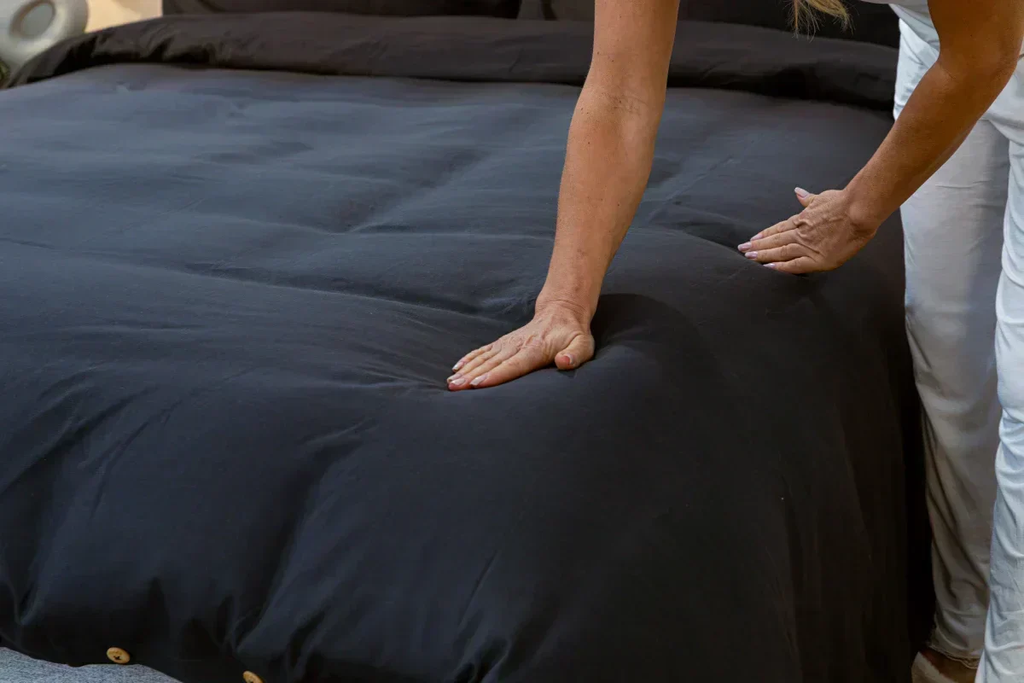
The EcoToppers bamboo duvet cover is presented as a soft, breathable cover designed for year-round use in Australian homes. Its related product listing describes an organic bamboo quilt cover range in Australian sizes, with prices varying by size and option. Shoppers should confirm the current details on the retailer’s page before ordering.
Do not judge comfort by thread count alone
Thread count is often treated as a shortcut for quality, but it does not explain everything about how a fabric will feel or perform. Fibre type, yarn construction, weave, finishing and care all influence the result. A large number on a package should not replace a careful look at the full specification.
Touch is personal as well. Some sleepers prefer a crisp surface while others want a smoother drape. Someone who sleeps hot may prioritise a lighter feel and airflow. A cold sleeper may care more about the insert and total layering than the cover itself.
This is why a clear returns policy is useful. It allows shoppers to consider fit, colour and finish without pretending every household wants the same sensation.
Match the cover to the insert
Measure the quilt or doona rather than assuming its label tells the whole story. Dimensions can vary between brands, and an older insert may not match the measurements of a new cover.
A cover that is too large lets the insert slide and gather. One that is too small can create firm, uneven sections. Even when both items carry the same size name, compare the centimetre measurements.
If a household changes inserts between summer and winter, check whether both have the same dimensions. Otherwise, a second cover size may be necessary.
Think in seasonal layers
Australian bedroom styling often favours multiple cushions, blankets and throws, but those layers can become impractical in warm weather. Treat the bed as a seasonal system.
For summer, remove decorative layers that trap warmth and select an insert suited to the sleeper and climate. During transitional months, keep a light blanket nearby rather than building every layer into the bed. In winter, add warmth gradually so individual items can be removed as conditions change.
Air movement supports this approach. YourHome notes that moving air cools people by increasing evaporation. At 50 per cent relative humidity, air moving at 0.5 metres per second can reduce the perceived temperature by about 3 degrees Celsius. Correct fan placement and safe cross-ventilation may therefore make a noticeable difference to how bedding feels.
Read and follow the care label
Care instructions are not an optional extra. Australia’s mandatory care labelling framework covers many textile products, including bedding, and is intended to provide adequate directions that prevent damage when followed.
Use the recommended water temperature and drying method. Measure detergent rather than pouring by eye. Close buttons or zips before washing and avoid packing the machine so tightly that the cover cannot move freely.
Duvet covers can collect smaller items during a wash, creating an unbalanced load and leaving the centre insufficiently rinsed. Washing the cover separately or with similar bed linen helps. Dry it completely before placing it back on the insert, particularly in humid conditions.
Rotating between two covers can also make care easier. One can be washed and dried properly without pressure to remake the bed immediately.
Look for specific information, not vague promises
Useful product pages tell shoppers exactly what the item is, what it contains, which sizes are available and how to care for it. Be cautious when a listing uses broad environmental or health language without explaining the basis for the claim.
No duvet cover can guarantee better sleep or solve a hot room by itself. The Sleep Health Foundation notes that insufficient sleep has many possible causes, including lifestyle pressures and clinical sleep disorders. Bedding is one part of a much larger sleep environment.
That does not make the choice unimportant. A correctly sized, comfortable and easy-to-care-for cover can make the bed more pleasant to use every night. The best breathable duvet cover is the one that fits the insert, suits the climate and can be maintained according to its label.
A practical final checklist
Before placing an order, answer five questions:
1. Does the cover fit the insert’s measured dimensions?
2. Is the fibre and construction clearly described?
3. Will the care routine work in this household?
4. Does the retailer provide clear delivery and returns information?
5. Does the bedding suit the room’s real temperature and airflow conditions?
If the answer to all five is yes, the choice is based on practical comfort rather than a trend. That is a better foundation for an Australian bedroom in every season.