

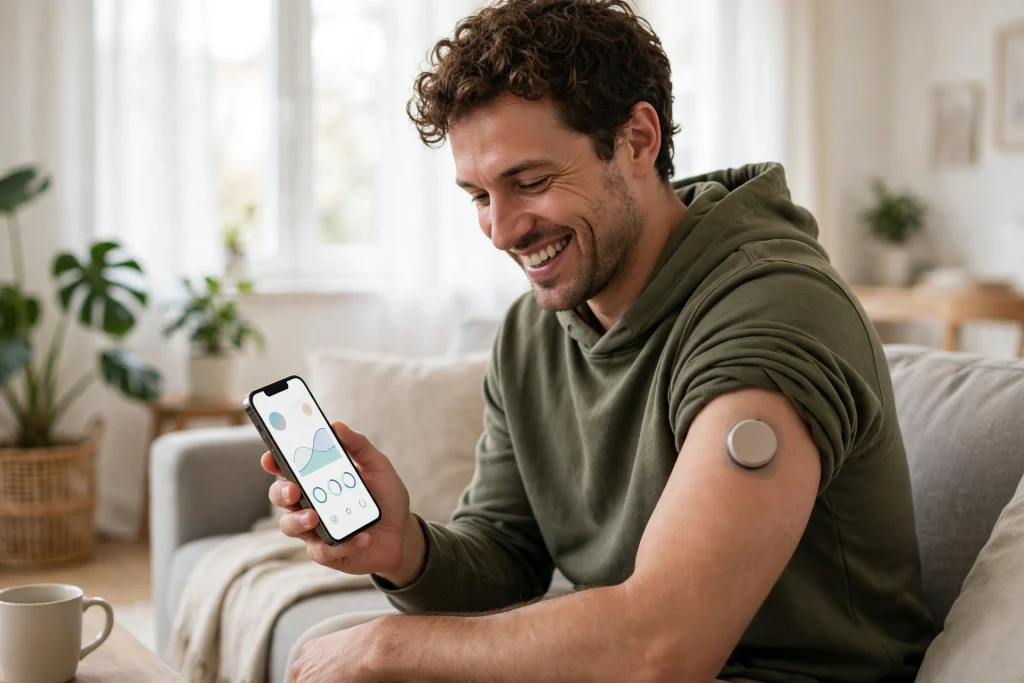
Continuous glucose monitors were once seen as specialist equipment for people who use insulin. The largest clinical trial of its kind, published in the New England Journal of Medicine, is changing that picture. The trial found that adults with type 2 diabetes who do not use insulin and who wore a continuous glucose monitor spent approximately five more hours a day in their target blood sugar range. For families managing diabetes at home, that is a meaningful, daily difference rather than a marginal lab result.
What the trial found
Participants using the monitors could see their glucose levels in real time, along with trends showing whether levels were rising or falling. Instead of relying only on occasional finger-prick tests or quarterly lab work, they received continuous feedback and could connect everyday choices, such as a meal, a walk after dinner or a late-night snack, with an immediate, visible response. A summary of the findings is available from the University of Colorado Anschutz Medical Campus, which reported the trial results.
Five extra hours a day in range adds up to more than a full extra day each week spent at healthier glucose levels. Over months and years, time in range is associated with a lower risk of the complications that make diabetes so burdensome, including damage to eyes, kidneys and nerves. Just as importantly, participants were not using insulin, which means the benefit came from awareness and behaviour rather than from a new medication.
Why home monitoring changes behaviour
Diabetes management happens at home, in kitchens and dining rooms, far more than it happens in clinics. A sensor worn on the arm turns abstract advice into personal evidence. A person can see exactly what a large portion of white rice does to their own glucose curve, or how a fifteen-minute walk after lunch flattens a spike. That kind of feedback loop is difficult to achieve with occasional testing alone.
It also helps families support each other. Shared app access, where the wearer chooses to enable it, lets a partner or adult child see worrying lows or highs and respond quickly. Combined with sensible home routines, such as the balanced, lower-waste kitchen habits discussed in our article on materials for kitchens and bathrooms, monitoring works best as part of an organised, health-conscious household rather than as a gadget used in isolation.
Who should consider a monitor
Adults with type 2 diabetes who struggle to keep levels in range, who experience unexplained highs and lows, or who are making major diet and activity changes are the clearest candidates to discuss monitoring with their clinician. Availability and insurance coverage vary, and a monitor is not a substitute for prescribed treatment, regular check-ups or medical advice. Anyone considering one should start with a conversation with their own doctor, who can interpret readings in the context of their full health picture.
There are practical points to plan for at home too: sensors are typically replaced every ten to fourteen days, readings can lag slightly behind blood glucose during rapid changes, and skin adhesives need a clean, dry site. Keeping supplies organised alongside other household health essentials, much like planning any upgrade such as the heat pump improvements many homes are making this year, makes the routine far easier to sustain.
Making the data part of daily life
Clinicians involved in this field often stress that the device itself is only half of the story. Reviewing weekly patterns, noting which meals consistently cause spikes, and sharing reports at appointments turn raw numbers into decisions. Many users keep a simple food and activity note alongside the app for the first few weeks, until healthier defaults become habit. That steady, informed routine is where the extra hours in range are really earned, day after day at home.
The bottom line for households
This trial strengthens the case that continuous glucose monitoring is a practical home health tool, not just hospital technology. Five more hours a day in the target range, achieved without insulin, shows what timely information can do. For the millions of households living with type 2 diabetes, that information, used with professional guidance, could make everyday management clearer, calmer and more effective.