

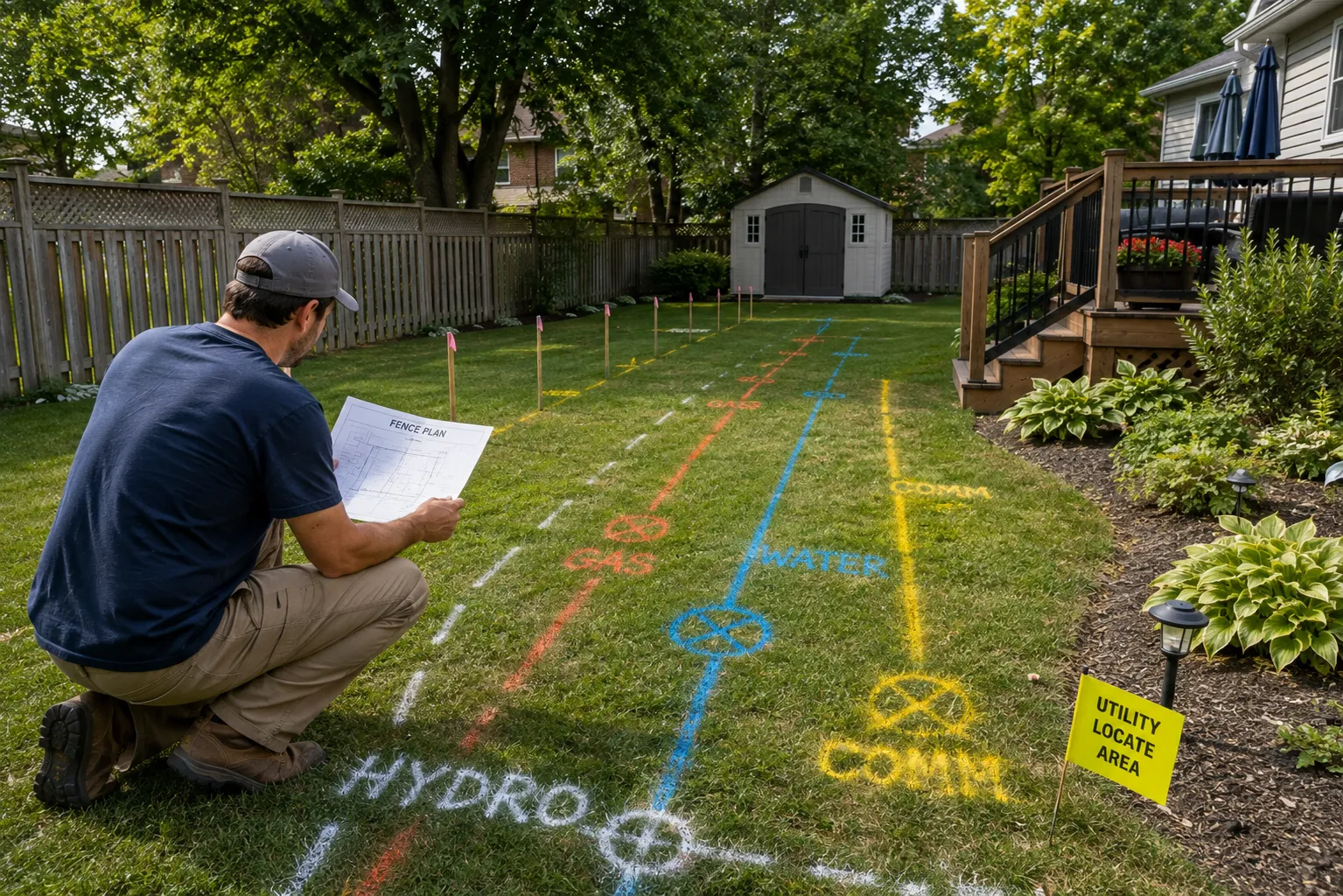
A backyard project can change quickly once digging begins. Installing a fence may require dozens of post holes. A new deck needs properly placed footings. Planting a mature tree can involve excavating much deeper than expected. Even garden improvements, irrigation systems, sheds, and landscaping features may require disturbing areas of soil that have not been opened for years.
What homeowners see at ground level tells only part of the story. Underground utility lines and other buried services may cross a property without any visible indication of their location. Understanding what could be below the planned work area is therefore an important part of preparing for an outdoor project.
Small Projects Can Still Involve Significant Digging
It is easy to associate excavation risks with major construction, but many routine backyard projects require substantial digging.
Fence installation is a common example. Each post needs a hole deep enough to provide stability, and a long property line can mean repeated excavation across several parts of the yard. Deck construction may involve fewer holes, but footings can extend well below the surface.
Landscaping preparation can be equally disruptive. Planting a larger tree requires space for its root ball, while irrigation work may involve trenches extending through much of a lawn or garden. Homeowners preparing for a pool, substantial patio, retaining wall, or major backyard renovation may disturb an even larger area.
The important factor is not whether a project feels large or small. It is whether the work will penetrate the ground in a location where buried utilities or other infrastructure could be present.
Know What May Run Through Your Property
Residential properties can have various services running underground. Depending on the property and its history, these can include utilities serving the house as well as lines installed to support other structures and outdoor features.
Some buried infrastructure is relatively easy to anticipate. Homeowners may know, for example, that utilities enter the house from a particular side of the property. Other installations can be less obvious.
A detached garage or workshop might have an underground electrical supply. A pool could have associated electrical or gas services. Irrigation systems, landscape lighting, or other privately installed features may also have underground components.
Property changes over time can make the situation more complicated. Previous owners may have added outdoor structures, replaced landscaping, or installed services that are not obvious to the current homeowner.
This is why backyard digging safety should be based on locating information rather than assumptions about where a line probably runs.
Make Safe Digging Part of Project Preparation
Checking for underground services works best when it is treated as an early planning task rather than something considered immediately before excavation.
Start by defining the work area as accurately as possible. If a fence is being installed, establish the proposed fence line. For a deck, identify where footings are expected. Landscaping projects should account for planting areas, trenches, grading, and other places where soil will be disturbed.
This information makes it easier to understand where digging is expected and what needs to be investigated.
Homeowners should also consider whether the project may change after work starts. A landscaping plan might expand, for example, or a fence post may need to move because of rocks, roots, or property conditions. If digging shifts into an area that was not originally considered, the underground conditions there may also need attention.
Planning for safe digging is therefore not simply a box to check. It should remain part of the project whenever the excavation area changes.
Public and Private Infrastructure May Require Different Steps
One detail homeowners can overlook is that not every underground service on residential property is necessarily covered in the same way by a standard utility locate process.
There can be a distinction between infrastructure owned by a utility provider and privately owned services located beyond certain points on the property. Private infrastructure might include a service running from a house to a detached structure or equipment elsewhere on the lot.
That distinction matters because completing one locating step does not necessarily mean every buried line associated with the property has been identified.
Before digging, homeowners should consider how the property is used and whether private underground infrastructure could cross the work area. A garage, shed, pool, irrigation system, outdoor lighting, or other improvement may provide clues that additional buried services exist.
When further investigation is needed, Complete Locating Services is one local resource for private utility locates Hamilton homeowners can consider when determining what may be underground before excavation begins.
The objective is to develop a clearer picture of the work area before a shovel, auger, or excavator enters the ground.
Give Underground Services a Place in Your Backyard Plan
Homeowners usually spend considerable time thinking about the visible details of an outdoor project. Fence styles, deck materials, tree varieties, garden layouts, and patio finishes naturally receive attention because they determine how the finished space will look and function.
What lies below the yard deserves consideration as well.
Good landscaping preparation includes more than ordering materials and choosing where features will go. It also means understanding the conditions that could affect installation. Buried utilities can influence where a fence post, deck footing, tree, or other feature can safely be placed.
This is particularly important when contractors are involved. Homeowners can ask what excavation is required, which areas will be disturbed, and how underground services will be addressed before work begins. Those conversations are easier to have during planning than after crews and equipment have arrived.
A backyard project does not need to involve major excavation for underground infrastructure to matter. A single post hole or planting location can be enough to create a problem if it intersects with something buried below.
Before beginning an outdoor home improvement project in Hamilton, make identifying underground services part of the preparation. Knowing more about what is beneath the yard can help homeowners and contractors plan the work with fewer surprises once digging starts.
