

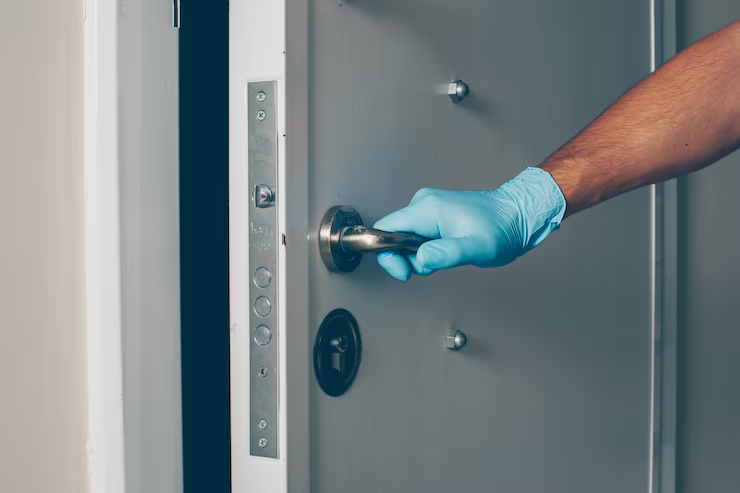
Most homeowners lock their front door and call it a day. That feels like enough until it is not. The uncomfortable reality is that a standard doorknob lock takes only seconds to bypass for anyone who knows what they are doing. No forced entry, no broken glass, no noise. Just a quiet moment at your front door that you never find out about until you notice something missing.
South Florida sees its share of property crime, and Boca Raton is no exception. Locksmith services in Boca Raton respond to break-ins regularly, and the pattern is almost always the same. The home was not impossible to get into. It was just slightly easier than it needed to be.
The gap between a vulnerable home and a reasonably secure one is smaller than most people think. It does not take a full security overhaul. It takes a few targeted upgrades in the right places. Here are the six that local locksmith professionals recommend most often.
- Swap Out Weak Deadbolts for ANSI Grade 1 Hardware
Walk to your front door right now and look at your deadbolt. If it came with the house and nobody replaced it, there is a fair chance it is a Grade 3 lock. That is the lowest rating under ANSI/BHMA grading standards, and it is what builders install to keep costs down.
Grade 1 deadbolts are tested to withstand far greater force. The bolt needs at least a one-inch throw into the frame, which most people know. What they miss is the strike plate. A cheap strike plate held in by half-inch screws is basically decorative. Replace it with a reinforced plate and drive three-inch screws through it into the actual wall stud. The door frame trim won’t stop anything on its own.
- Consider a Smart Lock, But Choose Carefully
Smart locks are heavily marketed, and some of them are genuinely worth it. The ability to get a phone alert every time your door opens is more useful than it sounds. You will know if a delivery person tried the handle, if your kid got home on time, or if something opened at 2 am that should not have.
Physical strength still matters even with a smart lock, so do not let the tech features distract from that. Check that it carries an ANSI Grade 1 or Grade 2 rating first. Wireless encryption matters too since some budget models skip that entirely. CISA flagged app-controlled home devices as a security concern and specifically mentioned multi-factor authentication as something worth using, not just skipping past during setup because it feels like extra steps. Always make sure there is a physical key backup. Smart locks with dead batteries are just expensive paperweights.
- Sliding Doors Are a Bigger Problem Than Most People Realize
This one surprises homeowners. The latch on a sliding glass door is not a security feature. It is barely a deterrent. A little upward pressure and lateral force are often enough to pop it. Locksmiths in Boca Raton flag sliding doors as a constant concern during security assessments, and the fix is almost embarrassingly simple.
Drop a cut-down wooden dowel or a steel security bar into the floor track. That stops the door from sliding open regardless of what happens to the latch. For windows on the ground floor, a drilled security pin through the inner sash costs almost nothing and takes ten minutes. The National Crime Prevention Council has recommended this type of secondary blocking device for years, and most homeowners have never heard of it.
- Put a Camera Where People Can Actually See It
There is real research supporting the use of visible cameras as a deterrent. A study out of the University of North Carolina’s Department of Criminal Justice found that most convicted burglars said they would skip a home if they spotted a camera. That does not mean cameras prevent everything, but they do shift the math for someone casing a neighborhood.
A video doorbell with at least 1080p resolution and wide-angle night vision covers your front entry and gives you remote visibility. The night vision range matters more than most product listings make clear. A camera that only captures five feet of darkness is not doing much. Position a second camera toward the driveway or garage if possible. Those areas get hit almost as often as front doors and receive far less attention.
- Rekey the Locks When You Move In
This step gets skipped constantly, and it is probably the most straightforward thing on this list. Think about every person who had access to that home before you moved in. Prior owners, their adult kids, whoever handled repairs or cleaning. You have no way of knowing how many copies of that key got made over the years. Rekeying swaps out the internal pins so every old key stops working, and it costs a fraction of what a full lock replacement runs. That said, if the locks are visibly worn or feel loose, replacing them outright is the smarter call.
The FBI’s Uniform Crime Reporting data has shown for years that a notable share of residential break-ins involve no forced entry at all. No broken frame, no damaged lock. Someone just had access.
- Door Barricade Bars Work, and Nobody Talks About Them
A lock controls who opens a door. A barricade bar controls whether the door opens at all. These floor-mounted bars brace against the door and the floor, and the resistance they create is substantial. They are particularly useful for renters who cannot replace hardware or for anyone who wants a backup layer on a bedroom door.
Every extra layer buys time, and that is genuinely what determines whether someone continues or walks away. Most break-ins are opportunistic. The person is not committed to getting into your specific home at any cost. They want it easy. A door that resists for two or three minutes is usually enough to make them move on. You are not trying to make your home impenetrable, just noticeably harder than the next one.
Your Home Does Not Have to Be an Easy Target
None of these upgrades demands a weekend project or a large budget. A Grade 1 deadbolt and a reinforced strike plate run maybe sixty to eighty dollars combined. A security pin for a ground-floor window costs under five dollars. Rekeying a home typically runs between fifty and one hundred fifty dollars, depending on how many locks you have. The cost of doing nothing is harder to put a number on, but anyone who has dealt with a break-in knows it goes well beyond the value of whatever was stolen.
Start with the weakest point in your home and work from there. Perhaps that is the sliding door you never thought twice about. Perhaps it is the deadbolt that wobbles slightly when you turn the key. Pick one thing this week and fix it. That is genuinely how most security improvements happen, not all at once, but one decision at a time until the whole picture looks different than it did before.
If you are not sure where your home is most exposed, a local locksmith can walk through it with you and point out any areas of concern. That conversation costs less than most people think, and it is worth having before something happens rather than after.
