

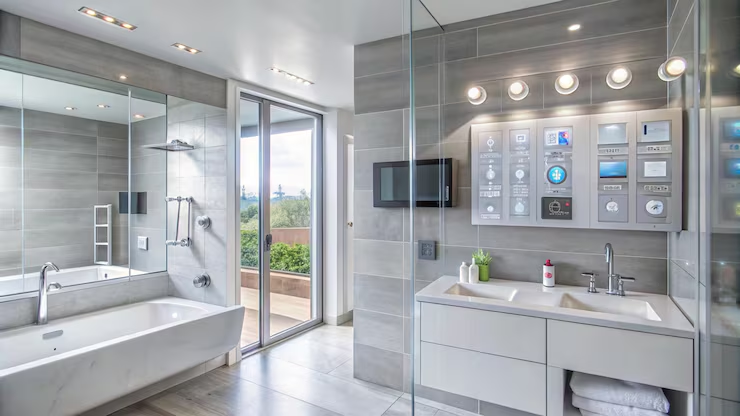
Honestly, most bathroom remodels in Sterling start with something embarrassing. A guest uses your bathroom, and you suddenly see it through their eyes. The stain near the base of the toilet you stopped noticing two years ago. The vanity door won’t close flush. The exhaust fan sounds like a small aircraft taking off.
It’s not a design epiphany. It’s closer to low-grade shame that finally crosses a threshold.
The trend of bathroom remodeling in Sterling has picked up steadily, and the reasons vary a lot more than people think. Some of it is financial. Some of it is purely practical. And some of it is just wanting to stop dreading your own bathroom.
Teams like WellCraft Kitchen and Bath have seen every version of that moment, and they know how to turn it into something worth walking into every morning.
1. Outdated Bathrooms Quietly Kill Home Sale Prices
Buyers are strange. They’ll overlook a lot of things during a home tour, but bathrooms aren’t usually among them. Walk someone into a bathroom with a pink 1987 toilet or a vanity that’s swelling at the base, and their mental offer price drops before they say a word.
Resale value gets thrown around a lot in remodeling conversations, sometimes too casually. But the numbers from the National Association of Realtors are worth sitting with. Homeowners typically recover around 66 cents on every dollar spent on a midrange bathroom remodel when the house sells.
That’s not a guarantee, and it shifts depending on what the neighborhood is doing. In Sterling, where nearby homes have been steadily updated, showing a 2003 original bathroom while asking 2025 prices creates a gap that’s hard to explain away. Buyers notice. Their agents notice more.
2. Water Damage Gets Worse When You Ignore It
Here’s something contractors find constantly during remodels: the damage behind the walls is always worse than what’s showing on the surface. A little discoloration around the tub. Some soft flooring near the toilet. These aren’t cosmetic problems. They’re the visible edge of something larger.
Moisture gets into subfloors and wall cavities, where it just sits. Mold follows. The longer it goes, the more material needs to be replaced. Catching it during a planned remodel costs a fraction of what it would cost if you’re dealing with it as an emergency. That’s not an exaggeration; it’s just how building materials behave when they stay wet.
3. Old Fixtures Are Running Up Your Water Bill Every Month
Old toilets are wasteful in a way that’s genuinely hard to see until you replace one. Pre-2000 models burned through three to five gallons per flush. The EPA’s WaterSense standard now sits at 1.28 gallons. That’s not a small difference. Run the numbers on a household of four people over twelve months, and you’re looking at tens of thousands of flushes.
Faucets and showerheads are a quieter version of the same problem. The water pressure feels fine, so nothing seems broken. But the volume running through those old fixtures adds up on every bill. Swapping them is a one-time cost that keeps trimming expenses month after month. Not dramatically, but consistently.
4. Better Layout Makes a Small Bathroom Feel Much Bigger
Walk into enough Sterling bathrooms built between 1985 and 1995, and a pattern emerges. There’s a large soaking tub taking up a third of the floor plan. It hasn’t been used for anything except storing bath toys for a decade. Next to it, a shower barely wide enough to turn around in.
Remodeling doesn’t mean expanding the footprint. It means stopping the waste. Pull the tub, build a proper shower with actual storage, and float the vanity off the floor. The room doesn’t get bigger on any blueprint, but people who’ve done it consistently say it stops feeling cramped. That shift in daily experience is harder to quantify, but it’s real.
5. Aging in Place Starts With the Bathroom
Most people don’t think about bathroom safety until something goes wrong. A parent visits and struggles with the tub step. A knee surgery changes what’s manageable. Suddenly, the bathroom that worked fine for twenty years has a different set of problems.
The National Institute on Aging has tracked this for years. Bathroom falls are among the most common and most serious injuries for older adults, and the bathrooms involved usually weren’t obviously hazardous. They just weren’t designed for anything other than a healthy adult in their thirties. Grab bars, wider clearances, zero-entry showers, and taller toilets are built into a remodel at normal cost. Adding them after the fact, especially urgently, is a conversation entirely different.
6. Poor Ventilation Is a Health Problem, Not Just a Comfort One
Exhaust fans in older Sterling homes tend to fall into one of two categories. Either they’re too small for the room and mostly just make noise, or they’re venting directly into the attic space, which trades a visible moisture problem for a hidden one.
Neither situation ends well over time. Moisture finds its way into wall cavities, sits behind tile, and works into the subfloor. The EPA has connected indoor mold to respiratory problems that go well beyond surface staining. Most homeowners don’t find out how bad it got until a remodel opens the walls. At that point, you’re already fixing it, but the scope of the fix is larger than it needed to be.
7. Sterling’s Housing Market Punishes Dated Interiors
An appraiser’s job is comparison. They look at what similar homes in your area have sold for recently and measure yours against that baseline. If the recent comps in your Sterling neighborhood include updated bathrooms and yours hasn’t changed since the original build, that difference lands somewhere in the final number.
Some homeowners decide the remodel isn’t worth it and price accordingly. That’s a valid call. But it’s worth knowing going in that the discount buyers expect for an outdated bathroom usually exceeds what the remodel would have cost. The math doesn’t always work out in favor of skipping it.
8. Daily Comfort Is Worth Something Too
Not everything comes down to resale value or utility bills. Some people just want a bathroom that doesn’t feel like a problem to walk into.
A shower that drains slowly. A toilet that runs every forty minutes through the night. A vanity with one working drawer. These things wear on people in ways that are hard to quantify but very easy to feel. You use your bathroom more than almost any other room in the house. Making it work the way it should, look the way you want, and stop causing small daily irritations is a return that shows up every single morning.