
Take a quick look at the doors in your home: the bedroom, the bathroom, the front door, and the back one you rarely open. Chances are they don’t all use the same lock. Some have a basic knob, one has a deadbolt, and the back door might even have a keypad.
Every lock does the same basic job of keeping a door closed, but they go about it differently, and some are far tougher than others. Below you’ll find the main types of door locks, what each is best for, and how to choose one. Miami also has a few quirks of its own, since the climate and building styles here matter more than most people expect.
Quick note: A lock is only as strong as the door it’s installed in. A top-quality deadbolt on a thin, cracked door is money wasted.
Door Lock Types at a Glance
Security levels are approximate, since brand and grade can make a big difference.
| Lock Type | Best For | Security Level | Key or Keyless |
| Deadbolt | Front and back doors | High | Key or keypad |
| Knob lock | Bedrooms, closets, interior doors | Low | Key |
| Lever handle lock | Offices, shops, accessible doors | Low to medium | Key |
| Mortise lock | Older homes, hotels, commercial buildings | High | Key |
| Smart lock | Homes, rentals, apartments | Medium to high | Keyless |
| Rim lock | Older doors, gates, sheds | Medium | Key |
| Padlock | Gates, storage, lockers | Low to high | Key or combination |
Deadbolt Locks
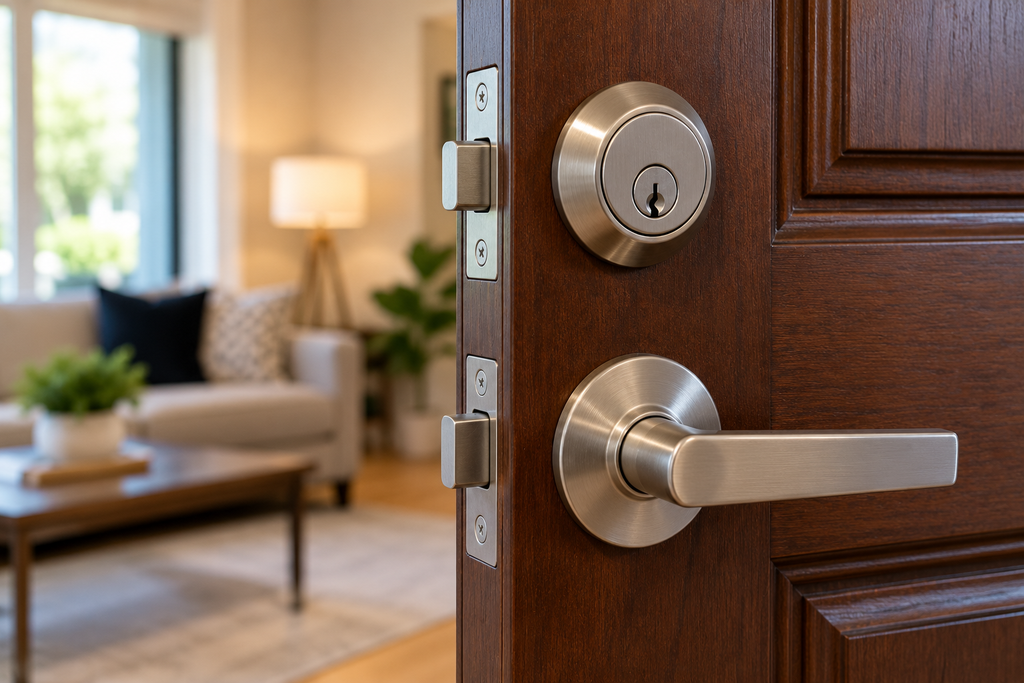
When most people say “door lock,” they mean a deadbolt. The bolt is a solid piece of metal that slides into the door frame and stays put. With no spring involved, a credit card can’t push it back, which is why deadbolts are the standard choice for exterior doors.
There are three common kinds. A single cylinder has a keyhole outside and a thumb turn inside. A double cylinder needs a key on both sides. A vertical deadbolt locks up and down, which helps resist prying at the frame. For most homes, a single cylinder is plenty.
Safety tip: A double cylinder can trap you inside during a fire if the key isn’t nearby. Some local codes restrict them, so check before you buy.
Knob Locks and Lever Handle Locks
You’ll find these on most interior doors and on plenty of front doors. They’re easy to use, but much easier to defeat than a deadbolt.
- Knob locks: You twist to open. They’re inexpensive and everywhere. The lock sits inside the knob itself, so a hard kick or a wrench can snap it off.
- Lever handles: You push down to open. They’re easier for kids and older adults. Offices and shops use them often for accessibility, along with othercommercial door lockssuch as panic bars.
- Privacy sets: Used on bathrooms and bedrooms. They lock from the inside, with a small hole outside for emergencies.
- Passage sets: No lock at all. These are for hallways and closets.
On any exterior door, add a deadbolt. A handle alone isn’t enough.
Mortise Locks
A mortise lock fits into a deep pocket cut into the edge of the door. The body is large, usually heavy steel or brass, and combines the latch and deadbolt in one unit. They’re most common in older homes, hotels and office buildings.
They’re tough and can last for decades. The downside is the door itself. It needs a special cutout, so switching to a standard lock means reworking the door. Parts for very old models can also be hard to find. If yours still works well, repairing it is often better than replacing it.
Smart Locks and Keyless Entry
A smart lock opens with a code, a phone, a fingerprint or a fob, and many still include a regular key slot as backup. Renters like them, as do busy families and anyone hosting short-term guests. You give someone a code and delete it when they leave, so there’s no spare key hidden under the doormat.
They aren’t magic, though. A keypad looks high-tech, but it’s still a lock that depends on power. Most run on batteries that last roughly six months to a year, so how a smart lock behaves in a power outage mostly comes down to battery health.
Other Locks You May Come Across
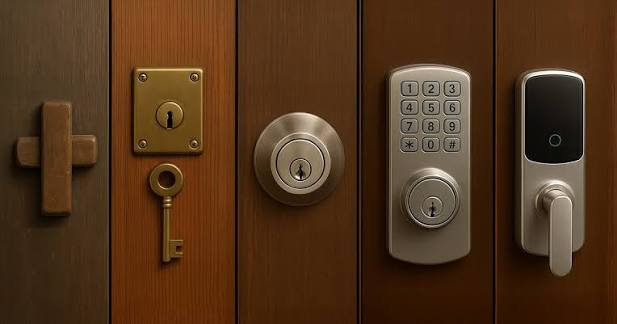
- Rim locks: Mounted on the surface of the door rather than inside it. Common on old doors, gates and sheds.
- Cam locks: Small and basic. Found on mailboxes, cabinets and lockers.
- Padlocks: Portable and versatile for gates, sheds and storage units. Spend a little more for a hardened steel shackle.
- Multipoint locks: Secure the door at several points along its edge. Often used on French doors and some patio doors.
- Electronic access locks: Open with cards, fobs or codes. Offices and apartment buildings often use them as part of an access control system.
How to Choose the Right Door Lock
Start with the door, then think about who uses it every day.
- Location: Front, back and garage doors need a real deadbolt. Interior doors can get by with less.
- Material: Wood, metal and glass each need different hardware. A thin door may need reinforcing first.
- Users: Kids and older family members often do better with a lever handle or keypad.
- Number of doors: If you have many, a master key system lets one key open several locks.
- Failure plan: Keys get lost and batteries die. Plan for both.
In the US, locks are graded by ANSI/BHMA. Grade 1 is the toughest and Grade 3 is the lightest.
| Grade | Strength | Typical Use |
| Grade 1 | Highest | Busy commercial doors, high-security homes |
| Grade 2 | Medium | Offices, shops and many homes |
| Grade 3 | Basic | Light home use, such as interior doors |
Good to know: The grade is usually printed on the packaging, but it’s easy to overlook. For an exterior door, choose Grade 1 or 2. Cheap locks are often Grade 3.
Door Lock Needs Around Miami
Where you live shapes what you need. If you’re searching for a locksmith in Miami Beach FL, you’re likely dealing with a condo, an apartment or an older house. In Coral Gables, many homes are older and some still have their original hardware. If you call a residential locksmith in Coral Gables about a door like that, a repair or rekey can make more sense than replacing everything.
Aventura and Sunny Isles Beach are full of high-rises, which often rely on key fobs, keypads and shared entry systems. If you need a locksmith in Aventura FL, or want to rekey locks in Sunny Isles Beach after a tenant moves out, read your building rules first, since some buildings manage the locks or keys themselves. Downtown Miami is mostly offices and apartments, and if you get locked out there, an emergency locksmith Miami can usually open a standard door without damaging it. Key Biscayne is its own case, because the island air is hard on metal.
Coastal tip: Salt air wears down cheap hardware fast. Near the water, look for a rust-resistant finish like stainless steel or solid brass. Wipe the lock down a few times a year and add a little lock lubricant.
Signs You Should Change or Rekey a Lock
You don’t need to change locks on a schedule, but some situations make it clear:
- The key sticks or is hard to turn
- The knob or handle feels loose
- You lost a key, or someone has one who shouldn’t
- You just moved into a new place
- You see rust, cracks or other damage
- Someone attempted a break-in
After a lost key or a move, rekeying is usually the first option to consider. It often costs less than a new lock. It changes the pins inside so the old keys stop working, and on a standard lock it takes about 10 to 15 minutes.
Do a Quick Door Check This Week
Every door has a different job, so every door may need a different lock: a deadbolt up front, a lever handle in a busy office, a smart lock for the person who’s always losing keys. Most properties end up with a mix.
This week, take five minutes to look at each door. Check the grade, the condition and who holds a key. If something looks worn, or you can’t tell what you have, ask a licensed locksmith to take a look.