

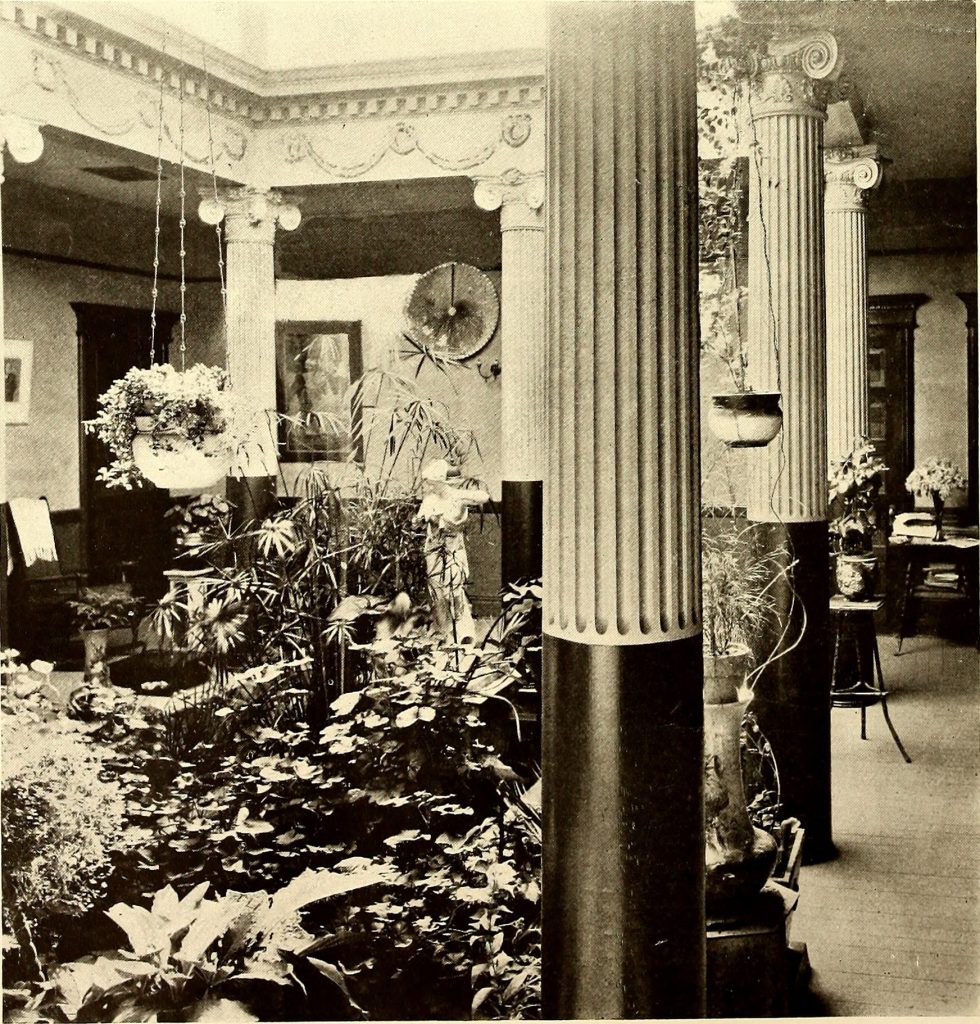
The small garden suffers from a comparison it never asked for: the sweeping lawns and borders of properties ten times its size. Designers who work in courtyards, terraces and pocket gardens insist the comparison is the problem. A compact garden is a room, not a field — and rooms are designed around intimacy, enclosure and detail, all of which small spaces do better than big ones. The gardens that feel generous share a handful of moves that cost thought rather than money.
The first move is to break the rectangle. A single visible shape reads instantly as small; diagonal paths, an offset seating area or a screen of planting that hides one corner forces the eye to travel and the brain to estimate a larger, unmapped space. Levels do the same work vertically: two shallow steps up to a deck make a destination, and raised beds double as seating and as the soil volume that lets real plants thrive. Inspiration collections from bodies such as the Royal Horticultural Society show the pattern repeatedly in award-winning small gardens: structure first, plants second, lawn — if any — last.
Layers, Light and Borrowed Landscapes
Plant in storeys: a small multi-stem tree for canopy, shrubs for the middle, perennials and ground cover at the base, climbers claiming the fences so the boundary disappears under green. Blur the edges and the garden’s true size becomes genuinely hard to judge. Borrowed scenery completes the trick — a neighbour’s tree, a church spire, the sky itself framed by an arbour — assets no fence can exclude. Lighting extends the illusion into the evening: uplight one tree, wash one wall, and leave the corners dark, because darkness has no dimensions. Container gardeners can steal every one of these moves at balcony scale. More outdoor ideas are in our homes and gardens section.
The Mistakes That Shrink
The Garden as a Room That Grows
Designers of small gardens share a heresy against the obvious: do not shrink a big garden. A small space copied from a large one reads as a failure of scale, while a small space designed on its own logic — as an outdoor room, with a floor, walls, a ceiling of branches and furniture chosen like furniture — reads as luxury. That reframing unlocks the techniques that follow: one beautiful surface instead of three cheap ones, planting in generous drifts of few species rather than a collector’s anxiety of singletons, and the borrowed view over the fence treated as the garden’s largest free asset. The small garden also returns its investment faster than any other home improvement measured in hours of pleasure per pound — because a room you use every day from April to October is not landscaping. It is square footage, grown rather than built.
The smallest gardens carry an outsized ecological brief. A courtyard of five metres square, planted densely with pollinator-friendly species and left a little untidy at the edges, functions as a refuelling station in the city’s fragmented habitat network — and networked across thousands of gardens, the effect is a conservation corridor no single park could provide. Gardeners are being recruited accordingly: no-mow corners, bee hotels, a shallow dish of water in a heatwave. The design lesson and the ecological one converge — abundance over tidiness, density over display. The small garden stops apologising for its size the moment its owner understands it is not a miniature of anything. It is a room, a refuge and a habitat, and it does all three jobs at full scale.
The classic errors are acts of tidiness: a perimeter path around a central lawn patch, everything planted in a single file against the fence, furniture scaled like dollhouse pieces in a bid to “leave space”. Small gardens reward the opposite courage — one oversized pot, one proper tree, seating for lingering rather than passing. A small garden designed as a room will be used like one: daily, in all seasons, at arm’s length from every plant. That intimacy is not a consolation prize. It is the whole point.