

Post Preview
Key Takeaways
- Start with the problem to solve, such as glare, privacy, heat, sleep, or difficult-to-reach windows.
- St. George homes often benefit from flexible light control, especially on south- and west-facing glass.
- Layered treatments can combine daylight, privacy, and room-darkening performance.
- Cellular shades, roller shades, blinds, shutters, and drapery each serve different practical needs.
- Cordless and motorized options can improve safety and convenience in the right setting.
- Accurate measurements and the right mounting style affect both appearance and coverage.
In St. George, Utah, window coverings do much more than finish a room. Bright desert light, warm afternoons, expansive views, and neighborhood privacy can all influence how a space feels from morning to evening. Homeowners comparing styles or arranging a blind repair service in St. George, UT, can get better results by starting with the room’s daily challenges instead of choosing solely by color or trend.
The best window treatment is one that matches the window, its direction, and how the room is used. A shade that works beautifully in a shaded bedroom may not offer enough glare control for a west-facing home office or a sun-filled living room near the red-rock landscape.
Why Window Treatments Matter in St. George
Window treatments help manage direct sunlight, visual comfort, privacy, and a room’s mood. The U.S. Department of Energy notes that blinds, shades, and curtains can help block direct summer sunlight, particularly on southern and western windows. In a St. George home, they make a useful part of a broader plan for keeping bright rooms more comfortable, especially with the region’s intense desert sun and the high number of sunny days throughout the year.
Whether you are updating one room or searching for blinds installed near me, focus first on performance. A polished look matters, but a treatment should also open, close, stack, and filter light in ways that fit everyday life in St. George’s unique climate.
Start With the Room’s Main Needs
Before comparing fabrics or finishes, identify the top one or two issues in each room. This keeps the decision practical and helps avoid buying a decorative treatment that does not provide the coverage you need.
- Is early sunlight interrupting sleep?
- Does afternoon glare affect a television, computer, or phone screen?
- Do nearby homes create a need for daytime, nighttime, or full-time privacy?
- Is the window difficult to reach behind furniture or above a stairwell?
- Would a softer textile finish make the room feel more complete?
Choose Treatments Based on Light
East-facing windows can bring intense morning sun, while west-facing windows often need stronger afternoon control. South-facing windows may receive bright light for much of the day. In St. George, where solar exposure is significant year-round, the direction your windows face becomes even more critical to comfort and energy efficiency. Rather than treating every window the same, use its exposure to guide the level of filtering, adjustment, and privacy you need.
Light-Filtering Options
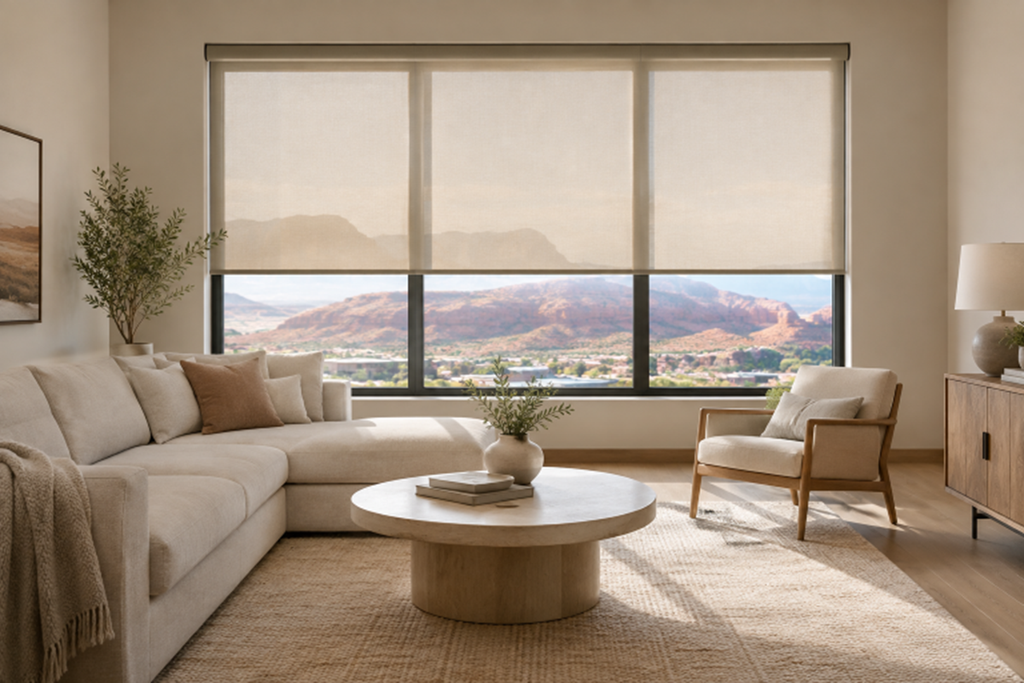
Sheer curtains, woven shades, and light-filtering roller shades soften daylight without making a room feel closed off. They can be a good fit for living areas where natural light and outward views are priorities, but they may not provide full privacy after dark when interior lights are on.
Room-Darkening and Glare Control
Blackout shades, lined drapery, and room-darkening roller shades are useful for bedrooms, nurseries, media rooms, and spaces affected by streetlights. Solar shades and adjustable blinds can help reduce screen glare while preserving some view and daylight, depending on the material and openness selected. For St. George residents dealing with intense desert heat, these options are particularly valuable for staying comfortable throughout the day.
Room-by-Room Recommendations
Living Rooms and Great Rooms
Choose flexible treatments that welcome daylight without allowing harsh glare to dominate the space. Roller shades, woven shades, drapery panels, and layered combinations can work well with large St. George windows that often frame views of the area’s distinctive red-rock landscape. Consider how the treatment will look both fully open and fully closed, especially where the window frames a view.
Bedrooms and Home Offices
Bedrooms typically need reliable privacy and darker conditions, making room-darkening shades, cellular shades, or lined curtains practical choices. In home offices, adjustable coverage is often more useful than fixed curtains because sun angles and video-call lighting can change during the day. St. George’s bright climate makes this flexibility especially important.
Kitchens, Bathrooms, and Sliding Doors
Moisture-prone rooms benefit from easy-clean materials that do not rely on heavy fabric. For wide windows and sliding glass doors, consider vertical blinds, panel-track systems, drapery, or motorized coverings. Check the stacking space and make sure the treatment will not interfere with normal access to the door.
When Layered Treatments Make Sense
One treatment does not have to do everything. Layering is especially useful when a room needs both daytime light control and stronger evening privacy. Practical combinations include solar shades with drapery panels, sheers with blackout curtains, or cellular shades with side panels for added softness.
Keep the scale of the room in mind. Too many thick layers can crowd a small space, cover attractive trim, or limit how widely a window can open.
Smart and Safe Window Coverings
Motorized shades can be helpful on tall windows, skylights, wide glass doors, and windows located behind furniture. When comparing systems, ask how they receive power, whether controls work without internet access, whether multiple shades can operate together, and how quietly the motor runs.
Cordless designs are also worth considering in homes with young children or pets. Safety, ease of use, and dependable daily operation should carry as much weight as the fabric, color, or hardware finish.
Measuring and Mounting Basics
Inside-mounted treatments sit within the frame for a clean, tailored appearance. Outside-mounted treatments sit above or around the frame and can provide greater coverage where light gaps, shallow frames, or decorative trim create challenges.
- Measure the width at the top, middle, and bottom of the opening.
- Measure height on the left, center, and right.
- For inside mounts, use the smallest width measurement.
- Check frame depth, handles, locks, trim, and nearby furniture.
- For unusually shaped or very large windows, consider professional measurement.
Common Mistakes to Avoid
- Choosing a style only because it looks good in a photo.
- Overlooking afternoon glare and seasonal sun angles.
- Assuming light-filtering fabric provides nighttime privacy.
- Forgetting to check how far the window treatment stacks when open.
- Measuring only one point on an uneven window opening.
- Selecting motorization before planning power and control access.
A Simple Buying Checklist
Before shopping, write down the room location, primary concern, desired light level, privacy needs, mounting preference, cleaning requirements, safety considerations, operation type, budget, and preferred colors or textures. In St. George, a thoughtful choice can preserve the daylight and views that make a home appealing while giving each room the control and comfort it needs to handle the region’s sunny climate.